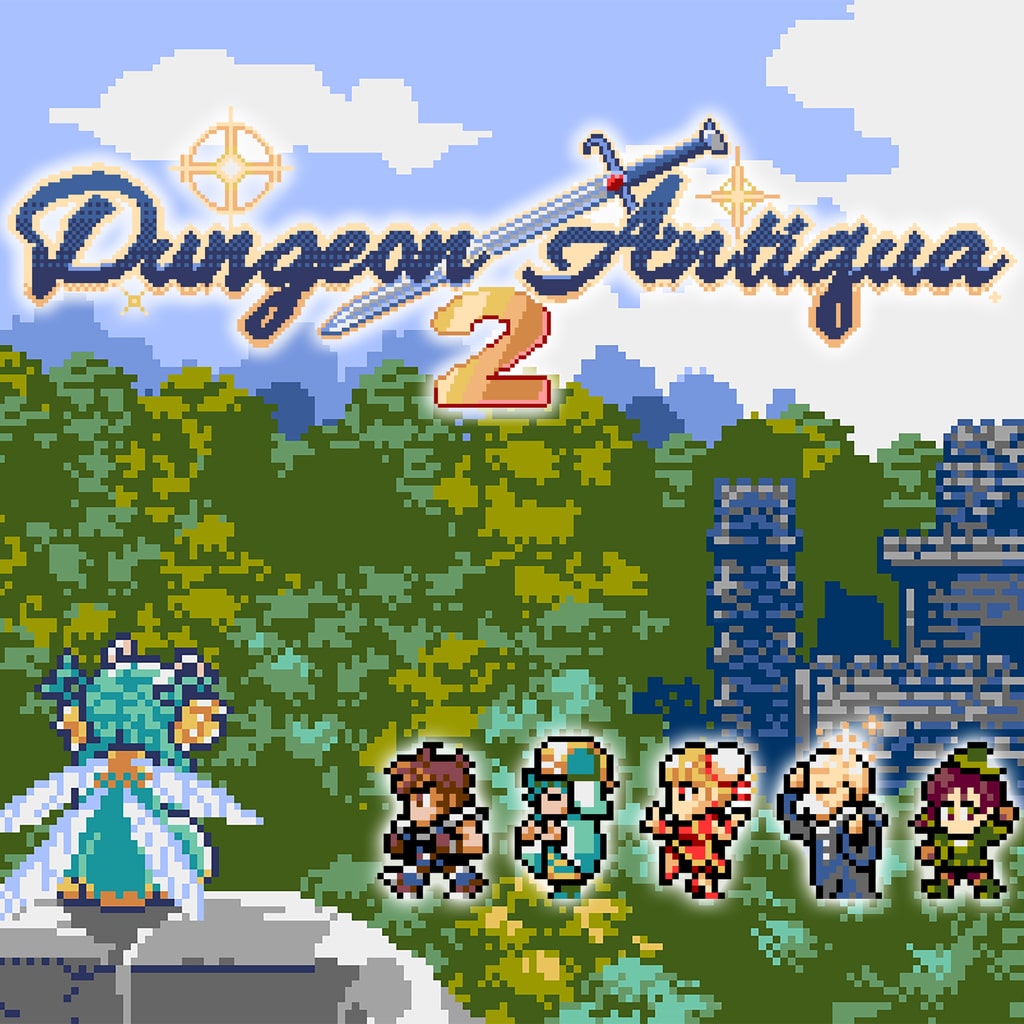
There is something wonderfully comforting about a game that knows exactly what it wants to be. In an industry where even the smallest RPG can feel compelled to throw enormous worlds, elaborate dialogue trees and cinematic cutscenes at the player, Dungeon Antiqua 2 takes a very different approach. It looks back, deliberately, to an era when an adventure could be built around a handful of heroes, a dangerous dungeon and the simple promise that something rather nasty might be waiting around the next corner. The result is a compact retro RPG that understands the appeal of imagination just as much as the pleasure of progression.
Developed and published by Pixel games, Dungeon Antiqua 2 is a 2D dungeon-crawling RPG designed with the spirit of the SNES era firmly in mind. It takes place hundreds of years after the events of the original Dungeon Antiqua, though you do not need to have played its predecessor to appreciate what is on offer here. The storytelling has a deliberately old-fashioned quality, with short exchanges and sparse exposition leaving plenty of room for the player to fill in the gaps. It is less interested in telling you every detail of its world and much happier to allow you to imagine what might be lurking beyond the edges of the screen.
A Journey Into the Dark
The premise opens with a mysterious figure who has spent countless generations quietly fulfilling her duty. Eventually, old and weary, she gathers the last of her strength and sets out to find the hero. It is a simple setup, but it immediately establishes the kind of storytelling Dungeon Antiqua 2 is aiming for. There is mystery here, but it is presented in broad strokes rather than through endless exposition.
That restraint is refreshing. Modern RPGs can sometimes struggle to leave anything to the imagination, explaining every character, location and historical event until the player feels more like a spectator than an adventurer. Dungeon Antiqua 2 remembers that there was a time when a few lines of dialogue and an evocative name could be enough to make a world feel enormous. It may not deliver the narrative complexity of a modern epic, but it succeeds in creating the feeling that a much bigger story is hiding behind what you see.
The adventure itself is expected to take around 10 to 12 hours on a first playthrough, which feels like a sensible length for this type of experience. There is enough room to experiment with characters and explore its six dungeons without the experience becoming bloated. It is the sort of RPG you can settle into over a few evenings rather than one that demands a month of your life.
Seeing Is Surviving
One of the most interesting ideas in Dungeon Antiqua 2 is its approach to visibility. Rather than giving you a completely clear view of every corridor and enemy, the amount of the dungeon you can see depends on your character’s vision. This seemingly simple mechanic adds an unexpected layer of tension to exploration, because you cannot always see what is waiting ahead.
It also makes character development feel meaningful outside of combat. A stronger character is not simply somebody who hits harder or survives longer. Vision becomes another consideration when building your party, and suddenly exploration itself becomes part of the character creation process. You begin thinking about who should lead, which abilities might help with navigation, and whether it is worth taking a slightly different approach through a particular dungeon.
The encounter system complements this nicely. Enemies appear as symbols rather than simply materialising into random battles, giving you an element of choice over whether to engage. If you can avoid an enemy, you can preserve resources and continue deeper into the dungeon, while striking first gives you the opportunity to seize the initiative. It creates a satisfying balance between caution and aggression.
Build Your Own Party
Character development is arguably where Dungeon Antiqua 2 becomes most interesting. There are ten jobs available, including the returning classes from the first game alongside the newly introduced Monk and Archer. Five are available initially, with the remaining options opening up as you progress, giving you plenty of incentive to experiment rather than immediately settling on a single party configuration.
The really enjoyable part is that changing jobs does not reset your character’s level. That simple decision makes experimentation far less intimidating. You can try a new class without feeling as though you have just thrown hours of progression away, allowing your characters to evolve naturally as you learn what works.
Victorious battles award skill points, and accumulating enough of them unlocks job-specific abilities. This gives combat a purpose beyond simply surviving the next encounter. You are constantly working towards something, whether that is a new skill, a more effective party combination, or simply figuring out which job suits the character you have in mind.
There is a lovely sense of freedom here. You can build the conventional balanced party if that is your preference, or start experimenting with unusual combinations simply because you want to see what happens. Dungeon Antiqua 2 encourages this curiosity rather than punishing it, and that makes the character system considerably more enjoyable than its relatively simple presentation might suggest.
Six Dungeons, Plenty of Danger
The six dungeons form the backbone of the adventure, and exploration is where the game’s retro philosophy truly comes to life. These are not sprawling open worlds packed with icons and quest markers. They are focused spaces where navigation, enemy encounters and character preparation all matter.
There is something satisfying about gradually becoming familiar with a dungeon. The first trip through a new area can feel uncertain because you do not yet know what is waiting around the next corner. After a while, however, you begin to understand its layout and recognise the dangers, turning that initial uncertainty into confidence.
The symbol-based encounters are particularly effective because they make exploration feel more deliberate. You can pick your battles to some extent, and that means the player’s decisions matter. Sometimes avoiding an enemy is the smart move, while on another occasion taking the initiative might be exactly what you need to gain an advantage.
It is a simple system, but simplicity is very much the point here. Dungeon Antiqua 2 is not trying to reinvent dungeon crawling. Instead, it takes familiar ingredients and combines them into something that feels pleasingly authentic.
The Pleasure of Pixel Art
Visually, Dungeon Antiqua 2 wears its retro influences proudly. The SNES-inspired pixel art has an appealing simplicity, with characters and environments designed to communicate their purpose without drowning the screen in unnecessary detail. There is colour and personality throughout, yet the game never loses sight of its old-school aesthetic.
The sound design follows the same philosophy. Its retro soundtrack and effects help create the sensation of playing something rescued from a forgotten cartridge. There is no attempt to disguise its influences, and that confidence works in its favour.
For players who grew up with 16-bit RPGs, there is an obvious nostalgia factor here. Yet the presentation is not simply nostalgia for nostalgia’s sake. The stripped-back visuals also support the game’s broader design philosophy, leaving room for your imagination to fill in the blanks.
A Game That Respects Your Time
One of the things I appreciate most about Dungeon Antiqua 2 is how little unnecessary baggage it carries. There are no enormous cinematic sequences demanding your attention every twenty minutes. There are no endless conversations explaining the political histories of every kingdom you visit. Instead, you get dungeons, characters, skills, enemies and a journey that trusts you to make something of it.
That approach will not appeal to everyone. Players who want a sprawling narrative RPG with dozens of characters and hundreds of hours of content may find the experience too compact. Likewise, anyone who has little affection for retro design may struggle with its deliberately limited presentation.
For those who understand the appeal, however, there is something quite special about its focus. Dungeon Antiqua 2 feels like a game built around the question of what an RPG actually needs to be enjoyable. The answer, apparently, is a good dungeon, a flexible party and enough freedom to make your own mistakes.
Verdict
Dungeon Antiqua 2 is a charming reminder that RPGs need not be enormous to be rewarding. Its six dungeons, flexible job system and clever approach to visibility provide enough mechanical depth to keep exploration interesting, while its deliberately sparse storytelling leaves space for the player’s imagination. The ability to change jobs without resetting character levels is particularly welcome, giving experimentation the freedom that suits the game’s old-school philosophy beautifully.
There are certainly limitations. The retro presentation will not be for everyone, and the relatively short campaign may leave players wanting more once they become comfortable with its systems. Yet those qualities are also part of what makes the experience work. This is a focused RPG that does not waste time trying to be something it is not.
Most importantly, Dungeon Antiqua 2 understands why people still love classic dungeon crawlers. There is a certain magic in stepping into an unexplored corridor without knowing exactly what awaits you, building a party around your own ideas and gradually becoming strong enough to push deeper into places that once seemed impossible. It is a simple pleasure, but sometimes the simple pleasures are the ones that endure.