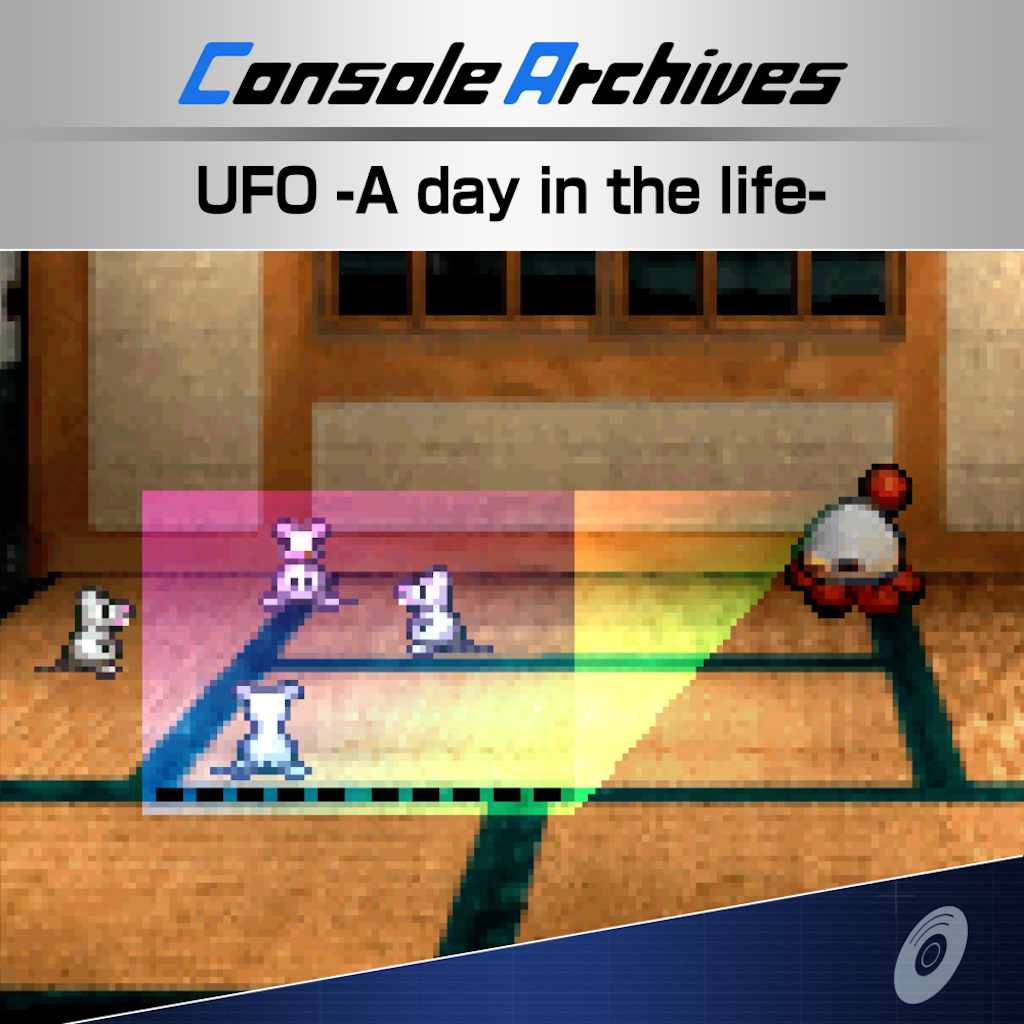
Some games chase spectacle. Others quietly carve out their own identity, becoming cult favourites simply because there is nothing else quite like them. UFO -A day in the life- belongs firmly in the latter camp. Originally released in 1999 by the wonderfully unconventional Love-de-Lic, it arrived at a time when Japanese developers seemed unafraid to experiment with strange ideas, trusting players to embrace curiosity over constant action. It never became a mainstream success, but those who discovered it often spoke of it with genuine affection.
Now, through Console Archives, HAMSTER has given this overlooked gem another chance to shine. Rather than remaking or modernising the experience, this release focuses on preserving it as faithfully as possible while introducing the quality-of-life features expected of modern archival collections. It is a welcome approach because UFO -A day in the life- has never relied on cutting-edge visuals or fast-paced gameplay. Its charm comes from observation, patience and an unwavering belief that even the smallest moments can tell meaningful stories.
It is an unusual game even by today’s standards. Beneath its whimsical premise about invisible aliens hiding inside an apartment block lies an adventure about ordinary people living ordinary lives. Their routines, relationships and personal struggles become just as important as the extraterrestrials you’re searching for. Few games blend humour, melancholy and curiosity with such effortless confidence.
Gameplay
The central objective is deceptively straightforward. After a spaceship crashes, fifty tiny aliens are scattered throughout an apartment building on Earth. Unfortunately, Earth’s atmosphere renders them invisible, so players cannot simply wander around collecting them. Instead, they must investigate the building’s residents’ behaviour, searching for clues that reveal where these hidden visitors might be.
This is where the Cosmo Scanner becomes the game’s defining mechanic. Rather than functioning as a weapon or traditional tool, it serves as a specialised camera for photographing suspicious moments. Strange movements, unusual conversations and seemingly insignificant events often hide far more than first appearances suggest. Once photographs have been taken, they are returned to Mother aboard the alien ship, who develops the film and determines whether another missing alien has been found.
That simple loop transforms exploration into detective work. Instead of solving puzzles through obvious interactions, players begin studying human behaviour. Why is somebody standing at the window every afternoon? Why does one neighbour always leave their apartment at exactly the same time? What appears mundane at first gradually becomes fascinating as every routine might conceal another rescue opportunity.
The brilliance of the design lies in how naturally curiosity replaces traditional objectives. Before long, you stop looking for aliens and start wanting to understand the people themselves.
Everyday Life Becomes The Adventure
Most games build excitement through escalating danger. UFO -A day in the life- takes the opposite approach, asking players to slow down and simply watch.
The apartment complex feels genuinely alive because each resident follows their own schedule. People cook, argue with family, leave for work, welcome visitors and spend quiet evenings alone. None of these routines exist purely to entertain the player. They continue regardless of whether anyone is watching, creating the impression of a believable community rather than a collection of scripted characters.
This structure makes experimentation incredibly rewarding. Revisiting the same room at different times often reveals completely different situations. A peaceful morning conversation may turn into a heated disagreement later in the day, while an empty corridor at lunchtime might host an unexpected encounter in the evening.
These constantly shifting scenarios encourage patience rather than speed. There is no pressure to rush through objectives because discovery itself becomes the reward.
Storytelling Without Grand Speeches
Although the missing aliens provide the overarching goal, the true heart of the game lies with the apartment’s human residents. Love-de-Lic had an extraordinary talent for telling stories through observation rather than exposition. Conversations feel natural, relationships develop subtly, and emotional moments arrive without dramatic cutscenes announcing their importance. Players gradually piece together individual lives simply by paying attention.
Some residents are amusing, others eccentric, while a few carry genuine emotional weight. There are stories of loneliness, family conflict, personal dreams, and quiet disappointments unfolding behind ordinary apartment doors. The aliens almost become secondary characters, serving as gentle excuses to witness these interconnected lives.
That understated storytelling remains remarkably effective more than twenty-five years later. It trusts players to notice details rather than explaining everything outright, making every discovery feel personal.
Presentation
Visually, UFO -A day in the life- captures the distinctive aesthetic of late-nineties PlayStation games without trying to hide its age. Character models are simple, environments modestly detailed, and animation can appear stiff by contemporary standards. Yet these limitations somehow contribute to the game’s charm. The apartment building feels warm and familiar despite its technical simplicity, while the colourful alien designs inject playful personality into almost every encounter.
The soundtrack deserves particular praise. Soft melodies accompany exploration without becoming intrusive, creating an atmosphere that constantly shifts between peaceful, humorous and quietly reflective. Rather than driving excitement, the music complements the relaxed pace, encouraging players to absorb every detail.
Sound effects also reinforce the illusion of daily life. Doors open and close, televisions play in distant rooms, conversations drift through hallways, and ordinary domestic noises create an environment that feels comfortably lived in.
Console Archives Does Preservation Right
HAMSTER once again demonstrates why its archival releases have earned such a loyal following. Save states make experimentation far less frustrating, especially when photographing specific time-sensitive events. Rather than repeating lengthy sections after every mistake, players can freely test different ideas without losing progress.
Customisable controls and display settings also help modernise the experience without compromising authenticity. Players seeking a nostalgic CRT presentation have plenty of visual options, while those preferring cleaner, modern displays are equally well served.
Perhaps most importantly, the game remains fundamentally untouched. There are no unnecessary visual overhauls or redesigned mechanics attempting to reshape the original vision. What players receive is essentially the same wonderfully peculiar adventure that first appeared in 1999, simply made far more accessible.
Not Every Player Will Connect
As delightful as UFO -A day in the life- remains, it is not universally accessible. Its deliberate pacing asks players to embrace observation rather than constant interaction. Those expecting frequent objectives, dramatic action or rapid progression may initially wonder whether anything meaningful is happening at all. The answer is usually yes, but only if you’re willing to pay close attention.
Some progression can also feel deliberately obscure. Certain alien locations require observing specific events at precise times, occasionally leading to periods of aimless experimentation. Save states reduce some frustration, yet players should still expect moments when patience becomes essential.
The dated interface likewise reflects its original era. While functional, menu navigation occasionally lacks the fluidity modern audiences have grown accustomed to. Fortunately, these shortcomings rarely overshadow the experience itself.
Final Verdict
Console Archives UFO -A day in the life- is exactly the kind of preservation project retro gaming deserves. Rather than celebrating only commercial successes, it rescues one of Japan’s most imaginative cult classics and presents it to a new generation to discover.
Its camera-based investigation, looping daily structure and quietly brilliant environmental storytelling remain unlike almost anything else available today. While some mechanics inevitably show their age, the creativity behind them feels timeless. This is a game built around empathy, curiosity and observation rather than combat or spectacle, and that makes it feel surprisingly refreshing even decades after its original release.
HAMSTER’s careful preservation ensures that players can experience Love-de-Lic’s original vision with modern conveniences that remove unnecessary frustration while respecting the game’s identity. It is another excellent reminder that some of gaming’s most memorable ideas were never the biggest commercial hits.
For those willing to slow down, watch carefully and appreciate life’s quieter moments, UFO -A day in the life- remains a wonderfully heartfelt adventure. It asks players to search for invisible aliens, but what they often end up finding is something far more meaningful: a genuine affection for the ordinary people quietly living their lives behind apartment doors.