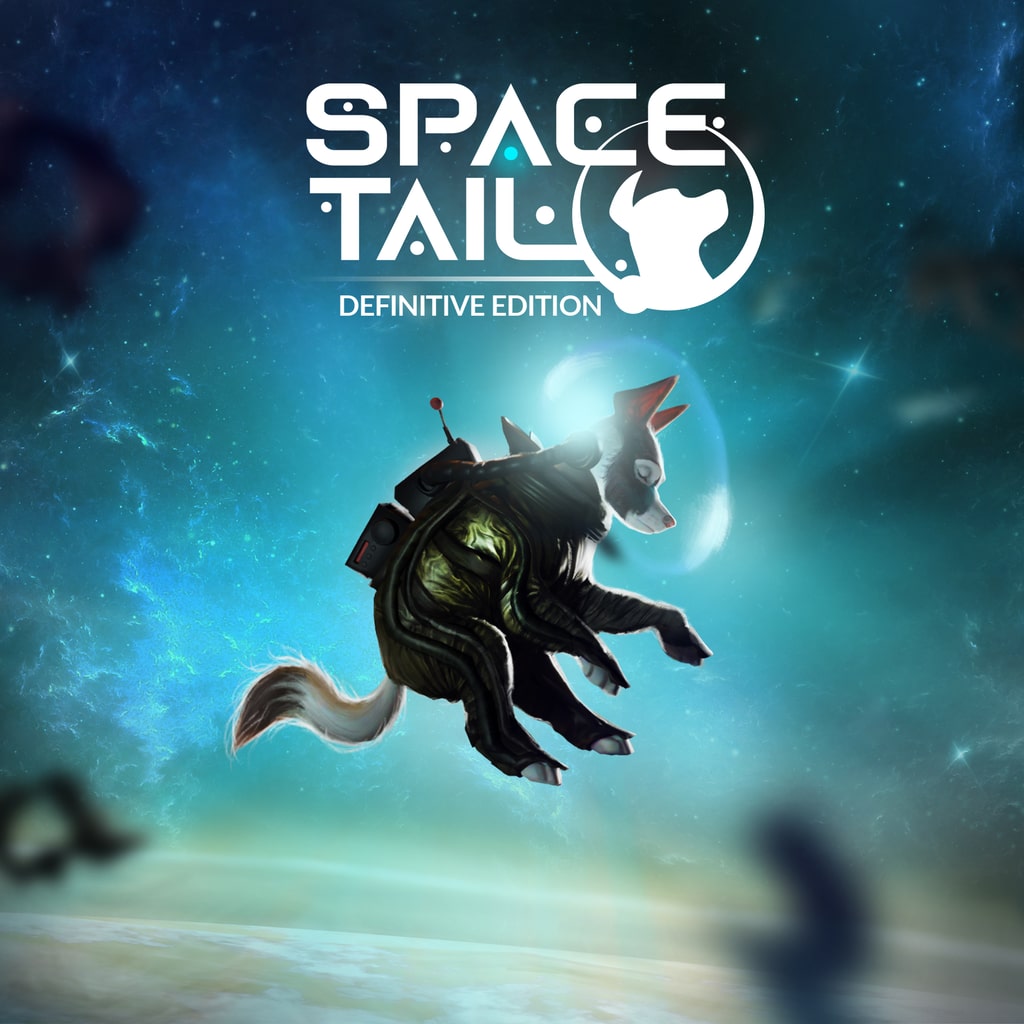
Some games entertain for a few hours before quietly fading from memory. Others linger because they leave you thinking about their characters long after the credits roll. Space Tail: Definitive Edition firmly belongs in the latter category. While it delivers enjoyable platforming and thoughtful puzzles, what truly sets it apart is the warmth at its heart. It tells a story about loneliness, curiosity, hope and belonging through the eyes of a dog who never asked to become a hero.
Inspired by the real history of animals sent into space during the earliest years of space exploration, Space Tail imagines a different ending. Instead of becoming another tragic footnote in history, Bea survives her mission and finds herself stranded among distant worlds populated by strange creatures, unfamiliar landscapes and mysteries beyond human understanding. It is an emotional premise from the outset, yet the game never leans into melodrama. Instead, it quietly explores ideas of identity, communication and compassion through an adventure that feels surprisingly personal.
This Definitive Edition bundles previous content while refining the overall experience with improved pacing, enhanced visuals and technical polish. More importantly, it presents the story in a smoother, more cohesive way, making this easily the best version of an already memorable adventure.
Gameplay
At first glance, Space Tail appears to be a fairly traditional 2.5D platformer. Bea runs, jumps, climbs and explores colourful alien environments while solving puzzles and avoiding environmental hazards. These mechanics are dependable and responsive throughout, providing a solid foundation for everything else the game attempts.
What sets it apart from countless other platformers is Bea herself. She is not a silent action hero with an endless arsenal of abilities. She is still a dog, and the game constantly reminds you of that. Her greatest strengths are not weapons or magical powers but her natural instincts. She sniffs out unfamiliar scents, listens carefully to distant sounds and observes subtle environmental clues others might overlook.
These abilities form the backbone of exploration. Activating Bea’s enhanced senses transforms familiar environments into interactive puzzles. Invisible scent trails become visible, hidden pathways reveal themselves and distant noises suddenly carry meaning. Rather than feeling like gimmicks, these mechanics become second nature as the adventure unfolds.
The sensory gameplay also reinforces the story. You are not simply controlling a dog. You begin to think like one, relying on instincts rather than conventional problem-solving. It is an elegant piece of design that strengthens immersion without constantly reminding the player how clever it is.
Exploration and Puzzle Design
Each alien world introduces fresh ideas without abandoning the game’s core mechanics. Some environments focus on navigating hazardous terrain, while others place greater emphasis on environmental puzzles or encounters with strange alien inhabitants.
The puzzles strike a comfortable balance between accessibility and satisfaction. They are rarely so obscure that progress stalls, yet they still encourage observation rather than trial and error. The best moments arrive when multiple senses work together, requiring players to listen, smell and explore carefully before the solution finally clicks into place.
Exploration itself feels rewarding because every location has its own identity. Rather than recycling similar landscapes with different colours, each planet introduces distinct ecosystems, wildlife and visual themes. One moment Bea is cautiously navigating lush alien forests, while the next she is crossing hostile terrain where survival depends on careful observation.
Hidden areas further reward players willing to investigate every corner. Collectibles and optional discoveries add depth without ever feeling mandatory, encouraging curiosity rather than completion for completion’s sake.
Communication Without Words
Perhaps the game’s most fascinating mechanic is its approach to communication. Many of the creatures Bea encounters speak entirely different languages, making traditional conversation impossible. Instead, interactions centre on body language, emotions and instinctive responses.
It is remarkable how expressive these exchanges become despite the absence of spoken dialogue. A cautious posture, an excited bark or a friendly wag of the tail often communicate more effectively than pages of written exposition ever could.
This system fits perfectly with Bea’s character. She does not conquer unfamiliar worlds through violence. She survives by earning trust, reading emotions and adapting to cultures she barely understands. That emphasis on empathy gives Space Tail a refreshing identity within a genre often built around defeating everything that moves.
Not every encounter ends peacefully, of course. Some creatures remain hostile, forcing players to avoid danger through careful movement and environmental awareness. Even then, conflict rarely feels like the primary focus.
Story
The emotional core of Space Tail is its greatest achievement. Although inspired by historical events, the narrative chooses hope over tragedy, imagining what might happen if a forgotten space pioneer found a new purpose among the stars.
Bea is an immediately lovable protagonist because her behaviour always feels believable. She remains playful, curious and occasionally frightened despite the extraordinary circumstances surrounding her. Small details, such as wagging her tail after making a new friend or nervously sniffing unfamiliar surroundings, reinforce her personality throughout the adventure.
The story also explores surprisingly mature themes without becoming inaccessible. Loneliness, sacrifice, acceptance and belonging emerge naturally through Bea’s journey. Rather than delivering lengthy speeches about these ideas, the game trusts players to experience them alongside its protagonist.
By the final chapters, the emotional investment feels entirely earned. You are no longer simply guiding a dog through colourful levels. You genuinely want Bea to find the home she has been searching for.
Presentation
Visually, Space Tail: Definitive Edition is consistently beautiful. The colourful alien worlds burst with personality, blending vibrant vegetation, unusual wildlife and imaginative environmental design to create settings that feel genuinely alien without becoming incomprehensible.
The enhanced lighting in this edition adds further atmosphere. Soft glows illuminate mysterious forests, distant stars shimmer across alien skies, and each world feels richer than before. Combined with improved performance, the visual upgrades help deliver a smoother overall experience.
Character animation is another highlight. Bea’s movements capture canine behaviour wonderfully, from excited sprints to cautious sniffing and playful tail wags. These details constantly reinforce her identity, making her one of the most expressive protagonists in recent memory.
Audio
The soundtrack perfectly matches the game’s emotional tone. Gentle orchestral pieces accompany quiet exploration, while more dramatic compositions emerge naturally during dangerous encounters. The music knows when to step forward and when to remain almost invisible.
Sound design plays an equally important role, thanks to the game’s sensory mechanics. Footsteps, distant wildlife, environmental ambience and subtle audio cues frequently contribute directly to puzzle-solving. Listening carefully becomes as important as looking around.
Voice acting is intentionally limited, allowing the game’s universal themes to remain accessible regardless of language. Emotion is communicated through movement, music and atmosphere rather than endless dialogue.
Where It Stumbles
While Space Tail excels emotionally, some gameplay sections can occasionally feel uneven. Platforming sequences sometimes lack the precision of genre leaders, resulting in a few awkward jumps or slightly inconsistent movement in more demanding sections.
The pacing also slows during certain exploration-heavy chapters. Players seeking constant action may find themselves wishing the narrative moved forward more quickly during these quieter moments.
Combat, when it appears, remains fairly simplistic compared with the richer exploration systems. Fortunately, the game recognises that fighting is not its strongest asset and wisely keeps the focus elsewhere. These issues never derail the adventure, but they prevent Space Tail from reaching absolute greatness.
Final Verdict
Space Tail: Definitive Edition succeeds because it understands that memorable adventures are built on memorable characters. Bea is far more than a clever gameplay mechanic or an adorable mascot. She is a wonderfully realised companion whose journey feels honest, heartfelt and surprisingly affecting.
The combination of sensory-based exploration, thoughtful puzzle design, imaginative alien worlds and emotionally grounded storytelling creates an experience unlike many platformers currently available. While a few rough edges remain, the Definitive Edition presents the adventure in its strongest form, refining its pacing and presentation without losing the warmth that made the original so special.
In an industry often obsessed with bigger explosions and louder spectacles, Space Tail chooses kindness instead. It reminds us that courage is not always about fighting monsters. Sometimes it is simply about continuing to explore, even when the universe feels impossibly vast and unfamiliar.