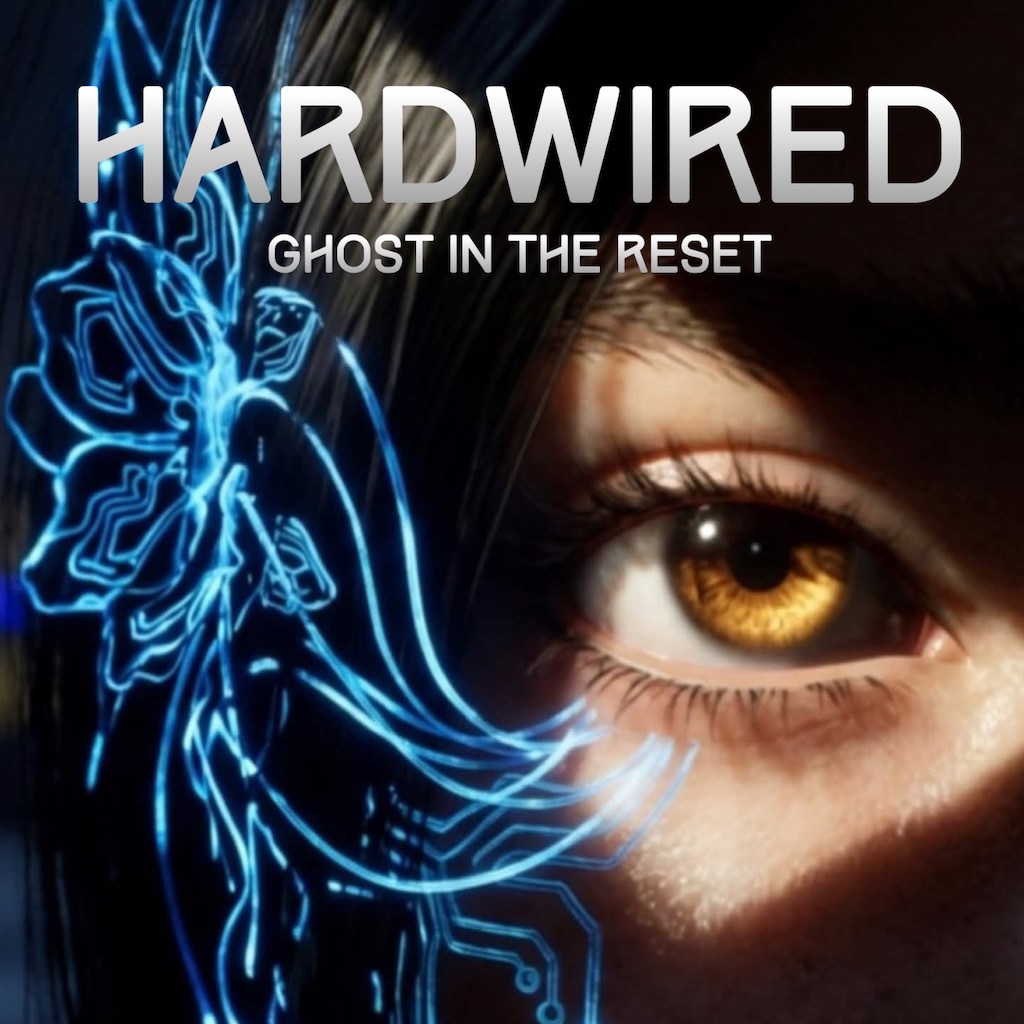
Cyberpunk stories often ask familiar questions. What makes someone human? Can memories be trusted? Does technology save us or slowly erase what makes us who we are? It is well-worn territory, yet every so often a game arrives that explores those ideas with enough confidence and personality to make them feel fresh again. HARDWIRED: Ghost In The Reset is one of those games.
Developed by solo creator Iron Byte Studios and published by DreadXP, this ambitious action-adventure blends stealth, tactical combat and immersive simulation into a world dripping with neon, corruption and existential dread. It wears its inspirations proudly, drawing from the immersive sims of the late 1990s and early 2000s while carving out an identity that feels distinctly its own. More importantly, it proves that a compelling cyberpunk experience does not need an enormous development team when the vision behind it is this focused.
You step into the role of Kay, a hardened operative who has survived by cutting herself off from emotion. Feelings are seen as weaknesses, distractions with no place in a brutal dystopian future. When a mission falls apart and she is forced to rely on the enigmatic prototype known as Icarus, that carefully constructed emotional armour begins to crack. What starts as another dangerous assignment gradually becomes a deeply personal journey through a city built on lies, exploitation and forgotten humanity.
The result is a game that balances explosive action with quieter moments of reflection, reminding players that the strongest stories are often found between the firefights.
Every Mission Is Your Mission
HARDWIRED: Ghost In The Reset refuses to funnel players down a single path. Almost every location encourages experimentation, rewarding curiosity over blind aggression. Corporate facilities are filled with ventilation systems, maintenance corridors, rooftops and security hubs that can be approached from multiple directions.
Stealth is often the safest option, but it is never the only one. Sneaking through shadows, disabling cameras and quietly removing guards creates a satisfying sense of mastery, particularly as new cybernetic abilities become available. At the same time, those who prefer direct confrontation will find a combat system that delivers intense firefights without making stealth feel irrelevant.
The balance between these approaches is one of the game’s greatest strengths. Choosing to remain unseen feels rewarding because it requires careful planning rather than patience alone. Likewise, charging into battle is viable, but only if players have invested in upgrades that complement a more aggressive style.
Every encounter feels like a puzzle with multiple solutions, capturing the spirit of classic immersive simulations where player choice extends far beyond simple dialogue selections.
Hacking With Consequences
Technology is more than a convenient gameplay mechanic here. It underpins nearly every decision players make throughout the campaign. Hacking security systems, overriding surveillance cameras and manipulating enemy cybernetics all become essential tools, yet every action carries a cost.
The heat and memory management system introduces welcome tension to each mission. Powerful abilities generate increasing system strain, forcing players to manage resources carefully rather than relying endlessly on advanced technology. Pushing your cybernetic systems too hard risks exposing your position or leaving vital abilities temporarily unavailable.
It is an elegant mechanic because it transforms hacking from an automatic to a strategic act. Rather than simply selecting an option from a menu, players must constantly weigh immediate advantages against future risks.
This thoughtful resource management extends into character progression as well. Cyberware upgrades offer meaningful choices rather than obvious improvements. One build may prioritise silent infiltration through enhanced camouflage, while another focuses on devastating combat enhancements or advanced network intrusion. No single approach feels universally superior, encouraging experimentation throughout the adventure.
A City That Breathes Corruption
New Neo City is exactly what great cyberpunk settings should be. It is beautiful from a distance and deeply unsettling up close. Rain-soaked streets glow beneath towering advertisements, while neglected districts crumble in the shadow of corporate skyscrapers. Every district tells its own story without relying solely on exposition. Environmental details speak volumes about the inequality that defines this fractured society, from abandoned residential blocks to pristine executive offices, guarded by heavily augmented security forces.
Exploration consistently rewards observant players. Hidden data logs, forgotten laboratories and abandoned workstations gradually piece together the city’s troubled history. These optional discoveries rarely feel like unnecessary collectibles. Instead, they enrich the narrative by revealing personal stories that highlight the human cost of technological obsession.
Environmental storytelling is among the strongest aspects of the experience. Even seemingly insignificant rooms often contain subtle details that deepen the world and prompt players to question the motives of every organisation they encounter.
Finding Emotion in a Machine
Although the gameplay offers plenty of freedom, the emotional core belongs to Kay and Icarus. Kay begins the story emotionally detached, treating every mission with mechanical efficiency. Years of violence and survival have convinced her that compassion is a liability. Watching those beliefs slowly unravel is one of the narrative’s most rewarding aspects.
Icarus provides the perfect contrast. As a self-aware prototype whose behaviour increasingly defies its programming, it constantly challenges Kay’s cynical worldview. Their conversations gradually evolve from guarded cooperation to something far more meaningful, never rushing emotional moments or relying on predictable clichés.
The writing succeeds because it keeps both characters flawed. Neither possesses all the answers, and neither undergoes sudden personality shifts simply to satisfy the plot. Their relationship develops naturally through shared hardship, giving later story revelations genuine emotional weight.
The branching narrative further enhances replayability by letting player choices influence how events unfold. While the major themes remain consistent, smaller decisions create enough variation to encourage multiple playthroughs.
Style Meets Substance
Visually, HARDWIRED embraces classic cyberpunk aesthetics without being overwhelmed by them. Neon reflections shimmer across rain-soaked streets, holographic advertisements flicker against decaying architecture, and industrial facilities create an oppressive atmosphere that perfectly suits the narrative.
The lighting deserves particular praise. Shadows are not merely decorative but functional elements that directly influence stealth gameplay. Every corridor feels deliberately designed, giving players opportunities to disappear from sight or carefully observe patrol routes before acting.
The soundtrack complements the world beautifully. Its synth-driven compositions capture both the loneliness and urgency of New Neo City, shifting effortlessly between tense infiltration sequences and quieter moments of introspection. Rather than overpowering the experience, the music quietly reinforces its emotional tone.
Considering the game’s independent origins, the overall presentation is remarkably polished. There are occasional rough edges in animation and character interactions, but these moments rarely distract from the broader experience. Instead, they serve as reminders of the extraordinary achievement accomplished by such a small development effort.
Final Thoughts
HARDWIRED: Ghost In The Reset is an impressive example of what focused design and a strong creative vision can achieve. It blends stealth, action, hacking and immersive simulation into an experience that respects player freedom while delivering an emotionally engaging story.
Its tactical gameplay consistently rewards experimentation, its cybernetic progression encourages creative builds, and its richly detailed world invites exploration at every opportunity. Beneath the stylish neon skyline lies a surprisingly heartfelt narrative about identity, trust and rediscovering humanity in a world determined to erase it.
Not every system is flawless, and players expecting relentless action may find its slower, methodical pace demanding. Yet those willing to embrace careful planning and thoughtful exploration will discover one of the more rewarding cyberpunk adventures in recent memory.
For fans of immersive sims, stealth-driven action and thoughtful science fiction, HARDWIRED: Ghost In The Reset is an easy recommendation. It demonstrates that ambition is not measured by studio size but by the confidence to tell a meaningful story while trusting players to shape their own journey through it. Sometimes the brightest light in a cyberpunk city is not the neon overhead. It is the spark of humanity, fighting to survive beneath layers of steel and circuitry.