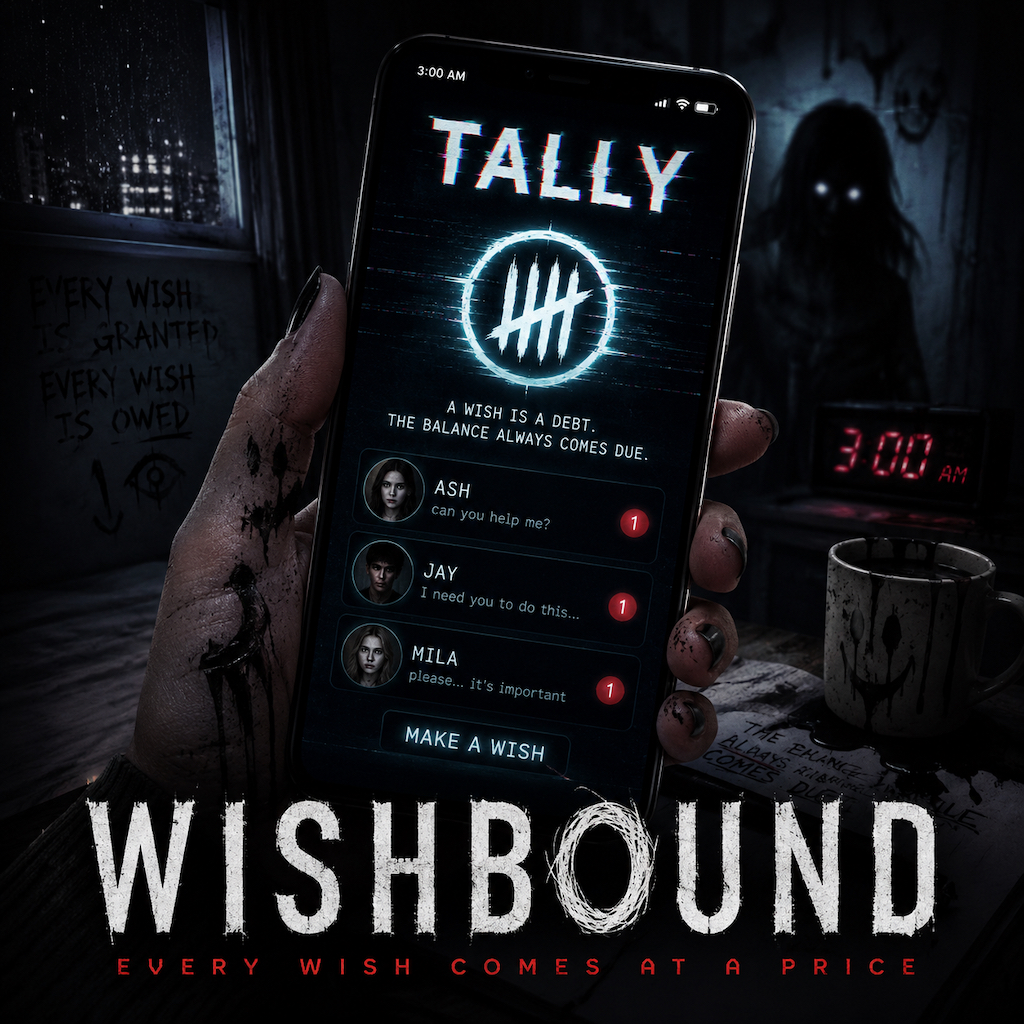
Most of us have entertained the idea at some point. What if there really were an app that could solve our problems? Not the life-changing lottery win or the impossible dream, but the small things that quietly consume us every day. Getting someone to reply to a message. Impressing a friend. Avoiding an awkward conversation. Having just one day when everything goes your way. Wishbound takes that familiar temptation and slowly twists it into something deeply unsettling, crafting a psychological horror experience that feels unnervingly believable because it starts with desires almost everyone has experienced.
The premise is wonderfully simple. At 3am, a mysterious application called Tally installs itself on your phone without permission. It offers to grant wishes, and, remarkably, it delivers exactly what it promises. At least, it appears to. Every favour comes with a cost, every miracle creates a debt, and before long you realise that Tally is keeping score far more carefully than you are. It’s an idea rooted in classic Monkey’s Paw storytelling, but Wishbound presents it through the familiar language of smartphones, messaging apps and late-night anxiety, making its horror feel strikingly modern.
Rather than relying on jump scares or grotesque monsters, Wishbound recognises that the most effective horror often stems from anticipation. Every tap on the screen feels like a decision you might regret in five minutes.
Horror Lives Inside Your Phone
One of Wishbound’s greatest achievements is its complete commitment to its presentation. The entire game unfolds through a simulated smartphone interface, and it never feels like a gimmick. Conversations unfold as realistic text messages, complete with typing indicators, read receipts and delayed replies that feel almost painfully authentic. It becomes surprisingly easy to forget you’re playing a game at all.
As the five-night story progresses, three central relationships evolve depending on your choices. Friends become suspicious. Loved ones drift closer or further away. Conversations subtly shift in tone based on previous decisions, and the game quietly tracks affection, suspicion, sanity and debt behind the scenes. Unlike many branching narratives that loudly announce every consequence, Wishbound trusts players to notice the gradual shifts themselves.
That subtlety gives every conversation weight. A seemingly harmless reply can ripple through future events in unexpected ways, encouraging careful thought rather than impulsive button presses.
Every Wish Has Teeth
The central mechanic revolves around making wishes through Tally. Each request appears straightforward, with a clearly displayed price before you accept. Unlike many games where consequences remain hidden until later, Wishbound makes it clear that every miracle carries a cost. The frightening part is deciding whether the reward is worth paying for.
After making a wish, players enter one of twenty-two unique dream sequences that function as self-contained minigames. These are far more inventive than simple diversions. Each dream reflects the emotional nature of the wish itself, creating surreal scenarios that constantly introduce fresh mechanics. One moment you may be navigating shifting corridors, while the next has you solving abstract puzzles or surviving increasingly tense encounters.
Winning these sequences yields the cleanest possible outcome. Lose, however, and the wish is still fulfilled, only in the most unpleasant way imaginable. This mechanic brilliantly reinforces the game’s core theme. There is never a complete failure, only consequences that grow increasingly uncomfortable. It also prevents frustration from stalling progress. Even poor performance pushes the story forward, albeit down a darker path.
The Room Watches Back
Wishbound constantly reminds players that something exists beyond the phone screen. While most interactions occur on the virtual device, your surroundings gradually respond to the growing debt you’ve accumulated. Lighting subtly shifts. Shadows linger longer than they should. Familiar objects begin to appear strangely distorted.
These environmental changes never overwhelm the experience, yet they become increasingly difficult to ignore. The room itself almost feels like another character, observing your decisions. It creates an uncomfortable sense that nowhere remains truly safe, even outside the phone, where most players instinctively expect reality to resume.
This environmental storytelling proves remarkably effective because it practises restraint. Rather than flooding the player with supernatural events, it slowly erodes normality until every glance away from the phone feels uneasy. The result is psychological horror that remains deeply atmospheric without relying on excessive violence or constant shock tactics.
Meaningful Replay Value
Branching narratives often promise multiple endings, yet many merely recycle minor variations on the same conclusion. Wishbound largely avoids that pitfall by crafting eighteen distinct endings shaped by numerous interconnected systems. Affection, sanity, suspicion and debt all influence how events unfold, while individual choices continue to reshape character relationships throughout each playthrough.
Because every wish carries lasting consequences, returning for another run rarely feels repetitive. Different decisions naturally reveal fresh dialogue, altered dream sequences and increasingly varied character outcomes. The game even remembers previous attempts in subtle ways, reinforcing the unsettling idea that Tally never truly forgets what you owe.
This persistence adds another layer to the psychological tension. Even restarting feels less like wiping the slate clean and more like entering another negotiation with something that already knows you.
Presentation That Sells The Illusion
Visually, Wishbound impresses through intelligent design rather than technical spectacle. Smartphone menus look convincing without becoming cluttered, while character portraits and interface animations sustain immersion throughout the experience. The dream sequences embrace surreal imagery, shifting effortlessly between abstract symbolism and deeply unsettling visual metaphors.
Sound design deserves equal praise. Notification tones become tiny moments of anxiety. Incoming messages suddenly carry genuine emotional weight, while ambient music quietly builds pressure without overwhelming conversations. Silence is used just as effectively, allowing tension to settle naturally between interactions.
Voice acting is absent, yet it never feels necessary. The writing carries conversations with enough confidence that players instinctively imagine each character’s voice. That imagination often proves more powerful than recorded performances could have achieved.
Small Imperfections
Wishbound is not entirely flawless. While the dream minigames remain consistently creative, a handful feel slightly less polished than the rest, and some mechanics prove more frustrating than genuinely challenging. Thankfully, these moments remain relatively rare and are quickly replaced by fresh ideas before repetition has time to settle in.
Some players expecting constant horror may also find the deliberate pacing surprisingly quiet in the opening hours. Wishbound spends considerable time establishing relationships before unleashing its darker twists. For anyone willing to embrace that slower burn, however, the eventual payoff becomes considerably more satisfying.
The story also deliberately leaves certain mysteries unexplained. Whether that ambiguity feels intriguing or frustrating will largely depend on individual taste, although it certainly suits the game’s unsettling atmosphere.
Final Verdict
Wishbound understands something many horror games forget. Fear rarely comes from monsters alone. It grows from ordinary situations that slowly become unfamiliar, from decisions that seemed harmless at the time, and from realising you’ve crossed a line long before you recognised it was there.
Its smartphone presentation feels remarkably authentic. Its branching narrative rewards thoughtful decision-making, and its dream minigames inject welcome variety without distracting from the emotional core of the story. More importantly, it fosters genuine attachment to its characters, ensuring every wish carries emotional weight rather than functioning as little more than a gameplay mechanic.
This is psychological horror that values atmosphere over spectacle and consequence over cheap scares. It trusts players to conjure much of the terror in their own imagination, and in doing so delivers an experience that lingers long after the credits roll. If you’ve ever wondered what you might sacrifice for one perfect day, Wishbound has an answer. Just don’t expect to like it.