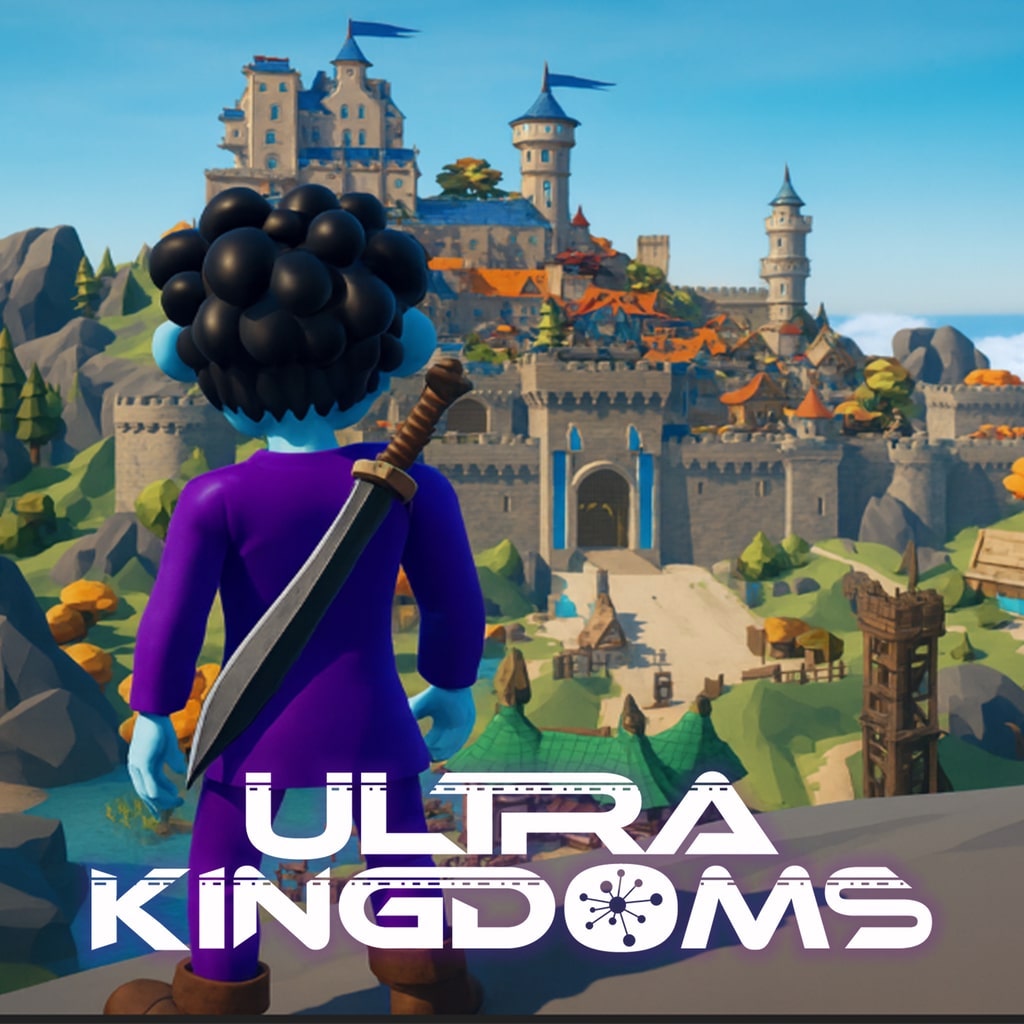
Some games win players over with polished execution. Others impress through sheer ambition, daring to chase ideas far larger than the teams behind them can comfortably realise. Ultra Kingdoms firmly belongs to the second category. It aspires to be more than a traditional MMORPG, presenting itself as a sprawling multiverse where kingdom building, online role-playing, social interaction, strategy, crafting, exploration and metaverse concepts all coexist under one enormous roof.
That ambition deserves recognition, as there is genuine imagination behind the project. Rather than simply asking players to level a character and defeat increasingly powerful enemies, Ultra Kingdoms wants you to create something that feels like your own corner of a living fantasy universe. From constructing settlements to joining guilds and exploring shared online spaces, the game constantly reminds you that it aims to be an evolving platform rather than a straightforward adventure.
Unfortunately, ambition alone cannot carry an online game. The experience often feels like a collection of interesting systems still searching for the smooth, cohesive gameplay that ties everything together. There are moments when its potential shines brightly, but reaching those moments requires patience and a willingness to overlook rough edges that are difficult to ignore.
Building a Kingdom from the Ground Up
The strongest part of Ultra Kingdoms is undoubtedly its construction system. Rather than handing players a pre-built home or a small housing plot, the game encourages genuine creativity by letting settlements grow from modest beginnings into sizeable kingdoms.
Gathering resources gradually unlocks more elaborate structures, while expanding your territory creates a satisfying sense of ownership. Watching empty land transform into walls, towers, marketplaces and bustling communities delivers the same quiet satisfaction found in many successful sandbox builders. It scratches that familiar itch to constantly improve something that belongs entirely to you.
There is also sufficient flexibility for players to develop settlements that reflect their preferences. Some may focus on defensive fortresses, while others build thriving economic centres or visually impressive castles designed to impress visitors. That freedom gives Ultra Kingdoms personality, even if the building interface occasionally feels cumbersome.
Menus can become cluttered, and placing structures is not always as intuitive as it should be. Learning the finer details takes time, and newcomers may find themselves wrestling with controls that never feel entirely natural. Once everything begins to click, however, creating your own kingdom becomes one of the game’s most enjoyable activities.
A World Filled with Possibilities
Outside your settlement lies a vast fantasy landscape of forests, mountains, rivers and scattered points of interest waiting to be explored. The environments are inviting enough to encourage wandering, particularly when dynamic weather rolls across the landscape, shifting the atmosphere.
Exploration rewards curiosity with resource gathering, crafting materials and encounters with hostile creatures. While the world rarely surprises in its design, it succeeds in creating the illusion of a large online realm where something always lies beyond the next hill.
The game also leans heavily into its social identity. Players can meet, chat, join guilds and participate in larger community activities that extend beyond simple questing. When servers are active, the world feels considerably more alive than when travelling alone. Seeing other players build their own settlements reinforces the idea that everyone is contributing to the growth of the wider world.
The multiverse concept is an interesting addition, even if its implementation currently feels more like groundwork for future expansion than a fully realised feature. The framework allows different experiences to coexist within a shared ecosystem, although much of that promise still feels aspirational rather than essential.
Combat That Gets the Job Done
Combat follows familiar MMORPG conventions without introducing many fresh ideas. Players battle hostile creatures in real time while upgrading equipment, unlocking abilities and steadily becoming more capable adventurers.
The action feels responsive enough in smaller encounters, particularly when facing wildlife or standard enemies while exploring. Character progression provides regular upgrades that help maintain motivation, and there is satisfaction in watching your hero gradually grow stronger.
Combat struggles to deliver memorable encounters. Enemy behaviour can become repetitive, while larger battles occasionally feel chaotic for reasons unrelated to strategy. Visual effects sometimes overwhelm the battlefield, making it harder to read incoming attacks or understand exactly what is happening during busy fights.
PvP introduces another layer of excitement, particularly for organised guilds. Coordinated battles over territory can become highlights of the experience, although technical performance sometimes prevents these conflicts from reaching their full potential.
Systems Within Systems
Ultra Kingdoms constantly introduces new mechanics. Resource gathering leads into crafting. Crafting supports construction. Construction feeds kingdom management. Guild systems encourage cooperation, while progression branches into economic development, exploration and competitive play.
On paper, this interconnected design is genuinely impressive. Every activity contributes to another, creating the feeling that no time spent in the game is completely wasted. Even collecting basic resources eventually feeds into much larger long-term goals.
The downside is that the sheer number of systems creates complexity that is not always communicated particularly well. New players are presented with layer upon layer of mechanics before fully understanding the fundamentals. Rather than feeling empowering, the opening hours can become confusing.
Better tutorials and a more gradual introduction would significantly improve accessibility. The game often assumes players already understand concepts that deserve far clearer explanations.
Technical Growing Pains
Perhaps the biggest obstacle facing Ultra Kingdoms is its overall stability. Performance varies considerably depending on hardware, server activity and the number of players in the same area.
Frame rate dips occur more often than they should, particularly around larger settlements or during busy multiplayer events. Loading times can interrupt immersion, while occasional visual glitches remind you that the project still has significant optimisation work ahead.
Network stability also affects the experience. Since so much of the game depends on interacting with other players, inconsistent connections or server hiccups become especially noticeable. None of these issues completely ruin the experience, but together they create friction that slowly erodes enjoyment.
To the developers’ credit, there is clear evidence of ongoing support and updates. Ultra Kingdoms feels like a project still evolving rather than one abandoned after launch. Whether future improvements can fully deliver on its enormous ambitions remains the biggest question.
Presentation
Visually, Ultra Kingdoms offers a colourful fantasy world that balances realism with stylised design. Character models are respectable, environments offer pleasing variety, and weather effects occasionally create genuinely attractive vistas. While it lacks the technical polish of larger MMORPGs, there is enough artistic charm to make exploration worthwhile.
Audio is similarly competent. The soundtrack quietly supports exploration without becoming overly intrusive, while environmental effects help give forests, towns and battlefields their own identity. Sound design rarely steals the spotlight, but it consistently supports the atmosphere the developers are aiming for.
The interface is perhaps the weakest aspect of the presentation. Menus feel cluttered, information is scattered across multiple windows, and navigating the game’s numerous systems can be cumbersome. Streamlining the user experience would immediately make the game feel more welcoming.
Final Verdict
Ultra Kingdoms is a fascinating example of a game reaching for something much bigger than itself. It aims to combine MMORPG progression, kingdom building, sandbox creativity, social interaction and persistent online worlds into one enormous experience. Every now and then, you catch glimpses of exactly what the developers are aiming for, and those moments are genuinely exciting.
The problem is that the journey between those highlights is often uneven. Technical issues, interface frustrations and an overwhelming array of mechanics prevent the experience from reaching the heights its ideas promise. There is enjoyment to be found for patient players who appreciate ambitious sandbox projects, but many others may struggle before discovering the game’s strengths.
If the development team continues to refine performance, simplify onboarding and polish its many interconnected systems, Ultra Kingdoms could evolve into something far more compelling over time. As it stands today, it feels less like a finished kingdom and more like the foundations of one still under construction.