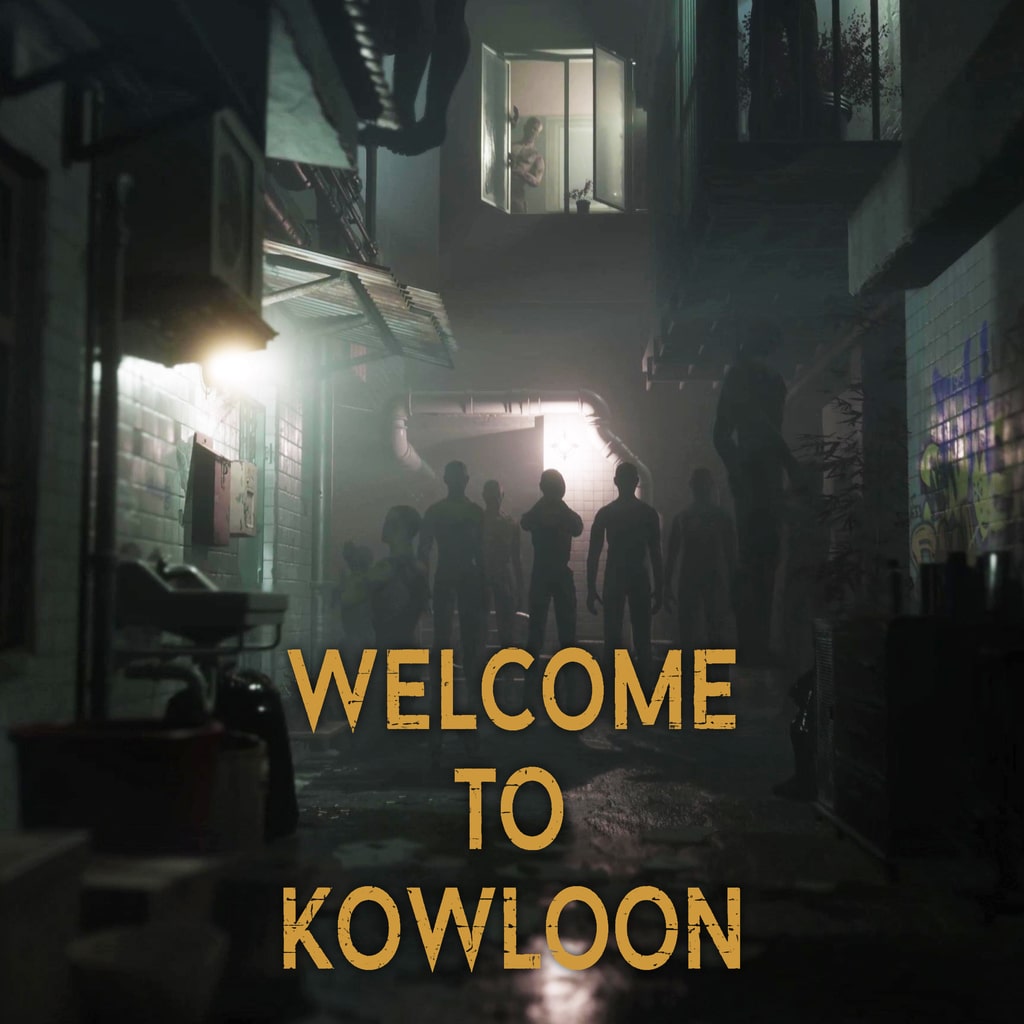
There is something uniquely terrifying about ordinary places becoming something they were never meant to be. Horror does not always need haunted castles, ancient monsters or supernatural dimensions to create fear. Sometimes the most unsettling environments are the ones that feel familiar: an apartment building, a quiet hallway, a neighbour you pass every day without knowing what happens behind their door. Welcome to Kowloon understands this perfectly, taking the simple idea of finding affordable accommodation and twisting it into a deeply unsettling descent into paranoia and dread.
Developed and published by aPenji and aMadHead under the scythedevteam name, Welcome to Kowloon is a short first-person psychological horror experience inspired by the infamous Kowloon Walled City. Rather than focusing on traditional survival-horror combat, the game builds its fear through exploration, atmosphere and the unsettling feeling that something is always watching. What begins as a search for a cheap place to live quickly becomes a nightmare of narrow corridors, strange residents and secrets hidden beneath layers of concrete.
Although its brief runtime prevents it from reaching the heights of longer horror adventures, Welcome to Kowloon succeeds because it understands the importance of atmosphere. It is not a game that constantly throws monsters at the player. Instead, it slowly tightens the pressure until every flickering light, distant noise and half-open doorway becomes a reason to feel uneasy.
The Horror Behind Four Walls
The premise of Welcome to Kowloon is brilliantly grounded. Players take control of a young student searching for an affordable place to live, who eventually discovers an opportunity that seems almost too good to be true. A cheap room in the dense maze of Kowloon appears to offer the perfect solution, but the reality behind those walls is far more disturbing than expected.
The opening moments deliberately establish a sense of normality. You are not immediately plunged into chaos or chased through dark corridors. Instead, the game lets you explore your surroundings and become familiar with the environment. This slower approach makes the eventual horror far more effective, as the player first understands the location as a home before seeing it transform into something far more sinister.
The apartment complex itself becomes the true antagonist. Every corridor feels cramped, every room uncomfortable, and every corner seems to hide something that should not be there. The walls seem to close in around you, creating a constant sense of isolation that perfectly captures the suffocating reputation of Kowloon Walled City.
As you explore, you encounter residents who seem increasingly disconnected from reality. Some moments are unsettling because they are so human, while others push into disturbing territory as the line between ordinary people and something much darker begins to blur.
A City That Feels Alive
The greatest achievement of Welcome to Kowloon is undoubtedly its environmental design. The developers have created an incredibly convincing depiction of urban decay, filling every hallway with small details that make the location feel lived-in. Damp walls, exposed wiring, flickering lights and cluttered rooms combine to create an environment that feels both realistic and deeply uncomfortable.
The VHS-style visual filter plays a major role in shaping the game’s identity. The distorted image quality, colour separation and artificial camera effects give the entire experience the feeling of watching a forgotten recording that was never meant to be discovered. While some players may find the filter distracting, it works extremely well with the game’s themes, adding another layer of uncertainty to everything you see.
The presentation effectively masks the limitations of a smaller indie production. Rather than relying on expensive visual effects, Welcome to Kowloon uses atmosphere and clever design choices to create fear. A simple hallway becomes terrifying because of the way it is lit, the sounds echoing through it and the knowledge that something could appear at any moment.
The sound design deserves equal praise. The game rarely relies on traditional music, instead filling the environment with unsettling ambient noise. The buzz of ageing electrical systems, distant footsteps, dripping water and strange movements behind walls create a near-constant sense of tension. Often, what you hear is more frightening than what you see.
Walking Through Fear
As a walking-simulator-style horror experience, Welcome to Kowloon focuses heavily on exploration and environmental storytelling. The gameplay loop is intentionally simple. Players search rooms, discover clues, collect items and unlock new areas while slowly uncovering what has happened inside the building.
This simplicity works well because it keeps attention on the atmosphere. The game does not interrupt its horror with complicated mechanics or unnecessary systems. Instead, it allows players to become fully immersed in the environment and the mystery surrounding the apartment complex.
However, this approach also highlights some of the game’s limitations. The puzzles are extremely straightforward, often requiring players to find keys, locate objects or complete basic environmental tasks. These moments rarely provide much challenge and sometimes feel more like obstacles between the player and the next story reveal.
For a game so focused on creating a believable location, some puzzle solutions can also feel slightly disconnected from the world. Searching for a hidden key or activating a series of switches is familiar territory for the genre, but it does not always match the otherwise realistic setting. The strongest moments come when the game simply lets the environment speak for itself.
Fear That Burns Bright But Briefly
The biggest issue with Welcome to Kowloon is its length. A typical playthrough takes about an hour, making the experience more comparable to a short horror film than a full adventure. This is not necessarily a problem, as many excellent horror experiences thrive on being focused and contained, but it does limit replay value.
Once the mystery has been solved, there is little incentive to return. There are no major alternate paths, additional challenges, or meaningful reasons to explore the building again. The first experience is undoubtedly the strongest, as fear stems from uncertainty, and once those secrets are revealed, much of the tension disappears.
The game also occasionally falls back on more predictable horror techniques. The slow-building atmosphere is genuinely impressive, but some later moments rely on sudden appearances and loud audio effects. These encounters are effective at delivering a quick shock, but they feel less interesting than the psychological tension established earlier.
Welcome to Kowloon. It is at its best when it allows players to imagine what might be waiting around the next corner. The unknown is far more frightening than anything the game can directly show.
The Verdict
Welcome to Kowloon is a short but memorable horror experience that proves atmosphere can be as powerful as traditional gameplay mechanics. Scythedevteam has created a beautifully grim interpretation of one of the world’s most fascinating locations, transforming cramped apartments and forgotten corridors into a place of genuine unease.
Its simple puzzles, limited replay value and brief runtime prevent it from becoming a genre masterpiece, but those weaknesses are balanced by incredible environmental design, excellent sound work and a constant sense of discomfort that lingers long after the credits roll. This is a game that understands horror is not always about what attacks you. Sometimes it is about the place you thought you could call home.
For horror fans seeking a short, atmospheric experience that can be completed in one sitting, Welcome to Kowloon is well worth exploring. Just remember that cheap rent often comes with a hidden cost.