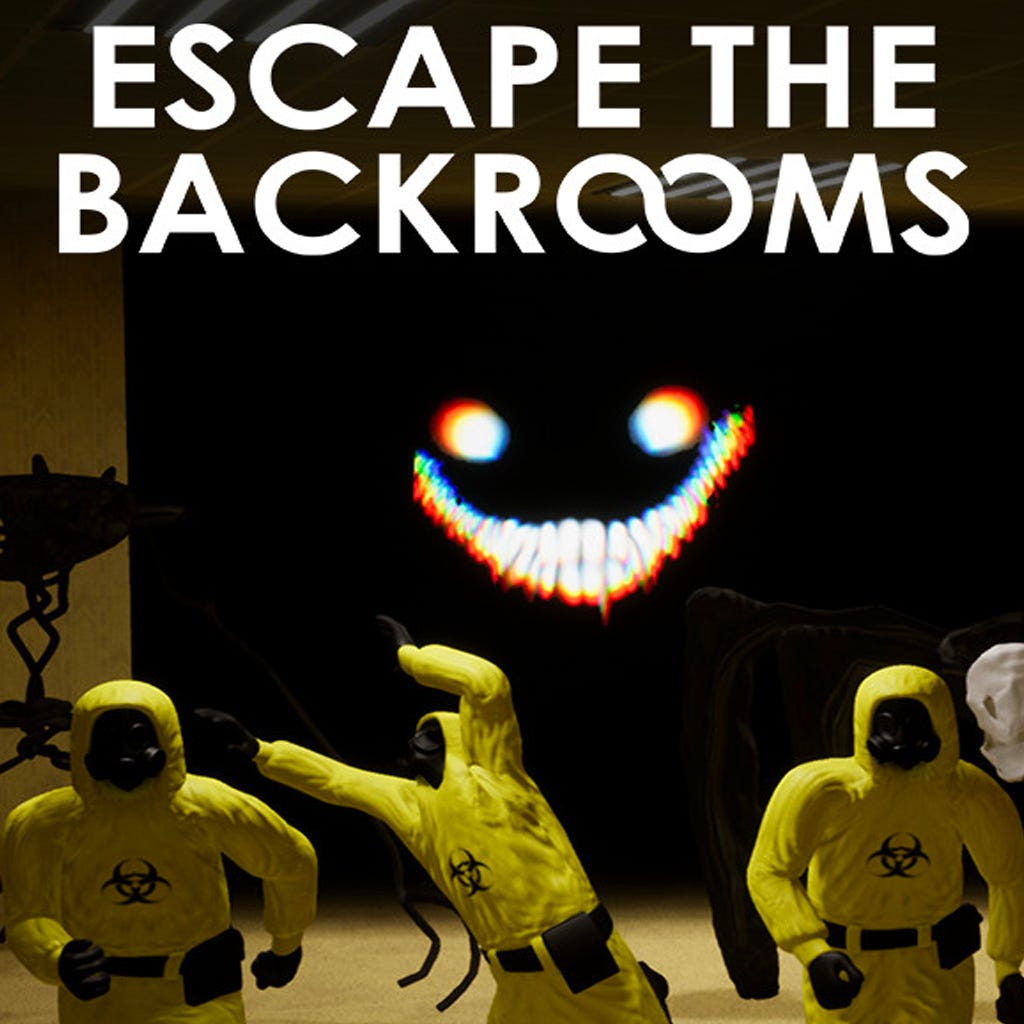
There is something uniquely unsettling about places that are not supposed to exist. A deserted office corridor, an empty swimming pool, or a forgotten underground car park should be familiar spaces, yet when stripped of human presence, they become strangely uncomfortable. The Backrooms phenomenon has built its entire identity around this feeling, transforming ordinary locations into endless nightmares where the biggest threat is not only what might be hiding around the corner but also the overwhelming sense that reality itself has gone wrong. Escape the Backrooms understands this concept better than most adaptations, taking the viral internet legend and turning it into a genuinely tense survival experience.
Developed by Fancy Games with support from Blackbird Interactive and published by Secret Mode, Escape the Backrooms brings the popular creepypasta-inspired horror adventure to console audiences, with a strong focus on atmosphere, exploration, and cooperative survival. Rather than relying on constant combat or predictable horror tropes, the game creates fear through uncertainty. You never quite know what lies ahead, whether the next doorway leads to safety, another puzzle, or an encounter with something that absolutely should not exist.
The result is a horror experience that feels less like a traditional haunted house and more like being trapped in a corrupted version of reality. It is not always the monsters themselves that create the strongest moments. Sometimes it is the silence, the endless, empty corridors, or the sudden realisation that your friends are no longer close enough to hear you.
Falling Through Reality
The premise of Escape the Backrooms is wonderfully simple. Somehow, you have broken through the boundaries of reality, slipping through the world like a glitch in existence before landing in the infamous Backrooms. There is no heroic mission, no grand explanation, and no comforting introduction. You are simply somewhere you should not be, surrounded by endless architecture that feels familiar yet completely wrong.
Your journey takes you through more than 30 levels inspired by the wider Backrooms mythology. Each location introduces a new environment, new rules, and new dangers to overcome. The iconic opening area, filled with endless yellow wallpaper, buzzing fluorescent lights, and damp carpets, immediately captures the unsettling charm of the original concept. Walking through those repetitive rooms creates a strange mix of curiosity and anxiety, as every identical hallway feels as if it could hide either an escape route or something far worse.
As you progress, the environments become increasingly creative. One moment you are navigating empty office spaces, and the next you are exploring abandoned underground areas, eerie pool complexes, or surreal locations that feel completely detached from reality. This variety helps prevent the experience from becoming a simple walking simulator, with each new area offering its own puzzles, hazards, and survival challenges.
Exploration, Fear, and Survival
At its core, Escape the Backrooms is about learning the rules of each environment. Each area presents a distinct challenge, requiring players to pay close attention, experiment, and work together to find a way forward. Some sections involve searching for hidden objects, while others require solving environmental puzzles or understanding the behaviour of the creatures stalking the halls.
The game does an excellent job of making exploration feel dangerous. Simply moving through a level becomes a tense decision, as you never know what might trigger the next threat. The lack of traditional combat keeps the pressure high, forcing players to rely on awareness, teamwork, and quick thinking rather than fighting their way through every encounter.
The various entities are where the game truly embraces its horror potential. Each creature has distinct behaviours and requires a different strategy to survive. Some threats rely on stealth and patience, while others demand quick reactions and careful movement. Learning these patterns becomes a major part of the experience, especially when entering unfamiliar areas where every sound could signal danger.
The Power of Playing Together
While Escape the Backrooms works as a solo horror experience, it is at its best when played with friends. The cooperative mode transforms the game from a lonely nightmare into a chaotic survival adventure where communication is essential. Up to four players can explore together, but the Backrooms are designed to constantly test that teamwork.
The inclusion of proximity voice chat is one of the game’s smartest design decisions. Hearing your teammates’ voices fade as you move deeper into an unfamiliar corridor creates a genuine sense of isolation. You might still know your friends are nearby, but not being able to hear them instantly makes every step feel more dangerous.
This mechanic becomes even more effective because some enemies can hear players. A sudden scream, a panicked warning, or even careless conversation can attract unwanted attention. Some of the funniest and most terrifying moments arise naturally from these situations, as a simple mistake turns into a desperate escape attempt with everyone shouting directions and trying to survive.
The cooperative experience feels unpredictable in a way that many horror games struggle to capture. The fear does not come only from scripted events but from the reactions of real players trying to survive together.
A Few Cracks in the Walls
Despite its strengths, Escape the Backrooms has some limitations. With more than 30 levels, the quality and pacing can occasionally vary. Some areas are incredibly creative and memorable, while others rely too heavily on long stretches of exploration that can feel repetitive. The mystery is part of the appeal, but certain sections could benefit from tighter pacing and more consistent challenge design.
The visual presentation is also slightly uneven across platforms. The darker environments and heavy atmospheric effects are fantastic for creating tension, but they can occasionally make important details hard to notice. On smaller screens, particularly during handheld play, spotting distant threats or environmental clues can be frustrating.
However, these issues rarely detract from the overall experience. The atmosphere remains strong, and the feeling of stepping into an unknown world continues to carry the adventure forward.
Final Verdict
Escape the Backrooms is one of the strongest examples of how internet folklore can be transformed into a genuinely engaging video game. Fancy Games has taken a simple online horror concept and expanded it into a tense, atmospheric adventure featuring memorable locations, clever survival mechanics, and some of the best cooperative horror moments in recent years.
Its greatest achievement is recognising that fear does not always stem from what you see. Sometimes it comes from what you cannot see, such as footsteps in the distance or the terrifying possibility that you might be completely alone in an endless world. While some levels suffer from uneven pacing and repetitive exploration, the overall package remains incredibly compelling.
Whether you are brave enough to explore alone or prefer to experience the chaos with friends, Escape the Backrooms offers an unforgettable descent into the unknown. It is a brilliant example of modern horror design, proving that an empty hallway can be far more frightening than a room full of monsters.