Few strategy games capture pressure quite like Frostpunk. Since the series began, 11 bit studios has excelled at placing players in impossible situations and asking them to make impossible decisions. It has never been about building the biggest city or creating the most efficient production chain. It has always been about survival, compromise, and the uncomfortable realisation that every solution creates a new problem. Frostpunk 2 expanded that philosophy on a much larger scale, shifting the focus from a single settlement to an evolving society shaped by competing ideologies and political power struggles.
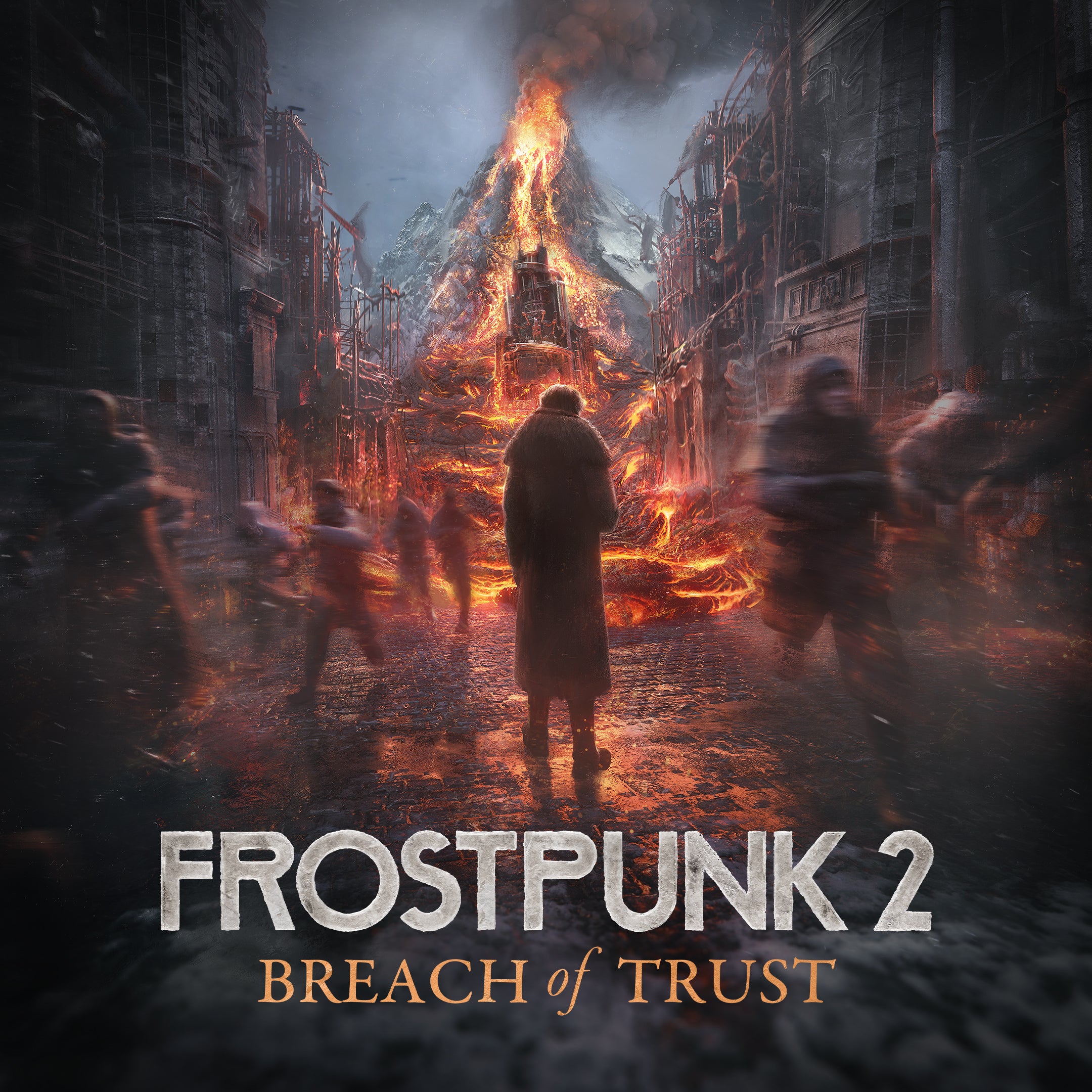
Breach of Trust builds on that foundation and tightens the screws once again. Rather than offering a sprawling sandbox full of limitless possibilities, this expansion presents a focused narrative centred on New Edinburgh, a city facing destruction from a threat entirely different from the frozen apocalypse that defined the series. Here, the danger comes not from ice and snow, but from fire and ash. It is a fascinating shift in tone that feels fresh while remaining unmistakably Frostpunk.
A City Built on a Ticking Time Bomb
The premise immediately grabs your attention. New Edinburgh has prospered by harnessing geothermal energy, drawing power from beneath the earth to fuel its survival. Unfortunately, years of reckless extraction have destabilised the volcanic system beneath the city. The ground begins to shake. Cracks spread across districts. Citizens panic. The leadership collapses.
You assume the role of the First Citizen after the Old Captain’s removal, inheriting a city teetering on the edge of catastrophe. Unlike many city-building campaigns that gradually raise the stakes, Breach of Trust begins with a sense of impending doom already hanging over every decision. You know disaster is coming. The question is whether your society can hold itself together long enough to survive it.
What follows is one of the strongest narrative scenarios the series has produced. Frostpunk has always been at its best when forcing players to weigh practical necessity against moral responsibility, and Breach of Trust repeatedly places you in situations with no perfect answer. Every law, every policy and every compromise feels significant because the consequences are immediate and tangible.
Trust Is Your Most Valuable Resource
The expansion’s defining mechanic is the new Vote of Trust system. On paper, it sounds simple. At regular intervals, your leadership is put to a formal vote. If enough factions and communities lose faith in your ability to govern, your rule ends immediately.
In practice, this transforms the game’s structure. Approval ratings are no longer just abstract numbers in a menu. Every percentage point suddenly matters. Every decision carries political consequences. You are no longer simply balancing food production, housing and healthcare. You are balancing personalities, ideologies, grudges and expectations.
This creates a different kind of pressure from the base game. Resource shortages are still dangerous, but public perception becomes equally important. Sometimes you know exactly what needs to be done to secure your city’s future, yet implementing that solution could alienate a critical faction whose support you desperately need.
The result is a constant sense of instability. You are never fully in control. Even when the city appears stable, the next vote looms on the horizon like a storm cloud. It is a brilliant mechanic that reinforces the expansion’s central themes and generates genuinely stressful moments.
Fire, Ash and Constant Adaptation
The environmental hazards introduced in Breach of Trust are among the franchise’s most memorable challenges. Tremors strike without warning, damaging infrastructure and disrupting carefully planned districts. A production chain that seemed perfectly organised moments earlier can suddenly collapse under the weight of structural damage. Repairs become an ongoing priority, forcing players to maintain flexibility rather than relying on rigid optimisation.
The true standout, however, is Volcano Night. When volcanic ash begins to blanket the city, everything changes. Air quality plummets. Food production suffers. Illness spreads rapidly through the population. Visibility drops as the sky darkens beneath layers of ash and smoke. The atmosphere during these events is extraordinary, creating a feeling of dread that rivals the worst blizzards from previous games.
What makes these disasters particularly effective is how they force adaptation. Strategies that work during periods of stability may collapse once volcanic activity intensifies. The expansion constantly pushes players to think several steps ahead while reacting to emergencies unfolding in real time.
The Aurora Question
One of the expansion’s most compelling additions is Aurora, an independent colony on a frozen lake beyond New Edinburgh. Aurora represents hope, security and a possible future. It is also a political problem waiting to happen.
Managing relations with the colony adds a compelling layer of geopolitical strategy. You can approach Aurora as a trusted partner, establishing mutually beneficial trade and fostering cooperation. Alternatively, you can pursue more aggressive methods, exerting pressure through intimidation, exploitation or outright conquest.
The beauty of this system lies in how naturally it fits within Frostpunk’s moral framework. None of these choices feel entirely comfortable. Every approach carries benefits and drawbacks, forcing you to consider not only what is effective but also what kind of leader you are becoming in the pursuit of survival.
Aurora becomes more than just another settlement on the map. It evolves into a reflection of your leadership philosophy and often serves as the source of some of the expansion’s most difficult decisions.
An Atmosphere Thick Enough to Breathe
Visually, Breach of Trust is stunning. The transition from endless white landscapes to ash-covered cityscapes creates a striking contrast that sets this expansion apart from previous Frostpunk content. Rivers of molten lava glow beneath cracked terrain. Smoke rises across the horizon. Buildings stand silhouetted against skies stained orange and grey.
Despite introducing an entirely different environmental threat, the expansion never loses the bleak atmosphere that defines the series. If anything, the volcanic setting feels even more oppressive at times. There is something uniquely unsettling about watching a city slowly suffocate beneath falling ash as the ground trembles beneath its foundations.
The sound design deserves equal praise. Low rumbles echo through the city long before major tremors arrive. Cracking earth, distant eruptions and panicked crowds combine to create a constant sense of unease. Piotr Musiał’s score once again delivers exceptional work, weaving melancholy and tension together in a way few strategy games can match.
Not Quite Perfect
As strong as Breach of Trust is, a few limitations prevent it from achieving absolute greatness. The most noticeable issue is the scenario’s restrictive nature. The focused narrative creates excellent tension, but it also limits experimentation. Certain technological paths are intentionally restricted, reducing the sense of freedom found elsewhere in Frostpunk 2. While this serves the story, it may frustrate players who enjoy developing highly customised solutions.
Some of the new factions also lack the distinct identities that make the best political groups in the base game so memorable. While they function effectively within the narrative, a few feel more like variations on familiar themes than truly unique ideological forces.
Replay value remains solid thanks to branching decisions and alternative political outcomes, but it does not quite match the endless strategic flexibility offered by the game’s broader sandbox systems.
Final Verdict
Frostpunk 2: Breach of Trust is a superb expansion that demonstrates exactly why 11 bit studios remains one of the strongest developers in the strategy genre. By replacing the frozen catastrophe with a volcanic disaster, it introduces a fresh form of environmental terror without sacrificing the political tension and moral complexity that define the series.
The Vote of Trust mechanic is a brilliant addition that turns leadership into a constant balancing act, while Aurora offers meaningful strategic choices that linger long after the scenario ends. Combined with exceptional atmosphere, strong storytelling and relentless pressure, the expansion delivers some of the most memorable moments Frostpunk 2 has produced so far.
Its more restrictive structure and a handful of underdeveloped faction concepts prevent it from surpassing the very best content the series has offered, but these are relatively minor complaints within an otherwise outstanding package.