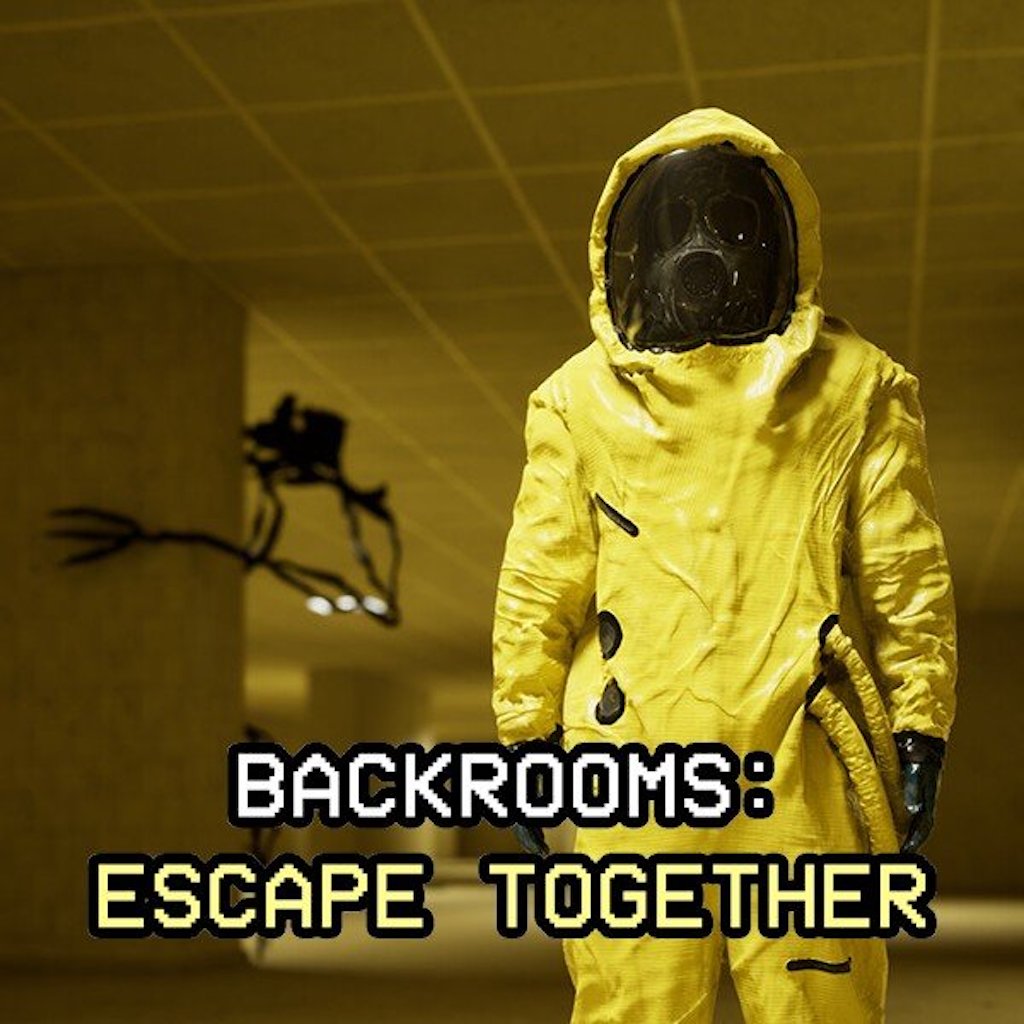
The Backrooms have become one of the internet’s most enduring modern horror myths. What began as a single unsettling image of yellow wallpaper, stained carpets, and endless fluorescent lighting has evolved into an entire universe of liminal terror. Countless games have tried to capture that feeling over the years, but many have settled for cheap scares and familiar horror clichés. Backrooms: Escape Together takes a different approach. Rather than simply borrowing the aesthetic, it fully embraces the atmosphere, uncertainty, and psychological discomfort that made the concept so compelling in the first place.
Developed by Triach Studios, this cooperative survival horror experience drops players into an ever-shifting nightmare where escape is never guaranteed. Whether played alone or with up to five friends, the game delivers a remarkably effective blend of exploration, puzzle-solving, teamwork, and raw survival. While still in Early Access, what is already here is impressive enough to stand among the strongest multiplayer horror experiences currently available.
A World That Doesn’t Want You There
The story setup is deliberately simple. You and your fellow researchers are trapped in the Backrooms after a catastrophic elevator malfunction. Your objectives are straightforward: survive, explore deeper levels, and somehow find a way out.
What follows is not a traditional narrative filled with lengthy cutscenes or exposition dumps. Instead, the game embraces environmental storytelling. Every corridor, abandoned room, broken workstation, and discarded note contributes to the mystery. The Backrooms themselves become the story.
This approach works brilliantly because uncertainty is the entire point. The less you understand, the more unsettling the experience becomes. The game constantly encourages questions without rushing to provide answers. What happened to previous explorers? How deep does this place go? What exactly are the creatures stalking the halls? The lack of certainty creates a lingering unease that follows you throughout every expedition.
The Horror of Being Lost
Many horror games rely heavily on monsters. Backrooms: Escape Together recognises that the environment itself can be terrifying. The procedural generation system ensures that every attempt feels unpredictable. Rooms, corridors, puzzle locations, and encounters constantly shift. Familiarity never fully takes hold because the game refuses to allow players complete mastery of their surroundings. This creates a powerful sense of vulnerability. Even after several hours, it remains possible to become hopelessly disoriented.
Each level introduces distinct visual themes and gameplay concepts while maintaining the oppressive atmosphere that defines the Backrooms. Some areas focus heavily on navigation, while others introduce environmental hazards, puzzles, or particularly dangerous entities. The variety prevents repetition from setting in too quickly and keeps players wondering what nightmare awaits around the next corner.
Procedural generation is often used as a shortcut for content creation, but here it serves the game’s central theme. The Backrooms should feel endless, unpredictable, and impossible to fully map. Triach Studios clearly understands that.
Friends Make Everything Worse
The standout feature is undoubtedly the proximity-based voice chat system. Countless multiplayer horror games include voice communication, but few integrate it as effectively as Backrooms: Escape Together. Conversations naturally become part of the gameplay. Players must communicate to solve puzzles and coordinate movement, but staying together is not always possible.
As teammates separate, voices fade realistically through walls and down hallways. Hearing someone speak from another room feels surprisingly natural. More importantly, hearing them panic feels terrifying.
The game generates countless memorable moments through this system alone. One player might volunteer to investigate a suspicious noise while the rest wait nervously behind. Minutes later, distant screams echo through the maze before abruptly falling silent. Those moments stick with you.
Even better, the voice system often creates accidental comedy. Horror and humour have always shared a close relationship, and the inevitable panic of watching a friend sprint blindly into danger can be genuinely hilarious. The balance between tension and laughter makes long sessions incredibly enjoyable.
Survival Through Cooperation
Beneath the atmosphere lies a surprisingly substantial survival game. Exploration requires resource management, puzzle-solving, and careful planning. Players must search environments for useful items while tracking limited supplies. Inventory space remains restricted, forcing difficult decisions about what to carry and what to leave behind.
Puzzles are generally well designed and encourage teamwork without becoming frustrating. Most rely on observation and communication rather than obscure logic. They offer welcome moments of problem-solving between the game’s more nerve-racking encounters.
Encounters with entities pose the greatest challenge. The creatures roaming the Backrooms are not merely scripted obstacles. They react dynamically to player behaviour, movement patterns, and environmental conditions. Some require stealth. Others demand quick thinking and rapid escapes. The unpredictability keeps encounters fresh and ensures players never feel completely safe.
Unreal Engine 5 at Its Best
Visually, Backrooms: Escape Together is stunning. Unreal Engine 5 enables the developers to create environments that feel disturbingly real. The fluorescent lighting casts harsh shadows across endless corridors. Surfaces reflect light naturally. Every room feels tangible and believable despite its surreal design.
The environmental detail is particularly impressive because much of it appears deliberately mundane. Ordinary office furniture, stained carpets, industrial hallways, and forgotten storage rooms become deeply unsettling through presentation alone.
The sound design deserves equal praise. The constant electrical hum of fluorescent lights becomes almost hypnotic after extended play sessions. Distant footsteps trigger immediate anxiety. Random noises from unseen locations create constant uncertainty.
Most importantly, the game knows when to embrace silence. Some of its most effective scares occur when absolutely nothing happens. Those quiet stretches allow players’ imaginations to do much of the work.
Early Access Growing Pains
Despite its strengths, Backrooms: Escape Together is not flawless. Procedural generation occasionally creates pacing issues. Some runs feel perfectly balanced, while others can lead to excessive wandering before meaningful progress. The randomness usually enhances the experience, but there are moments when it feels less carefully curated than it could be.
Visual repetition can also become noticeable during longer sessions. While individual levels introduce unique themes, certain environmental elements inevitably recur. This is understandable given the game’s procedural nature, but it can occasionally dilute the impact of exploration.
Solo players may also find the experience less compelling. The game remains perfectly playable alone, but much of its magic comes from shared panic, communication, and cooperation. Without friends, some of the most memorable moments simply cannot occur. Fortunately, these issues feel more like limitations of the concept than major design failures.
Final Verdict
Backrooms: Escape Together succeeds because it captures the essence of what makes the Backrooms fascinating. It is not simply about monsters lurking in dark hallways. It is about isolation, uncertainty, and the unsettling feeling of existing somewhere that should not exist.
Triach Studios has combined strong procedural generation, outstanding audio design, immersive proximity chat, and a genuinely unsettling atmosphere into a multiplayer horror experience that feels distinct from its peers. The game creates stories naturally through player interaction rather than relying on scripted spectacle, and those stories often become the moments players remember most.
There are still rough edges to smooth out during Early Access. Some procedural layouts can drag, visual repetition occasionally appears, and solo play lacks the same magic as cooperative sessions. Even so, the foundation is remarkably strong.
For horror fans, content creators, and groups of friends searching for their next unforgettable co-op experience, Backrooms: Escape Together delivers something genuinely special. It captures the strange terror of internet folklore and transforms it into a deeply immersive multiplayer nightmare that is difficult to put down and even harder to forget.