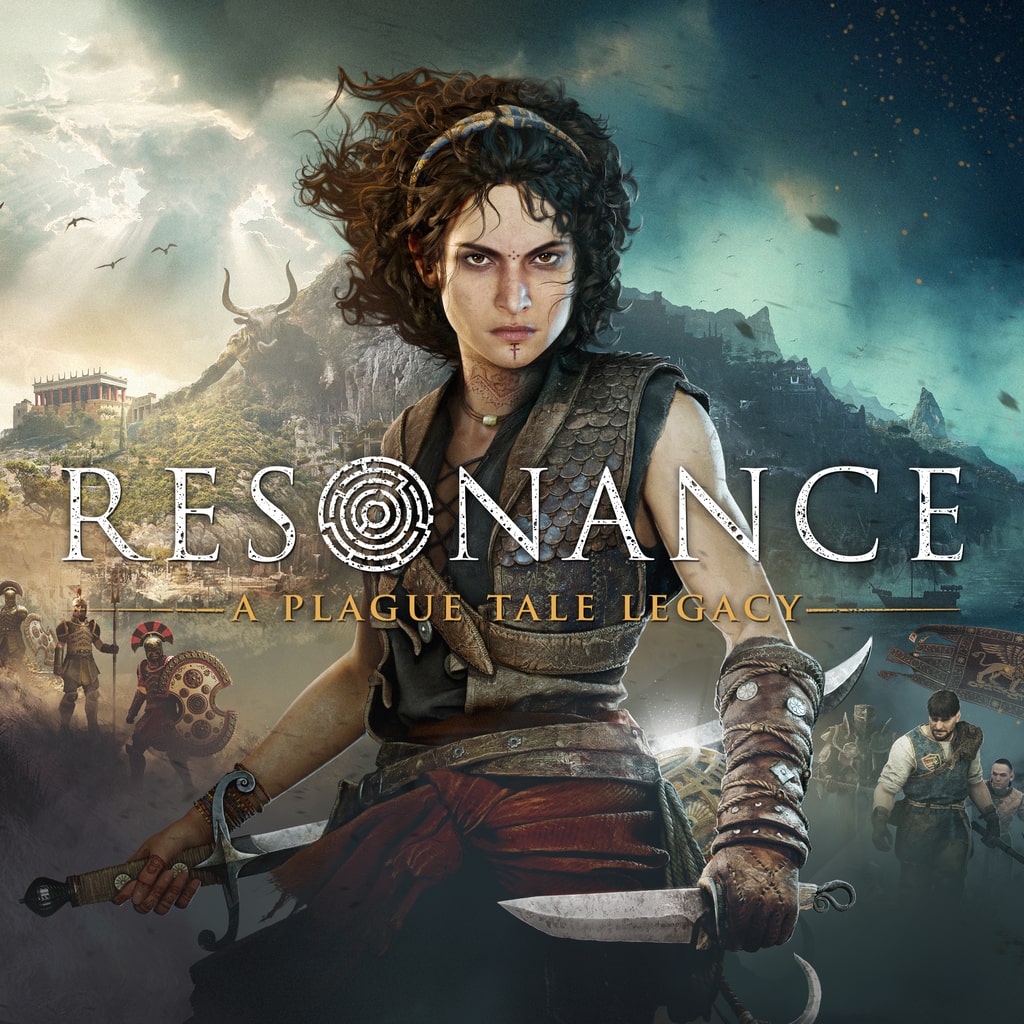
Asobo Studio has always excelled at grounded, emotional storytelling wrapped in historical myth, but Resonance: A Plague Tale Legacy feels like a deliberate shift in tone rather than a gentle continuation. Instead of following Amicia and Hugo, the focus shifts to Sophia, a character previously defined by pragmatism and survival instinct rather than vulnerability. Set fifteen years before A Plague Tale: Requiem, the game moves the series into the sun-bleached ruins of Minotaur’s Island, where Mediterranean beauty collides with ancient curse mythology. The result, at least from early previews, is a world that feels less about hiding from horror and more about confronting it head-on.
From Helplessness to Control
That shift in perspective alters everything about the series’ emotional language. Whereas earlier entries built tension through helplessness, Resonance seems to build it through control under pressure. Sophia is no longer a fragile figure navigating overwhelming threats but a capable fighter navigating hostile systems. Early impressions suggest a gameplay loop that rewards aggression and precision, where timing a counter or redirecting an enemy into environmental traps is as important as stealth. The emotional tone shifts from fear of inevitability to managing chaos, giving the game a very different identity even when familiar themes remain.
Combat Reforged Around Momentum
Combat is clearly the most significant structural evolution. Sophia’s fighting style is built around agility and responsiveness, with a parry system that encourages close engagement rather than avoidance. Encounters are designed for fluid movement, letting players chain attacks, deflect blows, and manipulate positioning using a grappling hook that serves both as a traversal tool and a means of combat control. Enemies can be yanked out of formation or thrown into hazards, turning arenas into reactive spaces rather than static battlegrounds. This creates a sense of momentum that feels closer to modern cinematic action games than the slow, tension-heavy stealth of the series’ past.
Light, Time, and the Dual Timeline Puzzle Layer
Even with this shift towards action, Resonance does not abandon puzzle-driven design. The Minoan Sphere introduces a light-manipulation system at the core of exploration. Players redirect beams through layered ancient architecture, unlocking paths that often span two timelines. The inclusion of a playable Minoan past, centred on Theseus, is one of the franchise’s most ambitious structural ideas. Actions in one era influence the layout and possibilities of the other, turning exploration into a layered cause-and-effect system that blends mythology with environmental storytelling.
The Island That Watches Back
Atmosphere remains one of Asobo Studio’s strongest assets, and Minotaur’s Island feels like a natural evolution of that strength. The Mediterranean setting is bright and striking, yet it is constantly undermined by a creeping sense of being watched and unease. Rather than overwhelming swarms, the threat here feels more psychological, embodied in an unseen presence that adapts to player behaviour. It creates a slower, more deliberate tension, where hesitation becomes dangerous in ways that feel personal rather than systemic. That shift from external horror to psychological pressure could become one of the game’s defining ideas.
A Risky Redefinition of Identity
Still, the most important question about Resonance is whether this new identity risks distancing itself too far from what defined the series. The original Plague Tale games were powerful precisely because of their vulnerability. You were not meant to feel powerful, only determined to survive. Sophia’s expanded capabilities alter that emotional contract. Early previews suggest the tension remains, but it is now built on unpredictability and escalation rather than helplessness. That is a fundamentally different design philosophy, and its success will depend entirely on execution.
Final Impressions: Ambition Over Safety
What is clear, however, is that Asobo is not playing it safe. The dual-timeline structure, environmental interactivity, and a more expressive combat system all point to a studio willing to challenge its own formula. If these systems interlock smoothly, Resonance could become one of the most interesting narrative-action hybrids of its generation. If they do not, it risks becoming a game caught between two identities, unsure whether it wants to be a stealth-driven tragedy or a mythic action-adventure.
Either way, Resonance: A Plague Tale Legacy is shaping up to be a pivotal entry in the series. It is not simply expanding the universe; it is actively reshaping how that universe plays and feels. That kind of ambition rarely lands without friction, but it also produces the most memorable risks in modern game design.