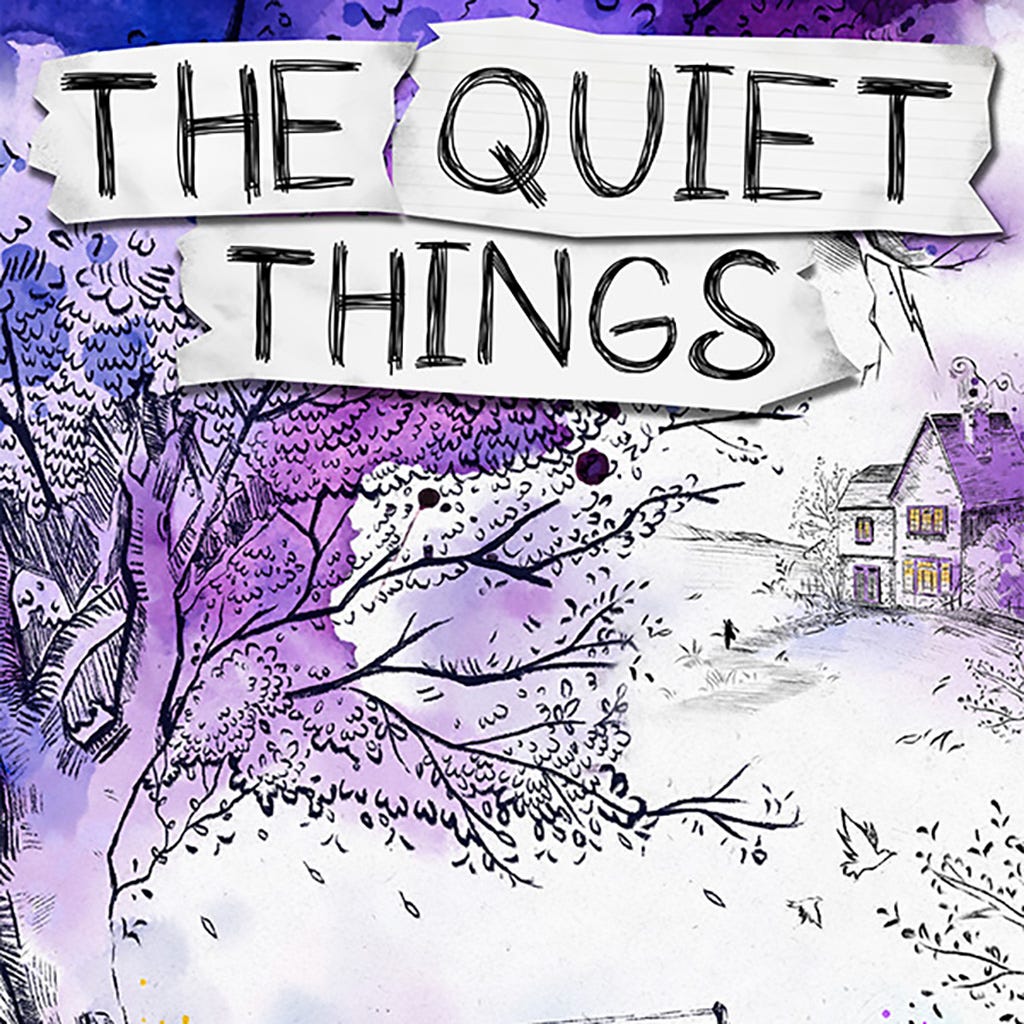
Video games have matured into a medium capable of telling stories that film, television, and literature cannot tell in quite the same way. The Quiet Things is a perfect example of that potential. Developed and published by Silver Script Games, this autobiographical narrative adventure is based on the real childhood diaries of creator Alyx Jones. Rather than constructing a fictional drama inspired by personal experiences, the game draws directly on lived memories, creating an intimate and often devastating exploration of adolescence, trauma, and survival.
Set in South England during the late 1990s and early 2000s, players follow a young girl named Alice as she attempts to navigate a fractured upbringing shaped by abuse, isolation, and mental health struggles. The subject matter is unquestionably heavy. The game explores emotional, physical, and sexual abuse, grooming, depression, self-harm, and suicide. These themes are approached with care and sensitivity, but they remain difficult to confront. This is not a game designed for casual escapism after a long day. It is a game that demands emotional engagement and rewards those willing to give it their full attention.
What makes The Quiet Things remarkable is not simply the subject matter it tackles, but the authenticity with which it presents it. There is an honesty running through every scene that feels impossible to fake. From the opening moments, it becomes clear that this is more than a story. It is a testimony.
Piecing Together a Life
The Quiet Things unfolds through exploration rather than traditional storytelling devices. Players move through carefully crafted environments, examining objects, uncovering diary pages, and triggering memories that gradually reveal Alice’s experiences. The narrative does not present itself as a neat, chronological package. Instead, it emerges through fragments, much like memory itself.
This approach creates a powerful sense of participation. Rather than sitting back and watching events unfold, players actively reconstruct Alice’s past piece by piece. A photograph tucked away in a bedroom drawer can carry tremendous emotional weight. A discarded note or an everyday household object can unlock memories that completely change your understanding of earlier events. The game trusts players to make connections and draw conclusions without constantly explaining itself.
That trust pays off. The fragmented structure mirrors the way people often revisit difficult memories in real life. Certain moments remain vivid, while others are hazy and incomplete. As the pieces begin to come together, the emotional impact becomes increasingly difficult to ignore. The Quiet Things transforms exploration into something deeply personal, allowing players to feel they are uncovering truths rather than simply being told them.
A Story Rooted in Reality
Many narrative games strive for emotional authenticity, but few achieve it as naturally as The Quiet Things. Knowing that the story’s foundation comes directly from Alyx Jones’ real diaries fundamentally changes how every scene is perceived. There is a vulnerability here that cannot be manufactured by clever writing alone.
Alice feels less like a traditional protagonist and more like a real person sharing painful memories. Her emotions are messy, contradictory, and entirely believable. Moments of fear sit alongside moments of hope. Small victories feel meaningful because they arise from genuinely difficult circumstances. The game never presents Alice as a flawless hero overcoming adversity. Instead, it portrays someone doing their best to survive situations no child should have to endure.
Perhaps most impressively, the writing avoids sensationalism. Lesser stories might have been tempted to exaggerate events for dramatic effect. The Quiet Things takes the opposite approach. It presents its subject matter with restraint and dignity, allowing the emotional truth of each moment to speak for itself. In many cases, what is left unsaid proves as powerful as what is openly discussed.
The Sound of Isolation
If the writing forms the heart of The Quiet Things, its sound design is unquestionably its soul. Alyx Jones’ experience in audio production is evident throughout. Every sound serves a purpose, contributing to an atmosphere that feels both deeply immersive and emotionally unsettling.
The game frequently conveys emotion through sound rather than visuals. Distant arguments can be heard through walls. Floorboards creak in otherwise silent rooms. Rain taps gently against windows while muffled conversations drift from neighbouring spaces. These sounds create a constant sense of tension, even when nothing overtly dramatic is happening.
What makes the audio so effective is its subtlety. The game rarely relies on loud musical stings or obvious horror techniques. Instead, it uses everyday sounds to create emotional discomfort. Players begin to associate certain noises with anxiety and uncertainty, mirroring Alice’s own experiences. This approach allows the game to communicate complex emotional states without heavy reliance on exposition.
The voice performances deserve equal praise. Emily Burnett delivers a nuanced performance as Alice, capturing vulnerability, confusion, and resilience without ever feeling forced. The supporting cast also performs exceptionally well, grounding the narrative in believable human interactions. Combined with the atmospheric soundtrack, the result is one of the most effective uses of audio storytelling in recent years.
Capturing a Particular Time and Place
The Quiet Things is also a fascinating period piece. Its depiction of suburban Britain in the late 1990s and early 2000s feels authentic in countless small ways. The houses, furniture, decorations, technology, and everyday objects all contribute to a strong sense of time and place.
For British players especially, many of the environments may feel strangely familiar. The bedrooms feel lived in. The family homes carry subtle signs of everyday life. The streets and neighbourhoods possess a distinctly British character that grounds the story in reality. These details may seem minor individually, but together they create an incredibly convincing setting.
More importantly, the environments reinforce the game’s central themes. The ordinary nature of these locations highlights a difficult truth. Trauma often exists within seemingly normal spaces. Behind familiar front doors and in ordinary living rooms, lives can be shaped by experiences invisible to outsiders. The Quiet Things understands this reality and uses its setting to quietly reinforce it throughout the journey.
Not a Game for Everyone
As powerful as The Quiet Things is, it would be misleading to call it universally appealing. Its greatest strengths are also the qualities that will limit its audience. The game is emotionally demanding from beginning to end, with few moments of relief from the weight of its subject matter.
Players seeking traditional gameplay systems may also be disappointed. There are no challenging puzzles, complex progression mechanics, combat encounters, or meaningful branching paths. The experience is largely built around exploration and narrative discovery. While this approach perfectly serves the story, it may leave some players wishing for greater mechanical depth.
The pacing can occasionally feel deliberate to the point of being slow. Certain scenes linger longer than expected, and progression often prioritises reflection over momentum. For some players, this measured approach will enhance the emotional impact. Others may wish the experience moved forward more quickly. Ultimately, enjoyment will depend heavily on whether you connect with the narrative and the themes it explores.
Final Verdict
The Quiet Things is one of the most courageous narrative games released in recent memory. It takes deeply personal experiences and transforms them into an interactive work that is thoughtful, respectful, and emotionally devastating in equal measure. Rather than using trauma as a dramatic device, it explores its lasting impact with honesty and compassion, creating an experience that feels genuinely important.
Its minimalist gameplay and intense subject matter mean it will never appeal to everyone. Some players will find the experience emotionally overwhelming, while others may struggle with the limited interactivity. Yet those willing to engage with it on its own terms will discover something rare: a game that uses the strengths of the medium to tell a story that could not be told as effectively anywhere else.
The Quiet Things is not always comfortable, and it is certainly not easy. What it is, however, is unforgettable. Long after the credits roll, Alice’s story lingers in your thoughts, a reminder that some voices deserve to be heard, no matter how difficult their truths may be.