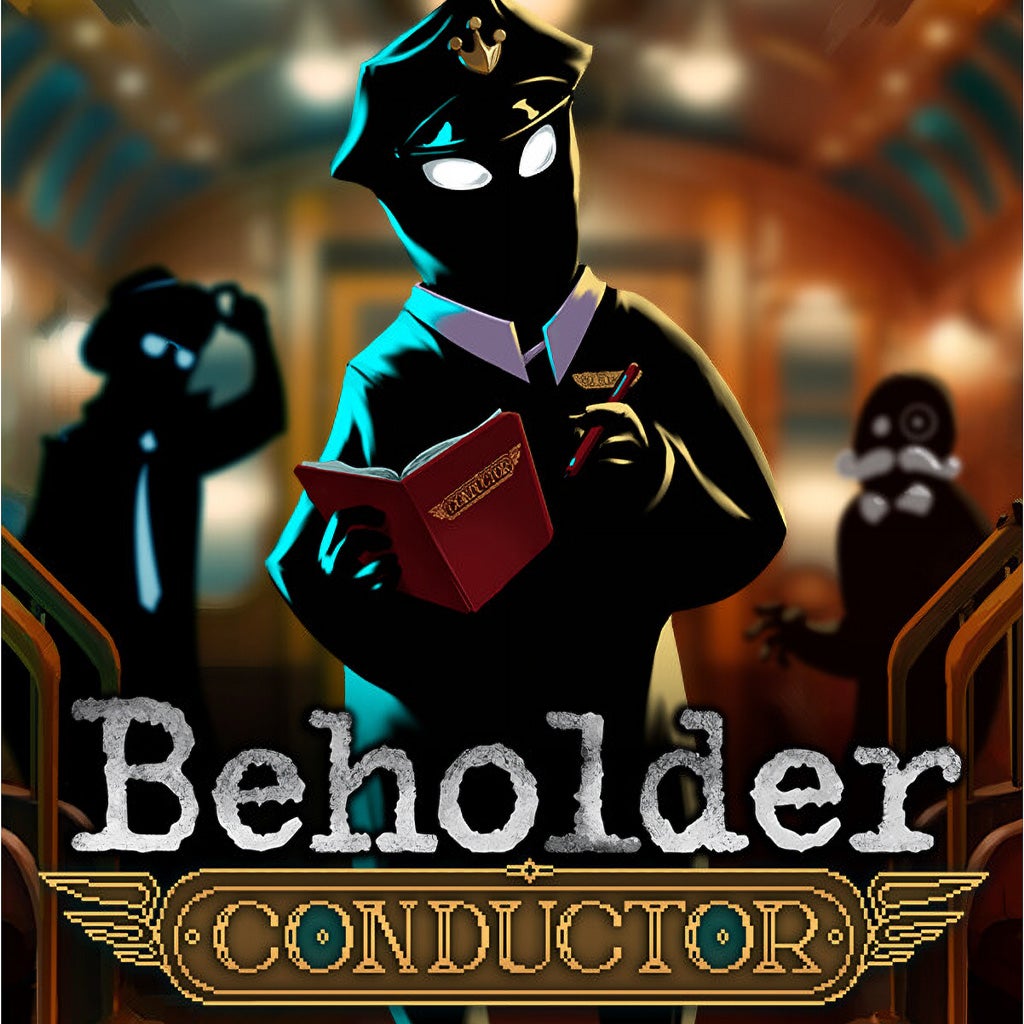
The Beholder series has always excelled at unsettling players. Not through jump scares or graphic violence, but through the quiet dread of participating in a system that rewards suspicion, punishes compassion, and constantly asks how much of your humanity you are willing to sacrifice for security, status, or survival. With Beholder: Conductor, developer Alawar once again places players under the shadow of an oppressive regime, but this time the action leaves the familiar apartment blocks behind and takes to the rails aboard the Determination Bringer, a legendary train that serves as both a symbol of national pride and an instrument of government control.
At first glance, the premise feels like a natural extension of the series. You are a senior conductor tasked with maintaining order amongst passengers as the train travels across a vast nation gripped by war and authoritarian rule. Yet beneath that seemingly straightforward setup lies one of the franchise’s most compelling ideas to date. Rather than observing the same tenants day after day, you are constantly exposed to new faces, new stories, and new moral dilemmas. Every station introduces fresh passengers carrying their own secrets, fears, ambitions, and hidden agendas. The result is a narrative experience that feels broader in scope while retaining the intimate human drama that has always defined the series.
Life on the Determination Bringer
You play as Winston Smith, an ordinary citizen elevated to the role of senior conductor aboard the country’s most celebrated locomotive. Like many protagonists in dystopian fiction, Winston begins as a cog in a much larger machine. His responsibilities include checking tickets, assisting passengers, maintaining carriage standards, and ensuring the journey runs smoothly. On paper, it sounds almost mundane.
Naturally, the Ministry expects much more than customer service. The train serves as a moving surveillance hub where every passenger is a potential suspect and every conversation could contain traces of sedition. The government has entrusted you with powers that extend far beyond collecting fares. You can inspect luggage, investigate suspicious behaviour, report illegal activities, summon law enforcement, and remove passengers from the train entirely. The deeper you progress, the clearer it becomes that your role is not simply to keep order. You are the eyes and ears of a regime obsessed with control.
What makes this setup so effective is how naturally the game blends ordinary duties with morally questionable ones. One moment you are helping a passenger locate a missing item. The next, you are deciding whether to ruin somebody’s life after discovering forbidden literature hidden beneath their clothing. These transitions happen seamlessly, creating an atmosphere in which even the most routine interaction feels loaded with potential consequences.
Every Passenger Has a Story
One of Beholder: Conductor’s greatest strengths is the sheer variety of characters who pass through your carriage. The train becomes a microcosm of society, bringing together people from every social class and political background. Workers travel alongside wealthy industrialists. Military officials share corridors with struggling families. Loyal citizens sit only a few seats away from smugglers, dissidents, and revolutionaries.
This constant flow of passengers gives the game a wonderful sense of momentum. Just as one storyline reaches its conclusion, another arrives at the next station. The structure prevents repetition from setting in and ensures there is always a new mystery to investigate or a fresh dilemma to consider. Some characters remain aboard for only a short time, yet many leave a lasting impression thanks to strong writing and believable motivations.
The game does an excellent job of avoiding simple good-versus-evil storytelling. Most passengers exist in shades of grey. A seemingly innocent traveller may be hiding dangerous secrets, while someone accused of breaking the law may simply be trying to survive under impossible circumstances. This ambiguity forces players to think carefully about their decisions rather than blindly following regulations or acting as a heroic saviour.
The Art of Invasion
The standout gameplay mechanic kicks in whenever passengers leave their compartments unattended. These moments let you conduct covert searches of their personal belongings, turning routine inspections into some of the game’s most suspenseful sequences.
Each suitcase becomes a puzzle. Players must carefully examine its contents for contraband, evidence, or suspicious items while memorising exactly where everything was originally placed. Once the search is complete, every item must be returned to its proper place before the passenger returns. Failure to do so can expose your intrusion and lead to serious consequences.
What sounds simple quickly becomes nerve-racking in practice. As footsteps echo through the corridor and the clock ticks away, even the smallest mistake can trigger panic. Suddenly you are desperately trying to remember whether a photograph was placed above a book or beside a medicine bottle. The mechanic brilliantly captures the tension of violating someone’s privacy while reinforcing the game’s broader themes of surveillance and control.
Few systems in recent narrative games generate this level of sustained anxiety. It is a simple concept executed with remarkable effectiveness, and it consistently produces some of the most memorable moments throughout the journey.
Climbing the Hierarchy
Progression aboard the Determination Bringer is directly tied to your performance. By fulfilling Ministry objectives, reporting violations, and maintaining order, you earn authority points that gradually unlock access to new sections of the train. This creates a satisfying sense of advancement while exposing players to increasingly complex situations.
The further you move through the train, the more influential your passengers become. VIP compartments introduce powerful government officials, military leaders, and wealthy business figures whose actions often have wider consequences. Their stories tend to involve larger political conspiracies, secret operations, and conflicts that extend far beyond the train itself.
This progression system works particularly well because it mirrors Winston’s own rise within the regime. Increased authority brings new privileges and opportunities, but it also demands greater loyalty. The game continually challenges players to decide whether advancement is worth the personal compromises required to achieve it.
Morality Under Pressure
Like the best entries in the Beholder franchise, Conductor is ultimately about choice. Nearly every major decision carries moral weight, and the game rarely offers clear answers about what constitutes the right course of action.
Do you report a passenger carrying illegal medicine if it means saving your career? Do you expose a colleague accepting bribes, even when you understand the desperation that drove them to it? Do you remain loyal to the Ministry despite witnessing the damage its policies inflict on ordinary people? These questions recur throughout the campaign.
What makes these decisions so impactful is that the game never reduces morality to a simple point system. There is no obvious path towards being the hero or the villain. Instead, players are forced to navigate a system designed to blur ethical boundaries. Compassion can carry severe consequences, while obedience often rewards behaviour that feels deeply uncomfortable.
By the time the narrative reaches its multiple endings, players are left reflecting not only on Winston’s choices but also on their own willingness to compromise when placed under pressure.
Atmosphere on the Rails
Visually, Beholder: Conductor continues the series’ distinctive artistic style with excellent results. The pixel art remains expressive and detailed, giving each passenger a unique identity despite the relatively simple visual presentation. Carriages feel lived-in, busy, and believable, while the train itself becomes a character through sheer atmosphere and presence.
The sound design deserves equal praise. The constant rhythm of wheels on tracks creates a subtle backdrop that reinforces the feeling of being trapped within an endlessly moving machine. Combined with the game’s understated soundtrack, it creates an atmosphere of quiet unease that rarely lifts, even during lighter moments.
While the opening hours can feel somewhat repetitive before additional mechanics and train sections become available, the experience steadily gains momentum as new systems are introduced. Once the larger narrative threads begin to intertwine and the moral stakes increase, the journey becomes difficult to step away from.
Final Verdict
Beholder: Conductor successfully distils the core ideas that made the series memorable and places them in a setting that feels both fresh and perfectly suited to its themes. The moving train delivers a constant stream of fascinating characters and moral dilemmas, while the luggage-searching mechanics generate some of the most effective tension the franchise has ever produced. Strong writing, meaningful decision-making, and a wonderfully oppressive atmosphere combine to create a compelling narrative simulation that remains engaging throughout its lengthy journey. Although the opening hours occasionally struggle with repetition, the experience grows richer and more rewarding with every new station stop. For fans of dystopian storytelling and morally complex, decision-driven games, this is a trip well worth taking.