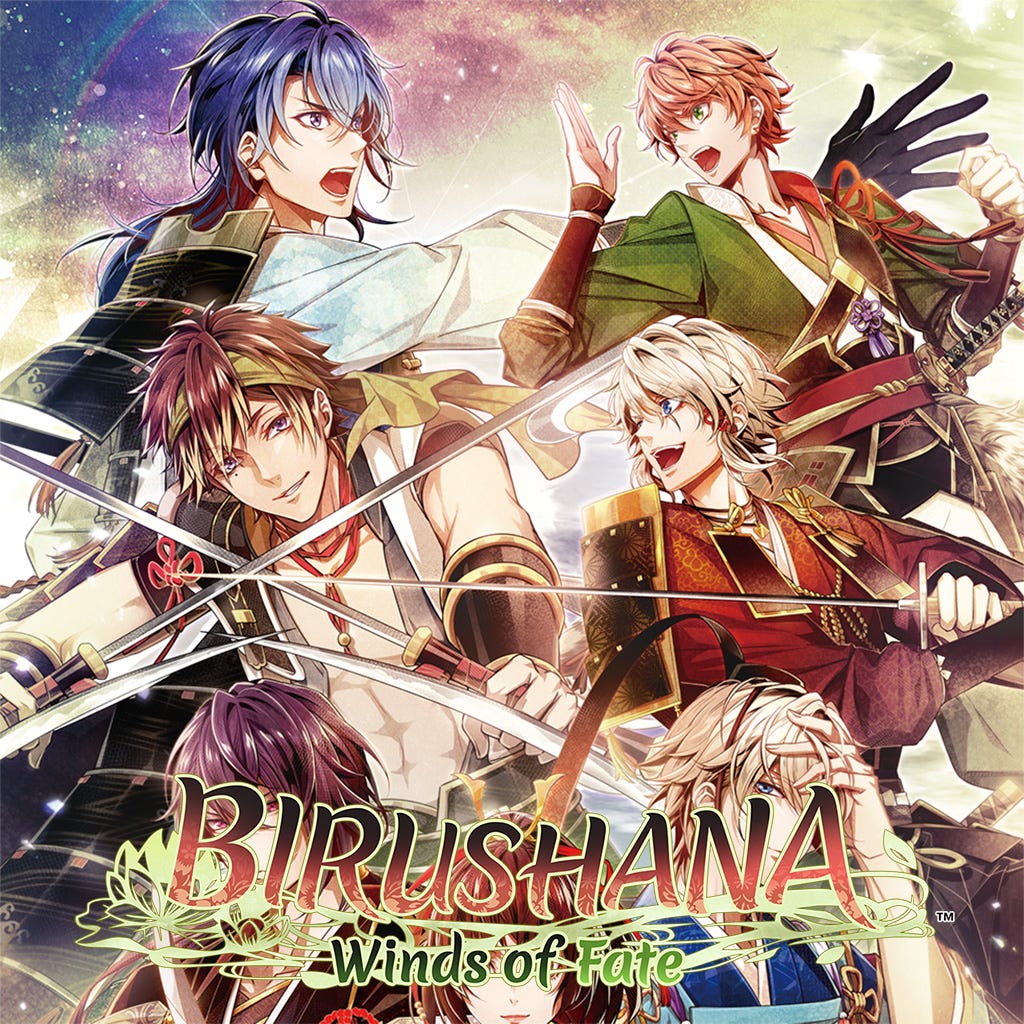
There is a particular kind of visual novel that neither reinvents its world nor seeks to expand it in sweeping, dramatic ways. Instead, it returns to familiar faces and asks a quieter question. What happens after everything has already ended? Birushana: Winds of Fate lives entirely in that space. It is a fan disc in the truest sense, built not to challenge expectations but to fulfil them with sincerity and care. It assumes you already know these characters, already understand their scars, and are simply here to see how those wounds heal when the battlefield finally goes silent.
Developed by Idea Factory and Otomate, alongside RED Entertainment, Winds of Fate continues directly from Birushana: Rising Flower of Genpei. It is structured less like a traditional sequel and more like a collection of emotional extensions. Some routes revisit established relationships through epilogues, while others reimagine supporting characters as full romantic leads. The result is a package that feels intimate and focused, though it is also highly dependent on prior investment in the original game’s world and emotional stakes.
A World After the War
Set fifteen years after the Heiji Rebellion, Birushana’s political landscape remains defined by the conflict between the Heike and Genji clans. Yet Winds of Fate is not interested in retelling that war. Instead, it lingers in its aftermath, where survival has given way to an uneasy peace and personal lives slowly begin to reassemble.
At the centre of it all remains Shanao, the hidden Genji heir, whose identity as a woman disguising herself as the last surviving male successor continues to define much of her existence. However, unlike the original game, where survival and conflict shaped every interaction, this expansion allows her to exist beyond constant struggle. She is still a warrior at heart, still sharp and resolute, but now she is also learning what it means to live without immediate danger dictating every choice.
This shift in tone is essential to understanding Winds of Fate. It is not about reinvention. It is about continuation. The world does not reset itself to accommodate romance. Instead, romance grows cautiously within the remnants of that world, shaped by everything that came before.
Two Paths Through Familiar Hearts
The structure of Winds of Fate is divided into two distinct experiences, both accessible directly from the main menu. The first comprises epilogue routes for the original cast of love interests, while the second introduces entirely new “if” routes for previously secondary characters. This separation gives the game a sense of clarity, even if it also highlights its highly specialised nature.
The epilogue routes are short, linear, and deliberately free of branching choices. They focus entirely on emotional resolution, offering glimpses of domestic life after the chaos of war has ended. These segments are less about narrative tension and more about comfort. They explore how love endures when it is no longer tested by violence, and how two people adjust to the quieter rhythm of peace.
While these epilogues are undeniably heartfelt, their brevity can feel slightly abrupt. Moments of intimacy are delivered with sincerity, but they sometimes conclude just as they begin to deepen. For players deeply attached to these characters, there is still emotional satisfaction, though it often arrives in concentrated bursts rather than sustained arcs.
The new main routes, by contrast, provide a more traditional visual novel structure. These stories reframe supporting characters as fully developed romantic interests, complete with branching choices, alternate endings, and expanded narrative focus. This is where Winds of Fate feels most like a complete standalone experience, even though it still relies heavily on familiarity with the original cast’s dynamics.
Romance as Resolution
What defines Winds of Fate most clearly is its commitment to emotional payoff. It is not interested in ambiguity or unresolved tension. Every route, whether epilogue or main story, is designed to bring clarity to relationships previously shaped by uncertainty, conflict, or emotional restraint.
The writing excels when it leans into this clarity. Shanao remains a particularly strong anchor throughout, consistently portrayed as independent, capable, and grounded. Even in moments of tenderness, she is never reduced to passivity. Instead, romance develops around her rather than replacing her sense of identity. This is one of the expansion’s most consistent strengths, preserving the integrity of the original protagonist while still allowing space for emotional development.
Among the new routes, Taira no Shigehira’s story stands out as the most compelling. His transformation from a complex, often antagonistic presence into a fully realised romantic lead is handled with surprising nuance. His route carries a sense of redemption that feels earned rather than imposed, and it quickly becomes one of the emotional highlights of the entire package.
Other routes vary slightly in execution. Some maintain strong character consistency and satisfying emotional pacing, while others occasionally struggle with tonal balance or rushed development. However, even in its weaker moments, the writing remains respectful of the source material and its established emotional framework.
Presentation That Elevates Emotion
Visually, Winds of Fate upholds the high production values expected of Otomate releases. The character CGs are particularly striking, often capturing subtle emotional shifts with impressive detail. Whether it is a quiet moment of reflection or a fully realised romantic confession, the artwork consistently enhances each scene’s emotional weight.
Backgrounds and reused assets are more functional than remarkable, but they rarely detract from the experience. The focus is clearly on character expression and key narrative moments, where the presentation excels. Voice acting, where present, adds further depth, with returning performers delivering performances that feel comfortably aligned with their established roles.
The overall aesthetic remains faithful to the original game, preserving its historical tone while allowing softer, more intimate visual storytelling to take centre stage. It is a presentation style that understands its purpose and rarely overreaches.
A Fan Disc That Knows Its Audience
It is important to understand exactly what Winds of Fate is and what it is not. This is not a game designed for newcomers. Its emotional impact relies heavily on prior knowledge of Rising Flower of Genpei, and much of its satisfaction comes from seeing established relationships reach their intended conclusions.
For returning players, this creates a deeply rewarding experience. There is a sense of closure here that feels carefully constructed, as if the developers are finally allowing characters to exhale after years of narrative tension. However, for those unfamiliar with the original, the emotional weight may feel diminished or inaccessible.
The pricing and structure also reflect this specialised design. As a premium fan disc, it does not attempt to broaden its appeal beyond its existing audience. Instead, it focuses entirely on delivering satisfaction to those already invested, which it does with notable consistency, even if not every route reaches the same level of refinement.
Final Verdict
Birushana: Winds of Fate is a carefully crafted epilogue to a story that was never truly about endings. It recognises that war stories are only complete when they allow space for what comes after, and it approaches that space with sincerity, patience, and emotional clarity.
Its strengths lie in its character writing, its commitment to emotional resolution, and its respectful continuation of Shanao’s journey. Its weaknesses are largely structural, with some routes feeling brief or uneven, and its reliance on prior knowledge limits its accessibility.
Yet for fans of the original game, these shortcomings are easy to overlook. What remains is a warm, occasionally bittersweet collection of stories about people learning to live after everything has already been lost and found again in different forms. It is not a reinvention. It is a reunion. And for what it sets out to be, Winds of Fate delivers that reunion with genuine heart.