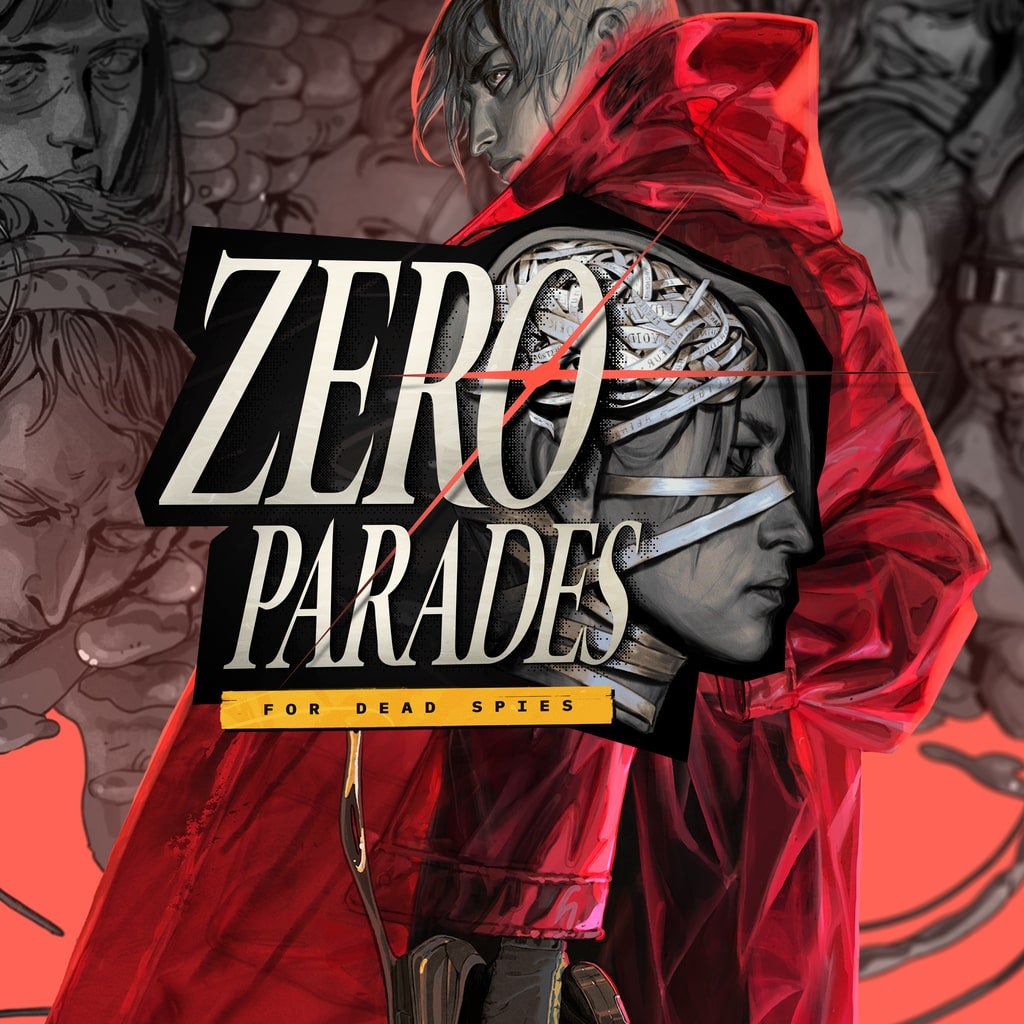
There is a particular kind of melancholy that only certain role-playing games can capture. Not sadness in the traditional sense, but the quiet ache of carrying too much history into a room and pretending you are still useful. ZERO PARADES: For Dead Spies lives inside that feeling. This is not a power fantasy about elite operatives saving the world with gadgets and precision gunplay. It is a game about a person held together by routine, regret, and whatever scraps of purpose remain after failure has hollowed them out.
ZA/UM’s long-awaited follow-up to Disco Elysium arrives with impossible expectations. Rather than chasing the same detective-shaped lightning twice, ZERO PARADES moves sideways into espionage, political theatre, and psychological warfare. The badge is gone. The gun is mostly irrelevant. What remains is the studio’s fascination with broken people trying to navigate systems much larger than themselves. The result is a dense, intimidating, frequently brilliant cRPG that feels less like playing a spy thriller and more like inhabiting a nervous breakdown in a trench coat.
Portofiro Is the Real Protagonist
You play Hershel Wilk, codename CASCADE, an operative dragged back into service after years in exile. Five years earlier, Hershel led her team into catastrophe and never truly escaped the fallout. Now she is sent to Portofiro, a fractured city-state caught in a three-way ideological struggle, where corporations, political factions, and shadow powers all tug at the same threads.
Portofiro immediately earns its place among gaming’s great fictional cities. Like Revachol before it, this place feels lived-in and wounded. Every street corner carries old arguments. Every building seems to remember something terrible. The city is not a backdrop but a participant.
Wandering through Portofiro often feels like reading a political novel while sitting in a smoky café at two in the morning. Conversations drift from intelligence operations to philosophy, identity, class structures, propaganda, memory, and the strange compromises people make simply to keep moving. The writing trusts players to keep up, and that confidence pays off. It also means ZERO PARADES demands patience. This is an intensely text-heavy game. Entire evenings can pass without a traditional action sequence. If you come searching for stealth missions and silenced pistols, you will find very little comfort here.
Dialogue Is the Battlefield
Like Disco Elysium, the game lacks conventional combat. Every conflict unfolds through dialogue, skill checks, observation, and psychological manoeuvring. The tension comes from trying to stay ahead of people who may already be manipulating you.
The new Conditioning system is one of the game’s smartest additions. Replacing the Thought Cabinet concept, Conditioning lets Hershel internalise philosophies, training doctrines, and psychological frameworks that shape not only who she becomes but also how the world reacts to her.
One playthrough might create a ruthless operative driven by instinct and compartmentalisation. Another may push Hershel into philosophical introspection, turning conversations into abstract duels of ideology and self-examination.
What makes it fascinating is that these choices alter more than statistics. They reshape narrative possibilities. Entire scenes can transform depending on the kind of person you allow Hershel to become. This flexibility gives ZERO PARADES extraordinary replay value while reinforcing its central theme: identity is not fixed. It is constructed, dismantled, and rebuilt under pressure.
Pressure Is Everything
Pressure systems replace traditional health bars. Instead of hit points, Hershel manages Fatigue, Anxiety, and Delirium. Push too hard in critical moments and you can Exert yourself, bending probability in your favour at the risk of permanent psychological damage.
It is a wonderful mechanic because it creates genuine stakes. Success is never free. Winning an argument might leave scars that linger for hours. A crucial breakthrough may come at the cost of permanently damaging one of Hershel’s core abilities. The system turns every important roll into a negotiation with yourself. Do you force success now and pay later? Or do you accept failure and live with the consequences?
ZERO PARADES constantly asks difficult questions without obvious answers. Failure often opens new paths rather than shutting doors. Sometimes disaster produces the most interesting stories. That philosophy keeps the experience unpredictable and deeply human.
A World Full of Strange Souls
The cast deserves enormous praise. Portofiro is populated by wonderfully eccentric figures who feel both absurd and painfully real. You meet international financiers, ideological extremists, impossible personalities, and people who seem one step removed from myth. There is a television presenter spiralling into paranoia. A man with a literal box for a heart. Doppelgängers that blur the line between metaphor and reality. Yet none of them feel merely thrown in for quirkiness.
Everyone carries beliefs, wounds, ambitions, and contradictions. Conversations often become layered performances in which uncovering motivation matters more than uncovering facts. You are not solving mysteries so much as dissecting people. The game excels at making dialogue feel dangerous. Every sentence can shift alliances. Every silence means something.
Not Quite As Sharp As Its Predecessor
For all its strengths, ZERO PARADES occasionally stumbles beneath its own ambition. The pacing can become glacial. Certain chapters bury players under walls of exposition before momentum returns. Some philosophical tangents are fascinating, while others drift dangerously close to self-indulgence.
The Tactical View sequences also feel less revolutionary than advertised. They create tension but lack the dramatic impact suggested by the marketing. In practice, they often function as slightly more elaborate skill-check setups rather than transformative gameplay moments.
There are also moments when the game’s refusal to simplify becomes exhausting. Important information occasionally disappears beneath layers of abstraction, forcing players to dig through dense dialogue chains simply to maintain narrative clarity. This is a demanding experience, and it will absolutely lose some players.
The Weight Of Memory
What stayed with me most was Hershel herself. She is not cool in the traditional spy-fiction sense. She is tired. Brilliant, yes, but visibly frayed. Every success feels temporary. Every conversation threatens to reopen old wounds. There is tremendous humanity in that portrayal.
ZERO PARADES understands that failure changes people. It reshapes identity and creates ghosts that follow you into every new assignment. Hershel walks through Portofiro carrying an entire graveyard of unfinished business, and the game never lets you forget it. That emotional honesty gives the story its soul.
Final Verdict
ZERO PARADES: For Dead Spies is not Disco Elysium 2, and it is better for refusing to be. ZA/UM has created something stranger, colder, and arguably even more introspective. It replaces detective noir with espionage anxiety and makes psychological systems the very foundation of play.
This is an RPG built almost entirely on conversation, consequence, and emotional erosion. It trusts players to sit with uncertainty, embrace failure, and lose themselves in a city that feels frighteningly alive. It can be exhausting. It can be overindulgent. At times, it sinks so deeply into its own ideas that reaching the surface takes effort. But when it works, ZERO PARADES achieves something rare. It makes espionage feel intimate. It makes politics feel personal. Most importantly, it reminds us that sometimes the most dangerous battlefield is the mind carrying the mission.