Board game adaptations can be unpredictable. Some struggle to capture the tactile magic of rolling dice around a table with friends, while others overcomplicate systems that were charming precisely because they were simple. King of Tokyo lands comfortably on the right side of that divide. Rather than reinventing the original design, it understands exactly why the tabletop version became such a hit and translates it into a digital format with confidence.
At its heart, this remains the same fast-paced dice battler fans know and love. Players take control of oversized kaiju competing to dominate Tokyo, either by being the first to reach twenty victory points or by becoming the last monster standing. It is a wonderfully straightforward premise that quickly evolves into tense risk-versus-reward decisions. Every roll matters, and every turn has the potential to shift the balance of power.
The digital version preserves that accessible energy beautifully. Whether playing solo against AI or battling friends locally, matches move quickly while still leaving room for strategy. It captures the feeling of sitting around a table, plotting your next move, only now the monsters roar to life with animated flair.
Gameplay That Thrives on Simplicity
The genius of King of Tokyo has always been its dice mechanics. Each turn, players roll six dice, reroll, and manipulate them in pursuit of the perfect combination. You might chase damage to attack rivals, hearts to heal, energy to purchase upgrade cards, or numerical sets to build victory points. The beauty lies in how these simple choices constantly create meaningful dilemmas. Do you heal now or push aggressively while opponents are weak? Do you spend energy immediately or save it for stronger power cards later? Do you stay in Tokyo for extra points despite becoming everyone’s punching bag? These decisions create an addictive rhythm. The game moves quickly, but there is always enough tactical depth bubbling beneath the surface to keep things engaging. No two rounds unfold exactly the same way because player behaviour dramatically alters the flow of battle.
The card system adds another layer of unpredictability. Some cards permanently strengthen your monster, while others deliver explosive one-off effects. Suddenly your cautious Cyber Kitty becomes an unstoppable glass cannon, or your wounded Gigazaur transforms into a near-immortal tank. The constant adaptation keeps matches fresh and encourages experimentation.
Importantly, the digital adaptation presents all this information clearly. Menus are intuitive, turns flow smoothly, and newcomers can understand the mechanics without feeling overwhelmed.
Presentation With Personality
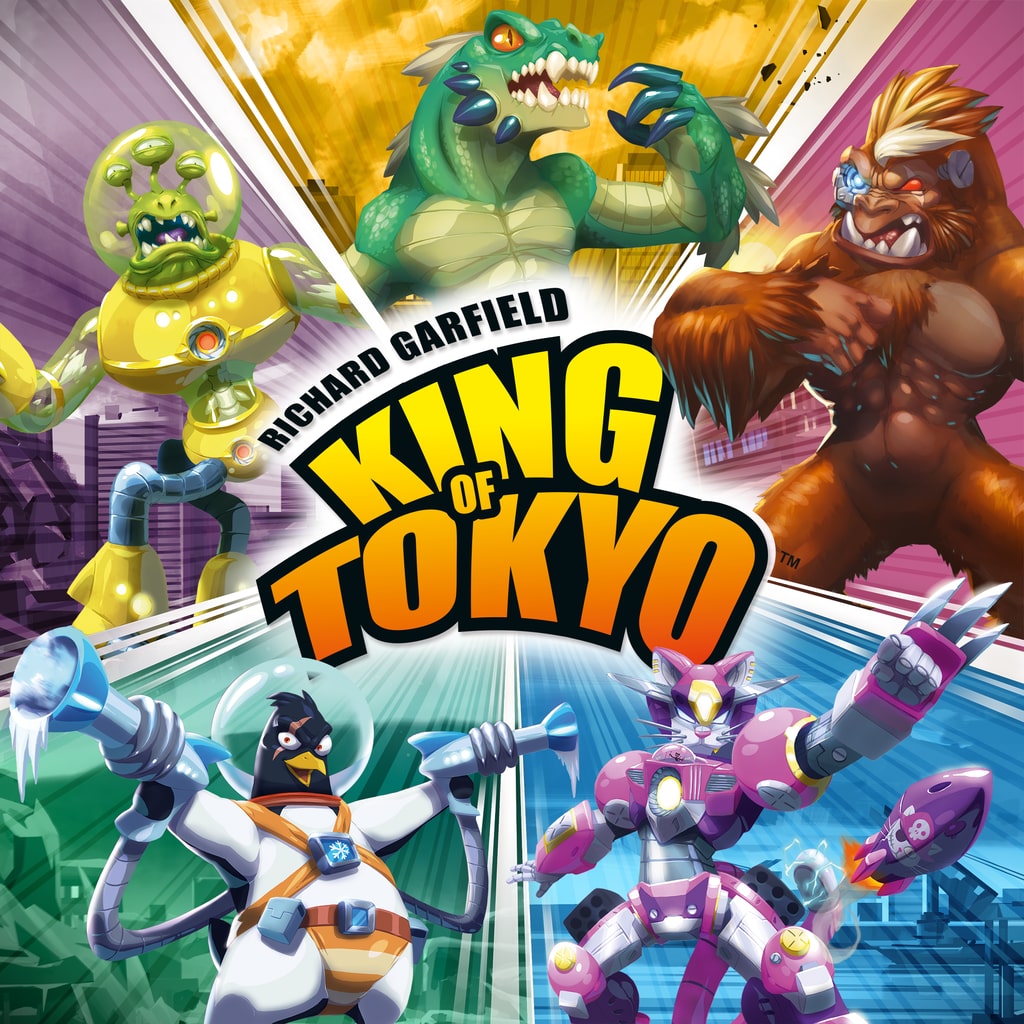
Visually, King of Tokyo takes an interesting direction by embracing an ukiyo-e-inspired aesthetic. It gives the game a distinct identity compared with the more cartoon-driven look many might expect from giant-monster chaos. The result is surprisingly elegant. Traditional Japanese art influences blend with exaggerated kaiju animation to create a world that feels playful without losing style. Backgrounds burst with colour and movement, while the monsters themselves carry plenty of personality.
Cyber Kitty remains delightfully ridiculous. Gigazaur still looks every bit the classic movie monster. Alienoid retains its weird extraterrestrial charm. Each creature feels distinct, even though their gameplay roles remain mechanically equal.
The animations also do a good job of selling impact. Attacks carry weight, Tokyo feels alive, and victory moments land with satisfying theatrical flair. It gives the game enough visual spectacle to elevate what is essentially a board-game conversion.
Performance is solid as well. Menus load quickly, matches run smoothly, and there are very few technical distractions that pull attention away from the action.
Solo Play Holds Its Own
Digital board games often live or die by their AI, especially for players without regular local multiplayer groups. Thankfully, King of Tokyo performs admirably here. Computer opponents make sensible decisions and provide enough challenge to keep solo sessions entertaining. They are aggressive when opportunities arise yet still capable of surprising strategic choices. It never feels like they are merely rolling randomly.
Solo mode is an effective way to experiment with tactics and monster builds before jumping into multiplayer matches. It also works surprisingly well as a quick pick-up experience. A single match rarely overstays its welcome, making it ideal for portable sessions. That said, multiplayer remains where the game truly shines. Local matches generate the same laughter, groans, and playful betrayal that made the tabletop original such a success. Watching friends desperately cling to Tokyo while everyone else unites against them never gets old. The couch multiplayer support feels particularly valuable in an era when local experiences are becoming rarer.
Accessible Yet Deep
One of King of Tokyo’s greatest strengths is how naturally it welcomes newcomers. You can explain the core rules in minutes and be rolling dice almost immediately. Yet beneath that accessibility lies surprising strategic nuance. Timing matters. Resource management matters. Reading opponents matters. Understanding when to attack and when to retreat becomes increasingly important as players improve. This balance gives the game longevity. Families can enjoy it casually, while experienced players still find layers to explore.
The digital adaptation respects this balance. Tutorials are clear without being intrusive, and the interface presents information elegantly. It avoids the trap of overexplaining systems that work best when discovered organically.
A Few Missing Teeth
Despite its strengths, King of Tokyo is not without issues. The biggest limitation is the scope of content. While the core gameplay loop remains enjoyable, players hoping for a massive campaign or an extensive progression system may come away wanting more. The experience stays close to its tabletop roots, so replayability relies heavily on enjoying the match-to-match dynamics rather than unlocking endless rewards.
Some players may also wish for broader online functionality or additional expansion content integrated from the physical releases. The foundation is strong enough that you naturally begin imagining what more could have been added.
Match outcomes can occasionally swing dramatically due to dice luck. While that randomness is part of the game’s charm, it may frustrate players seeking purely skill-based competition. Still, these are relatively minor complaints within a package that succeeds so confidently at its core mission.
Final Verdict
King of Tokyo knows exactly what it wants to be and rarely loses sight of it. This is not a sprawling strategy epic or an overly ambitious reinvention. It is a faithful, energetic adaptation of a fantastic board game that preserves its accessibility while giving it fresh visual life. The dice-driven gameplay remains endlessly charming, balancing luck and tactics with impressive finesse. The presentation adds personality without overwhelming the source material, and both solo and multiplayer modes deliver genuine fun.
Most importantly, it captures that magical board-game feeling when every roll can trigger cheers, laughter, panic, or betrayal around the room. Sometimes, becoming a giant monster and punching your friends is all the entertainment you need.