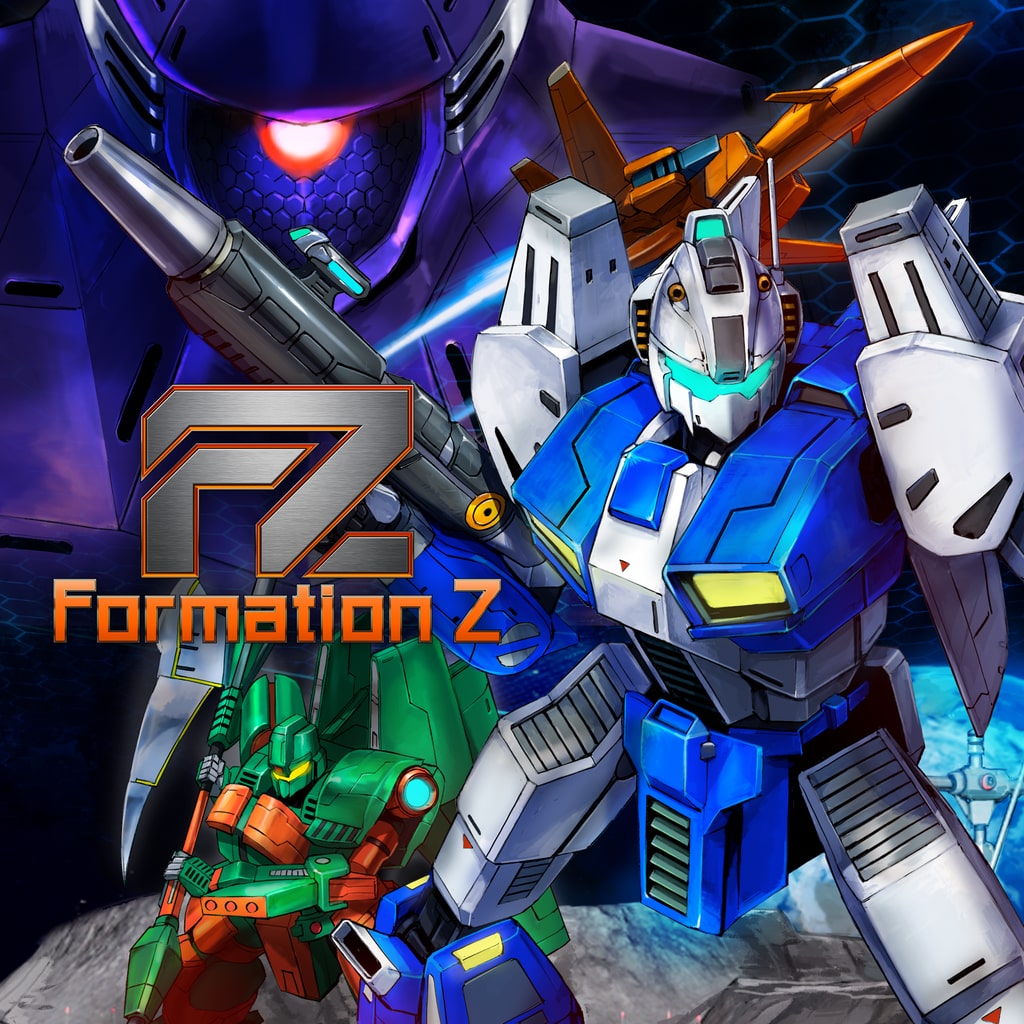
Jaleco’s 1984 arcade classic has been redeveloped for modern hardware after being taken from the retro vault. Created by Granzella Inc. and published by City Connection, with Western publishing by Clear River Games, FZ: Formation Z updates the classic Macross-style transforming mecha shooter gameplay.
There is something quietly admirable about a revival like FZ: Formation Z. This is not a blockbuster remake with cinematic ambitions or a legacy franchise returning after years in the wilderness with grand promises. Instead, it feels more like somebody carefully dusting off a forgotten arcade cabinet, restoring the paintwork, replacing the lights, and inviting players to rediscover a game that history nearly left behind.
Formation Z was one of those arcade curiosities that never quite reached the legendary status of genre giants. FZ: Formation Z brings it back for a modern audience, with updated visuals, refreshed mechanics, and enough quality-of-life additions to make the experience approachable without stripping away its arcade DNA. The result is an enjoyable, if occasionally uneven, shooter that thrives on speed, spectacle, and simple satisfaction.
Gameplay
At its core, FZ: Formation Z remains a side-scrolling shooter built around transformation mechanics. You pilot a futuristic craft capable of shifting forms in combat, adapting to enemy layouts and environmental hazards while blasting through waves of mechanical foes.
The transformation system remains the centrepiece and retains an appealing novelty even decades later. Swapping between forms is not merely cosmetic. Different states alter movement, attack capabilities, and positioning options, encouraging quick decisions during increasingly chaotic encounters. This creates a constant sense of motion and improvisation that helps distinguish FZ from more straightforward shooters.
Combat moves at a brisk pace throughout the campaign. Enemy formations arrive aggressively, projectiles fill the screen, and bosses frequently occupy absurd amounts of space. Yet the game rarely crosses into full bullet-hell territory. Instead, it occupies an interesting middle ground where positioning matters more than memorisation. That balance keeps the experience approachable while still offering enough resistance to satisfy arcade veterans chasing cleaner runs and higher scores.
The challenge curve is not always perfectly smooth, however. Some stages feel noticeably lighter before difficulty suddenly spikes in later encounters. Boss fights occasionally swing between entertaining chaos and prolonged endurance tests, particularly when attack patterns repeat without much escalation. Even so, the action loop remains enjoyable because the game understands momentum. Levels move quickly, mechanics are introduced clearly, and there is very little downtime.
Presentation
Visually, FZ: Formation Z walks an interesting line between retro reverence and modern enhancement. The neon colours, futuristic backdrops, and exaggerated mechanical designs feel rooted in arcade history, yet everything arrives with sharper detail and more dynamic effects.
Explosions bloom across the screen with satisfying impact. Enemy destruction carries weight. Lighting effects add depth without overwhelming the original aesthetic. The visual update feels respectful rather than revisionist, preserving the spirit of the source material while giving it enough polish to survive on modern displays.
Stage variety also deserves credit. Space stations, industrial sectors, hostile alien landscapes, and metallic fortresses all help maintain visual momentum. None of these environments are especially groundbreaking on their own, but together they keep the campaign from becoming visually repetitive.
Performance is equally solid. The action remains smooth even in crowded firefights, which is essential for a shooter built around rapid reactions and precise movement.
Audio Design
The soundtrack leans heavily on energetic synth work and classic arcade influences. It is upbeat, catchy, and perfectly suited to the game’s fast pace. Several tracks linger long after sessions end, carrying that distinctive arcade energy that immediately transports you back to glowing cabinets and noisy halls. The music never overshadows the gameplay, but it constantly propels the action forward.
Sound effects follow a similar philosophy. Weapons crack sharply, transformations have mechanical heft, and explosions land with enough impact to make every successful encounter satisfying. The audio package will not redefine the genre, but it absolutely understands its brief.
Content and Replay Value
Like many arcade-inspired shooters, FZ: Formation Z lives or dies by replayability rather than campaign length. The initial run is relatively compact, but score chasing quickly becomes the main draw. Higher difficulties, cleaner clears, and optimisation runs encourage repeat attempts. Unlockables and additional content help extend the experience, though players seeking expansive progression systems may find the offering modest.
This is still fundamentally an arcade game at heart. The joy comes from replaying stages, improving performance, and slowly mastering systems rather than consuming dozens of hours of narrative content. For some players, that purity will feel refreshing. For others, it may feel slight.
The modern additions do help bridge that gap somewhat. Quality-of-life improvements remove much of the friction associated with older arcade design while preserving challenge and rhythm. It feels accessible without becoming overly simplified.
Where It Stumbles
The biggest obstacle FZ: Formation Z faces is repetition. Despite solid stage variety and engaging transformation mechanics, enemy patterns blur together over longer sessions. Some encounters overstay their welcome, and later stages lean more on endurance than creativity.
The game also occasionally feels caught between audiences. Retro enthusiasts may wish it pushed harder into arcade difficulty and authenticity, while newcomers may expect deeper progression or more contemporary systems. As a result, it occupies a middle ground that works more often than it fails, but never quite reaches greatness. Still, there is charm in that restraint. FZ knows what it wants to be and rarely pretends otherwise.
Final Verdict
FZ: Formation Z is not trying to reinvent the shooter genre. It aims to celebrate a forgotten piece of arcade history and make it playable again for modern audiences. In that respect, it succeeds.
The transformation mechanic still feels fresh, the action remains energetic, and the visual overhaul gives the experience enough polish to stand proudly alongside contemporary retro revivals. Some repetition and uneven pacing prevent it from truly soaring, but the core loop remains consistently enjoyable.
There is warmth here too. You can feel the affection behind the revival. It never treats its source material as disposable nostalgia. Instead, it treats it as something worth preserving. That sincerity goes a long way.