After years of experimenting with massive open worlds and blockbuster licences, LEGO Batman: Legacy of the Dark Knight feels like Traveller’s Tales looking back at what made these games special. Rather than chasing scale for its own sake, this latest adventure embraces personality, nostalgia, and a genuine affection for Batman’s long history. The result is a game that feels surprisingly intimate despite the enormous amount of content packed inside it.
The story centres on fractures appearing across Gotham, causing different eras of Batman’s history to collide in one sprawling adventure. Characters, locations, and visual styles bleed together as timelines overlap, bringing together everything from Silver Age absurdity to darker modern interpretations. It creates a version of Gotham that feels like a giant toy box, where every corner hides another nod to the Caped Crusader’s legacy.
What immediately stands out is how comfortably the game balances humour and sincerity. LEGO games have always thrived on visual gags and playful reinterpretations, but Legacy of the Dark Knight also understands why people care about Batman. Beneath the jokes lies a story about legacy, identity, and the weight carried by those who protect Gotham. It never becomes overly serious, yet it still manages to land emotional beats when it needs to.
The writing helps enormously here. Batman remains wonderfully stoic as the chaos around him escalates into increasingly ridiculous territory. Seeing him maintain complete seriousness while villains destroy the city with oversized props and toy-like inventions never stops being funny. At the same time, returning allies such as Robin, Batgirl, Nightwing, and others all receive moments that make them feel important rather than simple side characters.
Gameplay
Mechanically, LEGO Batman: Legacy of the Dark Knight sticks closely to the formula players already know, but refinement is the key word here. Exploration, puzzle-solving, combat, platforming, and the endless smashing of LEGO objects all return, yet everything feels smoother and more deliberate than in some of the studio’s more bloated recent efforts.
Levels are compact enough to stay focused while still hiding plenty of secrets. Puzzle design gradually introduces new ideas through gadgets, environmental interactions, and character abilities without becoming frustrating. The pacing remains excellent because the game constantly rotates mechanics and scenarios before anything becomes repetitive.
Batman’s suits once again play a major role, drawing inspiration from multiple eras of the character’s history. Some focus on stealth and detective tools, while others lean into mobility or combat abilities. Unlocking new equipment constantly opens additional routes and hidden areas, creating that satisfying replay loop LEGO games have always done so well.
The supporting cast is equally impressive. This is not one of those LEGO games where dozens of characters exist purely as collectables. Instead, the roster feels genuinely integrated into the adventure. Missions regularly switch perspectives and encourage experimentation, giving players reasons to engage with different heroes and villains.
Exploration deserves special praise too. Gotham acts as a large hub packed with side activities, races, hidden collectibles, Riddler puzzles, mini-stories, and character missions. Crucially, it never feels overwhelming. Activities are spread naturally throughout the city, encouraging curiosity rather than checklist fatigue.
Vehicle gameplay also returns with Batmobile sequences, aerial missions, and various gadget driven moments scattered throughout the campaign. Previous LEGO titles occasionally struggled here, but Legacy of the Dark Knight handles these sections much better. They provide welcome variety without interrupting the game’s rhythm.
Graphics
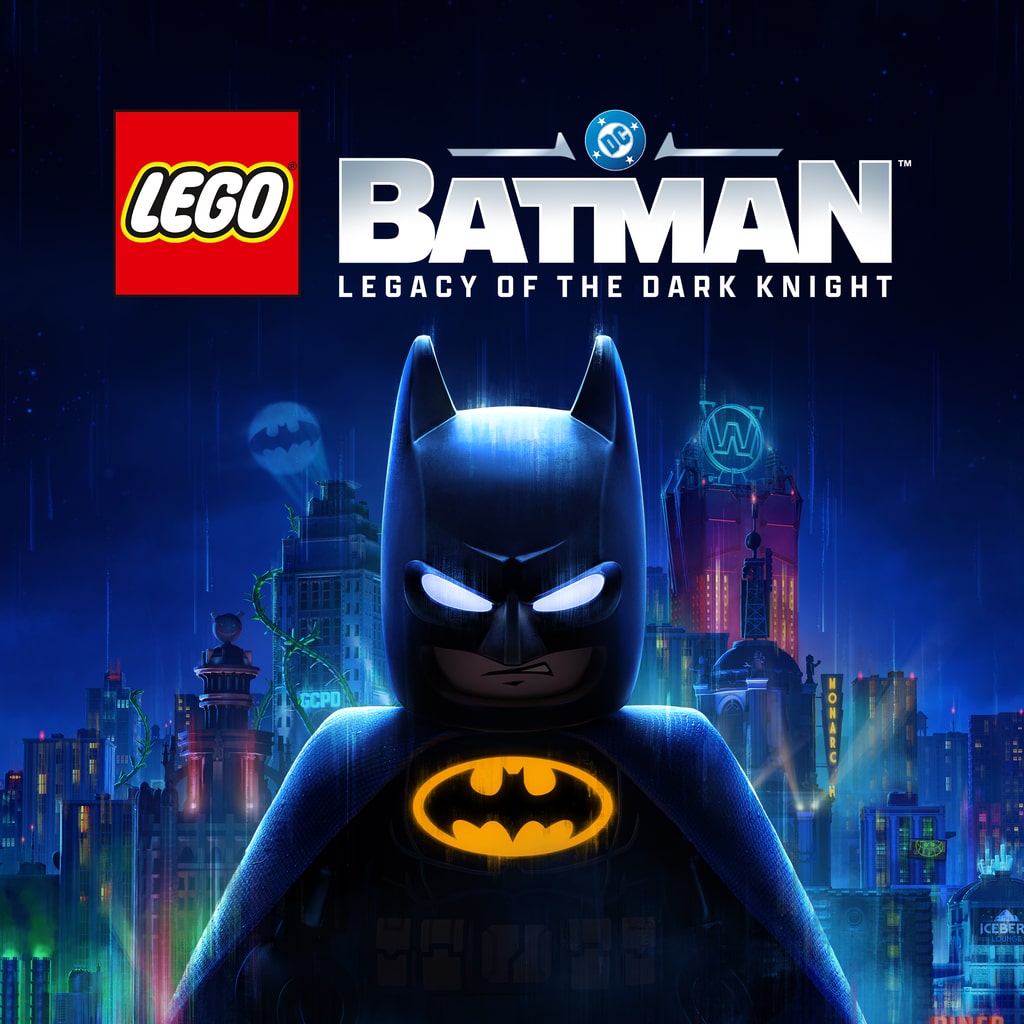
Visually, this may be one of the strongest-looking LEGO games yet. Gotham strikes a wonderful balance between gothic darkness and colourful, toy-like charm. Rain reflects across neon-soaked streets, towering buildings dominate the skyline, and familiar locations receive incredibly detailed recreations.
The environmental work deserves particular recognition. Wayne Manor feels appropriately grand, Arkham carries a sense of decayed menace, and the Batcave is packed with enough references to keep longtime fans busy for hours. Every district has its own identity, helping Gotham feel like a real place rather than a collection of disconnected zones.
The attention to LEGO detail remains impressive as well. Plastic surfaces catch light naturally, destruction effects are satisfying, and scattered bricks bounce convincingly during combat and exploration. Character animations carry plenty of personality too, often delivering punchlines through movement alone.
Performance remains solid throughout the experience. Even during larger encounters filled with effects, enemies, and environmental destruction, the game maintains stability. It gives the whole experience a polished feel that suits the premium presentation.
Audio
Audio work is another major success. Rather than sticking to a single Batman identity, the soundtrack draws on multiple eras of the franchise. Some tracks lean into mystery and noir influences, while others embrace heroic bombast or playful adventure.
The score constantly adapts to each section’s mood, helping sell Gotham’s shifting atmosphere. Quiet rooftop exploration feels entirely different from larger action moments, yet both are equally effective.
Voice acting is strong across the board. Batman’s dry delivery anchors the comedy perfectly, while the wider cast embraces the absurd energy around them. The performances keep even sillier scenes grounded through sheer commitment.
Sound design also deserves mention. Gadget effects, environmental ambience, and combat all have satisfying weight without becoming overwhelming. Small details, from brick impacts to Batmobile engines, reinforce the tactile toy-box feel.
Replay Value
Completionists are going to disappear into this game for quite a while. The number of unlockables is enormous, with hundreds of characters, costumes, secrets, and collectibles spread across Gotham and the campaign missions.
Importantly, replaying content remains enjoyable because progression constantly reshapes how you interact with earlier areas. Returning with new suits or character abilities unlocks hidden routes and optional objectives that were previously inaccessible. The structure still captures that addictive “just one more collectible” mentality.
Co-op remains another major strength. Playing with a friend turns already chaotic encounters into wonderfully messy adventures where plans collapse, bricks fly everywhere, and accidental teamwork somehow succeeds. Accessibility here remains one of LEGO gaming’s greatest qualities, as players of different ages and skill levels can enjoy the experience together.
Final Verdict
LEGO Batman: Legacy of the Dark Knight does not reinvent the LEGO formula, and it never needed to. Instead, it refines what already worked, wrapping it in a heartfelt celebration of Batman’s history.
It is funny, nostalgic, visually impressive, and packed with enough content to keep Gotham fans busy for weeks. More importantly, it remembers something many modern games forget: joy matters. There is genuine warmth running through this adventure, from its playful humour to its obvious affection for the source material.
For longtime Batman fans, it feels like opening an old toy box and finding everything inside still works exactly as you remembered. For everyone else, it is simply another reminder that LEGO games still know how to make people smile.