As a child, we used to visit Margate, among other seaside destinations, during the summer holidays. Back then, you couldn’t visit Margate without going to Bembom Brothers Theme Park/White Knuckle Theme Park. I remember it well, with the Looping Star Roller Coaster, the Mary Rose, and the 180-foot Big Wheel. It was probably the only time I’d eat fish & chips, sugar donuts, and candy floss, and inevitably feel sick after a few rides, but it was still great fun. Most of all, I was fascinated by the arcade cabinets. I remember standing beside one, watching two experienced players completely dismantle each other without saying a word. To outsiders, it looked chaotic. Buttons mashing. Health bars evaporating. But the longer you watched, the more you realised fighting games were never just about reflexes. They were about prediction. Fear. Conditioning. The slow process of convincing someone to make the exact mistake you wanted them to make. Yomi 2 understands that better than almost any modern fighter.
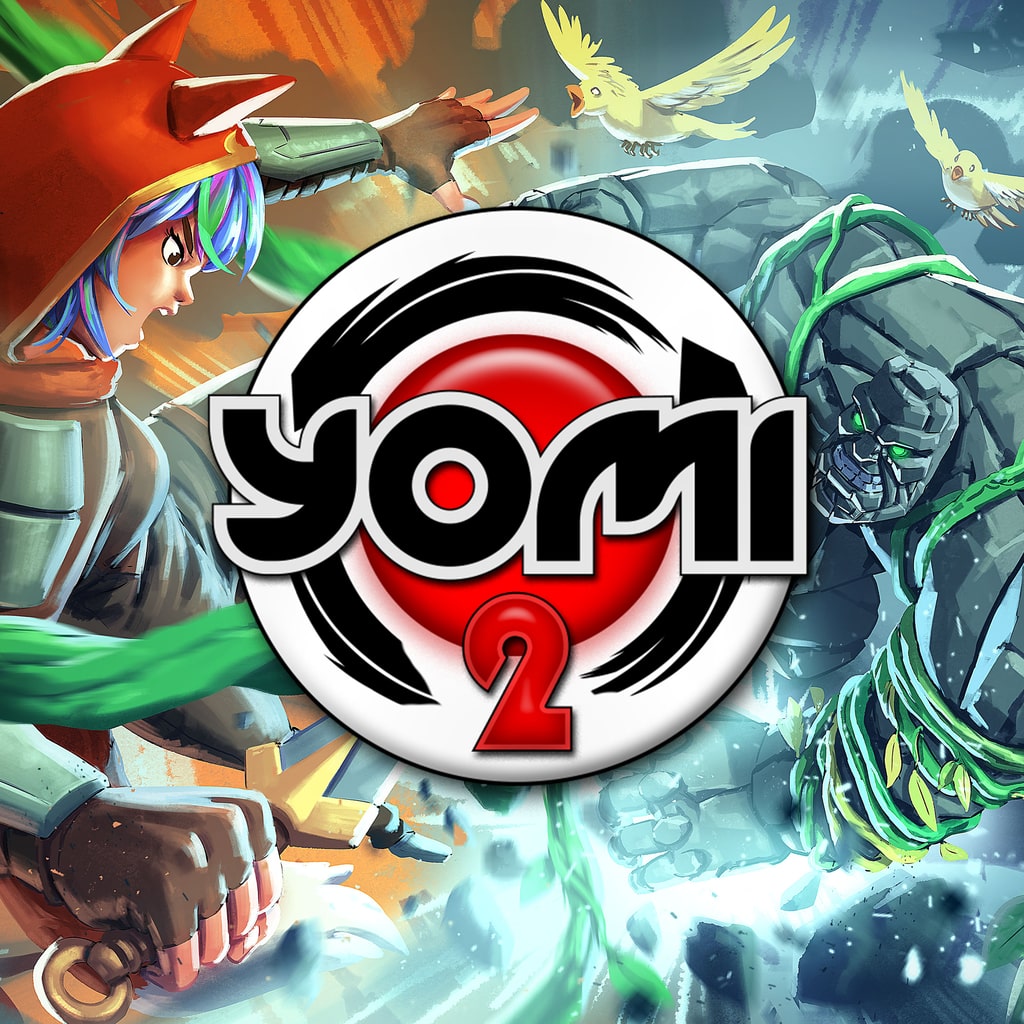
Developed and published by Sirlin Games, the long-awaited sequel to the cult classic card battler finally arrives on consoles after a lengthy PC Early Access period. Created by fighting game designer David Sirlin (lead designer of Super Street Fighter II Turbo HD Remix), Yomi 2 takes the emotional DNA of competitive fighting games and translates it into a card-based duel where psychology matters more than physical execution. That premise alone is fascinating. What makes Yomi 2 special is how convincingly it pulls it off.
A Fighting Game Without Reflexes
At its core, Yomi 2 is built on an elegant foundation of reads and counter-reads. Attacks beat Throws. Throws beat Blocks. Blocks beat Attacks. On paper, it resembles an advanced version of rock-paper-scissors. In practice, it becomes far more layered and emotionally exhausting.
Every card represents an action you might recognise from traditional fighting games. Fast pokes. Risky overheads. Defensive counters. Combo extenders. Reversals. Supers. Entire matches unfold like condensed versions of tense tournament sets, where momentum shifts constantly and players slowly adapt to each other’s habits. What immediately stands out is how much tension Yomi 2 generates despite its simplicity. You are not reacting with reflexes. You are reacting with instinct.
When you correctly predict an opponent’s desperate throw attempt and punish it with a crushing strike combo, the emotional payoff feels startlingly close to landing a hard read in Street Fighter 6 or Tekken 8. The satisfaction comes not from execution, but from understanding another human being for a split second longer than they understand you. That psychological tension becomes addictive very quickly.
Every Character Feels Like a Different Genre
One of Yomi 2’s greatest strengths is its roster design. The game features twenty playable fighters, and remarkably, nearly all of them feel distinct enough to completely reshape a match’s flow. Some characters dominate with relentless pressure. Others specialise in traps, counters, or long-term resource manipulation. A few almost seem designed to frustrate impatient players into self-destruction. Importantly, these differences are not merely cosmetic. Learning a new character genuinely feels like learning a new fighting-game archetype.
The added Gem system deepens this further. Before each match, players choose a Gem that subtly alters their capabilities. One build might enhance aggression, while another rewards defensive patience or combo extension. It gives experienced players room to experiment without immediately overwhelming newcomers. That balance between depth and readability is difficult to achieve in competitive games, but Yomi 2 handles it surprisingly well.
The Exchange Mechanic Changes Everything
The smartest addition in Yomi 2 is the Exchange mechanic. Every turn, players can trade a card from their hand for one from the discard pile. It sounds minor at first, but it completely changes the strategic landscape.
Traditional card games often carry an unavoidable element of randomness. Bad draws happen. Sometimes luck decides momentum before strategy can intervene. Exchange dramatically reduces that frustration by allowing players to shape future turns proactively.
You begin planning multiple rounds ahead. Suddenly, discarded cards are no longer gone. They become delayed resources, waiting to return at the perfect moment. Skilled players can intentionally cycle key tools back into their hands while baiting opponents into false assumptions about which options remain. The result is a game that feels remarkably fair even in defeat. Most defeats come from being outthought rather than simply outdrawn. That distinction matters enormously.
A Surprisingly Strong Single-Player Experience
Card battlers and fighting games often struggle with solo content. Once you strip away human competition, the illusion can collapse quickly. Yomi 2 avoids that trap better than expected.
The console release introduces a substantial single-player Career Mode, in which players travel between tournaments, level up characters, and gradually learn the game’s deeper systems through structured battles. More importantly, it serves as an excellent teaching tool. Rather than dumping endless tutorials on the player from the start, Career Mode introduces concepts organically. You slowly begin to recognise matchup dynamics, combo opportunities, and defensive patterns through experience rather than lectures.
For newcomers intimidated by competitive card games, this mode becomes essential. The writing also carries a light charm without overstaying its welcome. Characters have enough personality to make progression enjoyable, even if the narrative is clearly secondary to mechanics.
Clean Design, Sharp Presentation
Visually, Yomi 2 prioritises clarity over spectacle, and that decision works in its favour. Animations are smooth and legible. The interface communicates information efficiently without cluttering the screen. Cards snap into place with satisfying precision, giving every move a sense of physicality despite the abstract presentation.
There is also a subtle confidence in the art direction. Rather than chasing hyper-realism or excessive visual noise, the game embraces a stylised competitive aesthetic that mirrors tabletop strategy games while retaining fighting game energy.
The soundtrack deserves praise as well. Electronic beats and tense battle themes quietly reinforce the pressure of each encounter without distracting from the mental chess match unfolding on screen.
A Learning Curve That Demands Patience
Yomi 2 is brilliant, but it is not immediately welcoming. Even with the excellent tutorials and Career Mode, the game demands mental engagement that many modern competitive games avoid. Understanding tempo, prediction layers, matchup psychology, and resource management takes time.
Early losses can feel brutal because the game exposes your habits so clearly. Aggressive players become predictable. Defensive players become exploitable. Hesitation itself becomes readable. There is nowhere to hide. But for players willing to embrace that process, Yomi 2 becomes incredibly rewarding. Improvement feels tangible because it stems from genuine understanding rather than mechanical memorisation. You are not just learning combos. You are learning people.
A Card Game With the Soul of an Arcade Fighter
What ultimately makes Yomi 2 remarkable is its faithful capture of the emotional rhythm of fighting games without relying on execution barriers. The tension of a comeback. The fear of committing to a risky option. The slow conditioning of an opponent across multiple rounds. The moment when both players hesitate because each knows exactly what the other wants. All of that survives the transition from joystick to card table.
In some ways, Yomi 2 even makes those emotions clearer. By removing mechanical noise, it exposes the raw psychological warfare beneath competitive play. That is not something many games manage to achieve.
Final Verdict
Yomi 2 is one of the smartest competitive games released this year. By translating the psychological depth of fighting games into a strategic card battler, it delivers an experience that feels tense, rewarding, and endlessly replayable.
Its learning curve can be intimidating, and players expecting a casual deckbuilder may be put off by its unforgiving mental demands. But for those willing to engage with its systems, Yomi 2 offers an extraordinary battle of prediction, adaptation, and nerve. It is not about how fast your hands move. It is about how well you understand the person sitting across from you.