

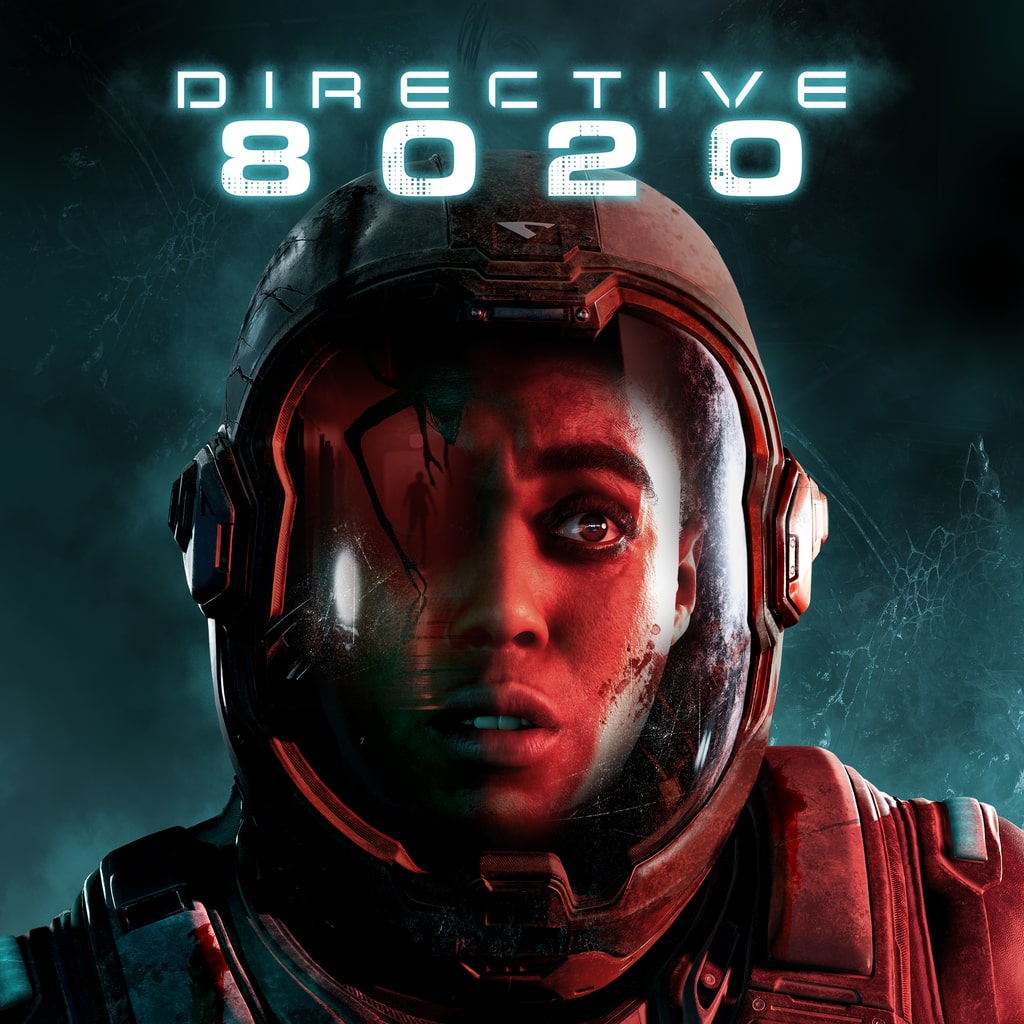
Many of us grew up gazing at the night sky, dreaming of space travel long before we understood its realities. We imagined ourselves drifting among stars in massive spacecraft heading to distant worlds. Space symbolised endless possibilities and mysteries. Films like Alien, Event Horizon, and The Thing transformed that wonder into fear, showing us that the unknown could be just as terrifying as it is beautiful. Surprisingly, space travel for civilians is becoming a reality! While £1 million is beyond most, for just £40, you can fulfil your childhood dream with Supermassive Games’ Directive 8020.
The latest instalment in The Dark Pictures Anthology, released this month, shifts from haunted houses and isolated towns to cold steel corridors, dying stars, and the creeping paranoia of deep space. It offers a cinematic horror experience that asks a chilling question: if humanity’s last hope depended on trust, what happens when no one can tell who is still human?
A Bold New Direction
From the opening moments aboard the colony ship Cassiopeia, it becomes clear that Directive 8020 operates on a larger scale than previous Dark Pictures entries. Earth is collapsing, resources are gone, and humanity’s final chance rests on reaching Tau Ceti f, a distant planet that may support life. The crew’s mission is already tense when disaster strikes, but things spiral quickly after contact with an alien organism capable of perfectly mimicking living beings.
It is an idea horror fans will recognise immediately, yet Supermassive uses it effectively because it taps into a timeless fear. Monsters are frightening. Not knowing whether the person standing beside you is secretly one of them is far worse. The cast conveys this tension beautifully, especially Lashana Lynch as Brianna Young. Her performance gives the story emotional weight beyond its creature-feature premise. Brianna is not a fearless action hero. She is exhausted, grieving, uncertain, and desperately trying to hold people together while paranoia slowly poisons the crew from within.
Unlike some earlier anthology entries, where characters occasionally felt disposable, Directive 8020 spends more time building believable relationships. Conversations linger. Conflicts simmer naturally. Even quiet moments in the ship’s communal areas feel important because the game constantly reminds you that any character could die at any moment.
Horror in Motion
The biggest evolution comes through gameplay itself. Previous Dark Pictures games often resembled interactive films with occasional exploration segments. Directive 8020 substantially changes that formula. For the first time in the anthology, players have far more direct control over movement and survival. Exploration aboard the Cassiopeia feels tense because danger is no longer confined to scripted sequences. Mimics stalk ventilation shafts and dark corridors as you use scanners, torches, and environmental tools to survive.
Stealth mechanics play a significant role. Ducking behind machinery while listening to distorted footsteps echo through the ship creates genuine anxiety. Some sequences feel heavily inspired by survival horror classics like Alien: Isolation, though with a more cinematic structure. Importantly, the game rarely overuses these mechanics. They add tension without turning the experience into a full-on action title. The focus remains on atmosphere and choice-driven storytelling, but there is now a stronger sense of personal involvement in moments of danger.
The addition of the utility strap is particularly clever. What initially appears to be a simple gadget gradually becomes an essential survival tool. Scanning for biological traces while your torch flickers in cramped maintenance tunnels creates some of the most nerve-racking moments Supermassive has ever produced.
The Fear of Identity
What elevates Directive 8020 beyond standard sci-fi horror is its effective weaponisation of uncertainty. The mimic organism does not simply copy appearances. It studies behaviour, speech, and memory. Crew members begin accusing one another. Friendships collapse. Every disagreement carries suspicion. Supermassive smartly avoids making the creature too visible too early, allowing paranoia itself to become the true antagonist.
This creates fascinating moral dilemmas throughout the campaign. Do you isolate a crew member behaving strangely, even if they may still be human? Do you risk saving someone who could already be compromised? The game constantly forces you to make decisions without complete information.
The new “Turning Points” feature deserves praise. It allows players to revisit pivotal decisions after completing chapters. Some purists may disable it entirely via Survivor Mode, but for most players it feels like a smart inclusion rather than a cheap escape hatch. Dark Pictures games thrive on branching outcomes, and this system encourages experimentation without destroying tension during a first playthrough. More importantly, the branching paths finally feel substantial. Choices create major narrative ripples rather than cosmetic dialogue variations. Entire sequences can disappear depending on who survives, who trusts each other, and who succumbs to fear.
A Stunning Technical Leap
Visually, Directive 8020 is easily Supermassive’s strongest game to date. The shift to a more advanced engine gives the environments an oppressive realism that suits the story perfectly. The Cassiopeia feels lived-in. Screens flicker with dying system alerts. Metallic corridors groan under stress. Frost creeps across damaged windows as distant stars burn silently outside.
The lighting work deserves particular praise. The ship constantly fluctuates between sterile corporate brightness and suffocating darkness. Emergency red lights cast long shadows that make every hallway feel unsafe. Even moments of calm carry a visual unease beneath the surface.
Character models have also improved dramatically. Facial performances capture subtle fear and distrust in ways previous anthology entries occasionally struggled to convey. Tiny expressions matter when suspicion becomes central to the narrative. The body horror is equally impressive, if deeply unpleasant. Without spoiling specifics, the transformations caused by the alien organism are genuinely disturbing. Flesh twists unnaturally. Bones crack beneath translucent skin. Some sequences rival the grotesque practical horror of films like The Thing.
Performance remains remarkably stable throughout. On PlayStation 5, the game maintains smooth frame rates even during visually chaotic scenes involving fire, decompression, or large-scale environmental destruction.
Pacing Problems in Deep Space
Despite its many strengths, Directive 8020 is not flawless. The stealth mechanics, while effective, occasionally slow the pacing too much. Certain sections drag slightly as the game becomes overly cautious about building tension. Horror relies on restraint, yet the narrative momentum stalls beneath extended sneaking sequences.
The flash-forward scenes also remain divisive. Supermassive continues its tradition of teasing future events through visions and fragmented imagery. Sometimes this works brilliantly. Other times, it weakens suspense by making future twists slightly too predictable.
A few supporting characters also receive less development than they deserve. Brianna anchors the narrative strongly, but certain crew members feel underexplored compared with others, particularly in the middle chapters. Still, these issues never derail the experience entirely. The emotional core remains compelling enough to carry the occasional uneven moment.
Final Verdict
Directive 8020 feels like the start of a confident new era for The Dark Pictures Anthology. By blending cinematic storytelling with deeper exploration, stronger survival mechanics, and genuine psychological tension, Supermassive Games has delivered its most ambitious horror experience yet. The game understands that space horror works best when spectacle is paired with isolation. The stars outside the Cassiopeia are beautiful, but they are also indifferent. Humanity’s final hope drifts silently through the void as paranoia tears the crew apart from within.
What lingers after the credits is not simply the monsters or the jump scares. It is the fear of uncertainty. The fear that survival itself may demand the sacrifice of trust, morality, and even identity. For longtime fans of cinematic horror games, Directive 8020 is easily one of the strongest entries in the anthology so far. It occasionally stumbles under its own ambition, but when it locks into rhythm, it becomes genuinely gripping science-fiction horror.


