Some games age gracefully because they were ahead of their time. Others endure because they never tried to be anything more than they needed to be. ARKANOID sits comfortably in that second category. It is a pure idea, stripped to its essentials in 1986 and preserved with almost stubborn care ever since.
With Arcade Archives 2 ARKANOID, HAMSTER Corporation continues its long-running preservation effort, now upgraded for modern hardware. This is not a remake, reinvention, or reinterpretation. It is a careful restoration of a classic arcade loop, with just enough modern support features to keep it alive in 2026 without dulling its original intent. And that intent remains beautifully simple: break everything on screen, one bounce at a time.
The Clean Loop of Destruction
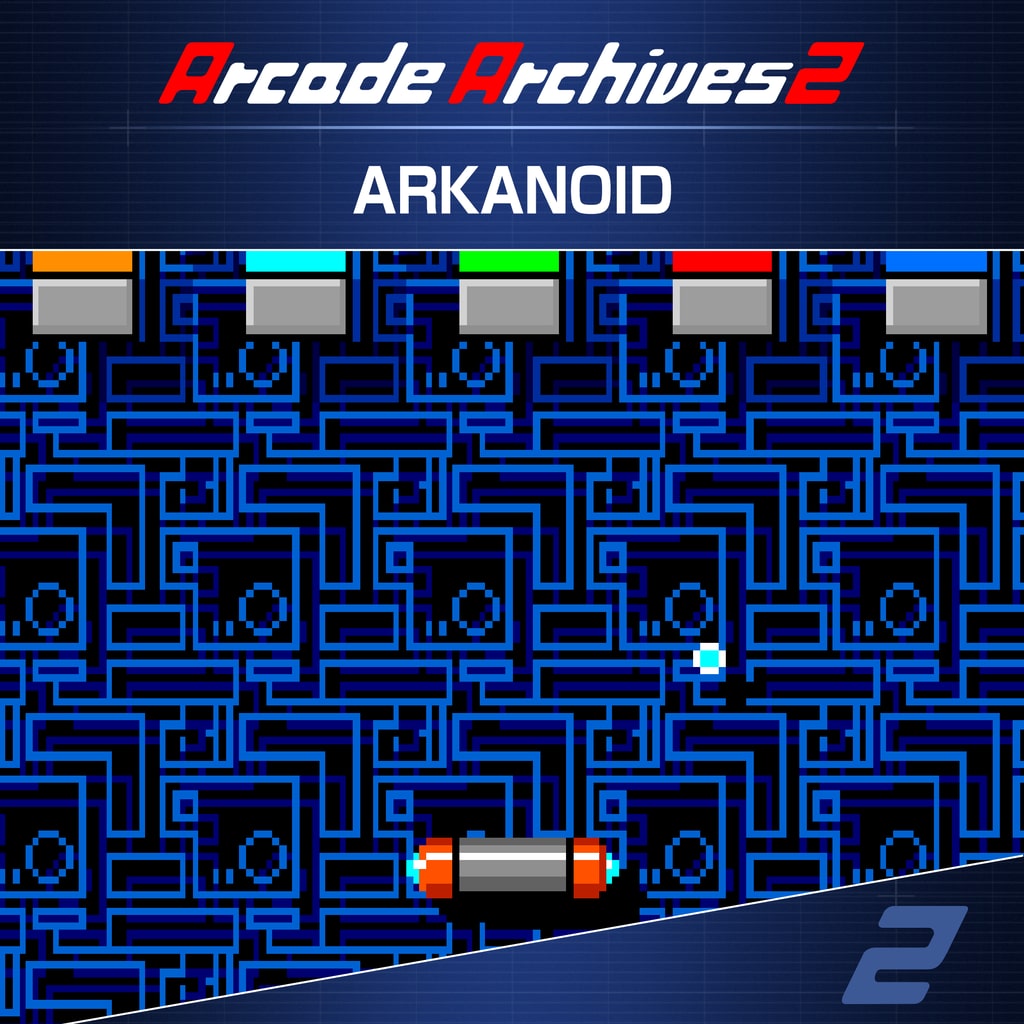
At its core, ARKANOID remains the same game it has always been. You control the small ship VAUS, sliding left and right along the bottom of the screen as a ball ricochets upwards to destroy formations of bricks. The goal is not just survival, but control. Each bounce matters. Each angle is a decision.
There is something oddly calming about its directness. No narrative layers. No upgrade trees. Just movement, timing and a constantly shifting puzzle of geometry and reflex.
Even after decades of evolution in game design, ARKANOID still feels strangely modern, communicating its rules with striking clarity. You understand what to do within seconds. The challenge is not comprehension, but execution.
What Arcade Archives 2 Actually Adds
This version does not attempt to reinvent the wheel. Instead, it polishes the frame around it. The biggest addition is Time Attack Mode, which shifts the focus from score chasing to pure efficiency. Rather than playing for survival or a high score, you are now racing the clock. It subtly but importantly changes the rhythm, encouraging riskier play and faster decision-making.
There is also the expected suite of Arcade Archives features, including rewind, rapid-fire options, difficulty toggles and multiple save states. These tools do not alter the core identity of the game, but they do make it more accessible to modern players who may not have grown up with arcade difficulty curves.
Online leaderboards return as well, and they remain one of the quiet strengths of the package. Seeing how your run compares globally adds a small but persistent layer of motivation that fits perfectly with the game’s repeatable structure.
On the technical side, VRR support and 4K presentation on supported hardware bring a smoother, cleaner version of ARKANOID than most players have ever seen. Importantly, it still looks like ARKANOID. The goal here is preservation, not reinterpretation.
Why It Still Works
What makes ARKANOID endure is not complexity but rhythm. Every stage develops its own tempo as the ball speeds up, slows down, gets trapped, or escapes into unpredictable patterns. You are constantly reacting, yet subtly predicting.
There is a quiet tension between control and chaos. You are always in command of VAUS, but never fully in control of the ball. That small gap is where the game lives. It turns a simple brick breaker into something closer to a reflex puzzle with momentum.
Even now, there is satisfaction in watching a carefully planned bounce clear half a screen of blocks in a chain reaction. It is immediate, readable, and endlessly repeatable.
Preservation Over Reinvention
HAMSTER Corporation has built a reputation for faithful arcade preservation, and Arcade Archives 2 ARKANOID continues that philosophy without compromise. There are no attempts to modernise the mechanics or reinterpret the pacing. Instead, the focus is on accuracy and accessibility. For purists, that approach is reassuring. This is not a remix. It is a restoration.
That said, players expecting significant new content will not find it here. Aside from Time Attack Mode and quality-of-life features, this is still the same game that has existed in countless forms for decades. The question is not whether it has changed, but whether it needed to. For many, the answer will simply be no.
A Game That Lives Between Runs
One of the most interesting things about ARKANOID in 2026 is how it fits into modern play habits. It is not a game that demands long sessions. It thrives in short bursts. A few runs, a few retries, a few moments of near failure followed by recovery.
That structure makes it surprisingly compatible with contemporary gaming habits, especially on handheld or hybrid systems like the Nintendo Switch 2. It is easy to pick up, easy to understand, and deceptively hard to master.
There is also a meditative quality to repetition. You are not progressing through a story so much as refining a skill. Each failure teaches something small about timing, angle, or patience. Each success feels earned in a very immediate way.
Final Verdict
Arcade Archives 2 ARKANOID does not try to redefine a classic, and it does not need to. Instead, it preserves one of arcade gaming’s most enduring ideas with care, precision and just enough modern support to make it comfortably playable today.
Time Attack Mode adds a welcome sense of urgency, and the technical improvements make this the most refined version of ARKANOID available on modern hardware. But at its heart, this is still a game about a bouncing ball and a paddle, and the strange satisfaction of turning order out of chaos, one brick at a time. It may not surprise you any more, but it still works. And sometimes, that is more than enough.