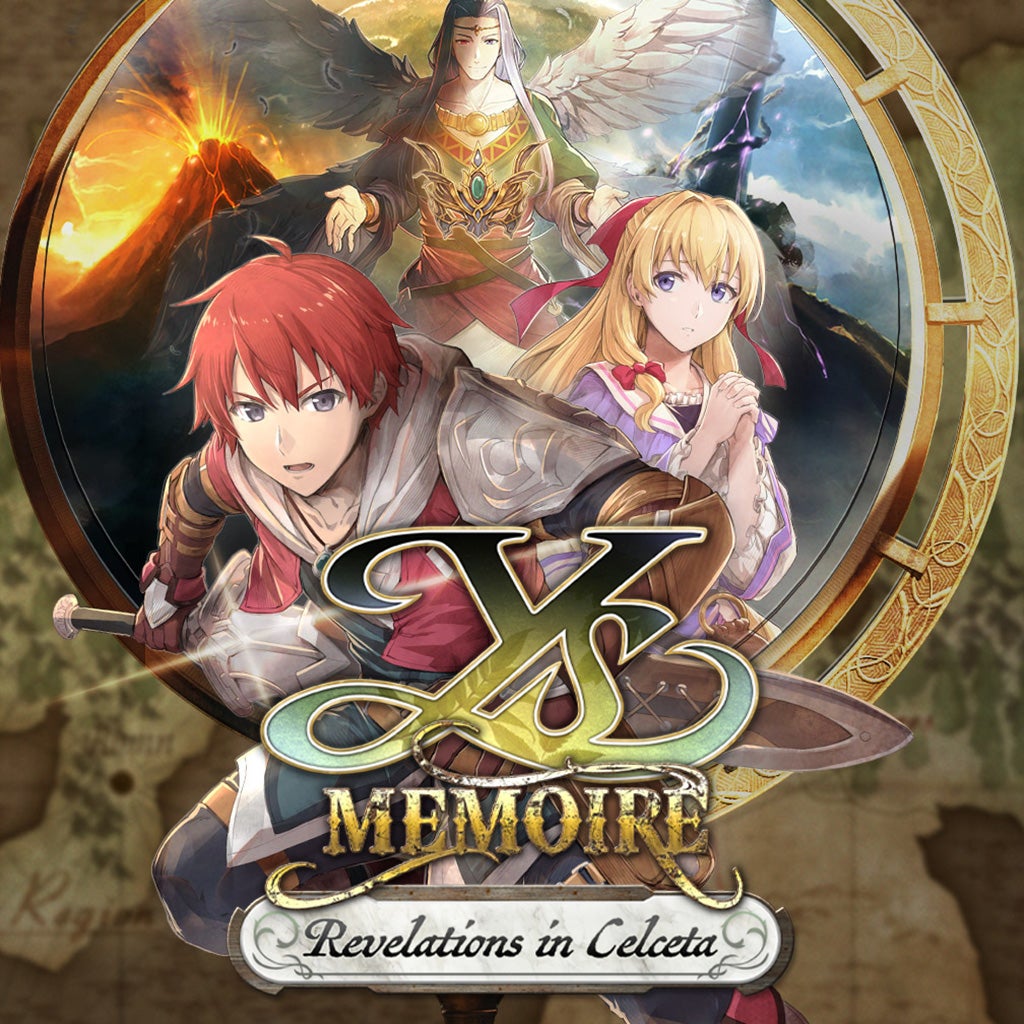
There is something quietly reassuring about stepping into a Ys game. Not because you know exactly what will happen, but because you understand the rhythm it will follow. Movement will feel immediate. Combat will be fast and deliberate. Exploration will pull you forward with just enough mystery to keep you going. Ys Memoire: Revelations in Celceta carries that rhythm with confidence, even as it looks back on a pivotal chapter in the series’ history.
Originally released as Ys: Memories of Celceta, this remastered version arrives on Nintendo Switch in 2026. Developed by Nihon Falcom and published by XSEED Games and Marvelous Europe, it follows the long-running protagonist Adol Christin as he ventures into the Great Forest of Celceta, a place as dangerous as it is unknowable. This time, though, the mystery is not just external. Adol has lost his memories, and the journey becomes as much about rediscovery as it is about survival.
This Memoire edition does not attempt to reinvent the original. Instead, it refines it, smoothing out its edges while preserving the structure that made it so influential in the first place.
A World That Reveals Itself Through Exploration
Celceta is not designed to be conquered quickly. It is meant to be mapped, understood, and pieced together slowly. The forest is dense, layered, and often disorienting at first glance, but that is by design. Progress is measured not only by story milestones but also by how much of the map you have filled in yourself.
This mapping system remains one of the game’s most distinctive features. Exploration feels purposeful because it contributes directly to your understanding of the world. Each cleared section adds clarity, turning uncertainty into knowledge.
There is a steady satisfaction in watching the map fill out over time. It transforms exploration into something tangible, reinforcing the idea that you are not just passing through this world but actively documenting it.
Even now, years after its original release, that system still feels thoughtful and engaging.
Combat That Balances Speed and Strategy
Combat in Revelations in Celceta sits between immediacy and control. It is fast, responsive, and built around constant movement, yet a layer of strategy becomes more apparent as encounters grow more demanding.
The party system lets you switch between characters on the fly, each with their own strengths and attack types. Enemies are not just defined by health and damage, but by how they respond to different approaches. Learning when to switch, when to press an advantage, and when to retreat becomes part of the flow.
This system would go on to influence later entries like Ys VIII: Lacrimosa of Dana, and you can feel those foundations here. It may not have the refinement of its successors, but the core ideas are already strong.
At its best, combat feels fluid and reactive. You are constantly adjusting, shifting between characters, and responding to what the game asks of you. When everything aligns, it creates a rhythm that feels natural rather than forced.
There are moments when encounters become repetitive, particularly in longer stretches of exploration, but the core system remains engaging enough to carry those sections.
A Story Told in Fragments
The narrative of Revelations in Celceta unfolds gradually, often through implication rather than direct explanation. Adol’s lost memories provide a natural framework for this approach. Information is revealed in fragments, allowing the player to reconstruct events alongside the protagonist.
The supporting cast adds texture to this journey. Characters are not always fully developed in isolation, yet they contribute to a larger sense of a world shaped by conflicting motivations and hidden histories.
A subtle tension runs through the story. Celceta is not merely a mysterious location. It is a place with a past that does not sit easily beneath the surface.
At times, the narrative’s pacing can feel uneven. Certain threads take longer than expected to resolve, while others move quickly once introduced. Still, the overall direction remains compelling, particularly for those invested in the broader Ys series.
A Remaster That Respects Its Source
What defines this Memoire edition is not transformation but refinement. Visual upgrades clarify environments and character models without altering their original design. Performance improvements ensure a smoother experience, making the game’s fast-paced combat feel more consistent.
One of the most notable additions is the ability to switch between the original soundtrack and a newly arranged version. Both options have their strengths. The original evokes nostalgia and familiarity, while the updated tracks add depth and clarity.
These enhancements do not change the core experience, but they make it easier to appreciate. Rough edges that once stood out are softened, allowing the underlying design to take centre stage.
It is not a remake, and it does not try to be. It is a careful restoration.
Where Age Still Shows
For all its improvements, Revelations in Celceta cannot entirely escape its origins. Some systems feel less refined than those in more recent entries in the series. Quest structure can become repetitive, and some environmental design lacks the variety seen in later games.
There are also moments when progression feels uneven, particularly when moving between story beats and exploration segments. These are not major flaws, but they are noticeable.
What matters is how the game holds together despite them. Its core systems remain strong enough that these imperfections feel like part of its identity rather than something that undermines it.
Final Verdict
Ys Memoire: Revelations in Celceta is a reminder of why the series has endured for so long. It captures a moment of transition, when ideas that would later define the franchise were first brought together into a cohesive whole.
Its strengths lie in its balance of exploration and combat. The mapping system gives purpose to every step, while the party-based combat provides a satisfying layer of strategy without sacrificing speed. Its weaknesses are tied to its age, with some systems feeling less refined than those that followed.
Even so, this Memoire edition presents the game in its best possible form. It smooths out rough edges without losing what made the original memorable.
For newcomers, it offers a strong entry point into the series’ evolution. For returning players, it provides a chance to revisit a defining chapter with greater clarity. It may not feel new, but it still feels alive.