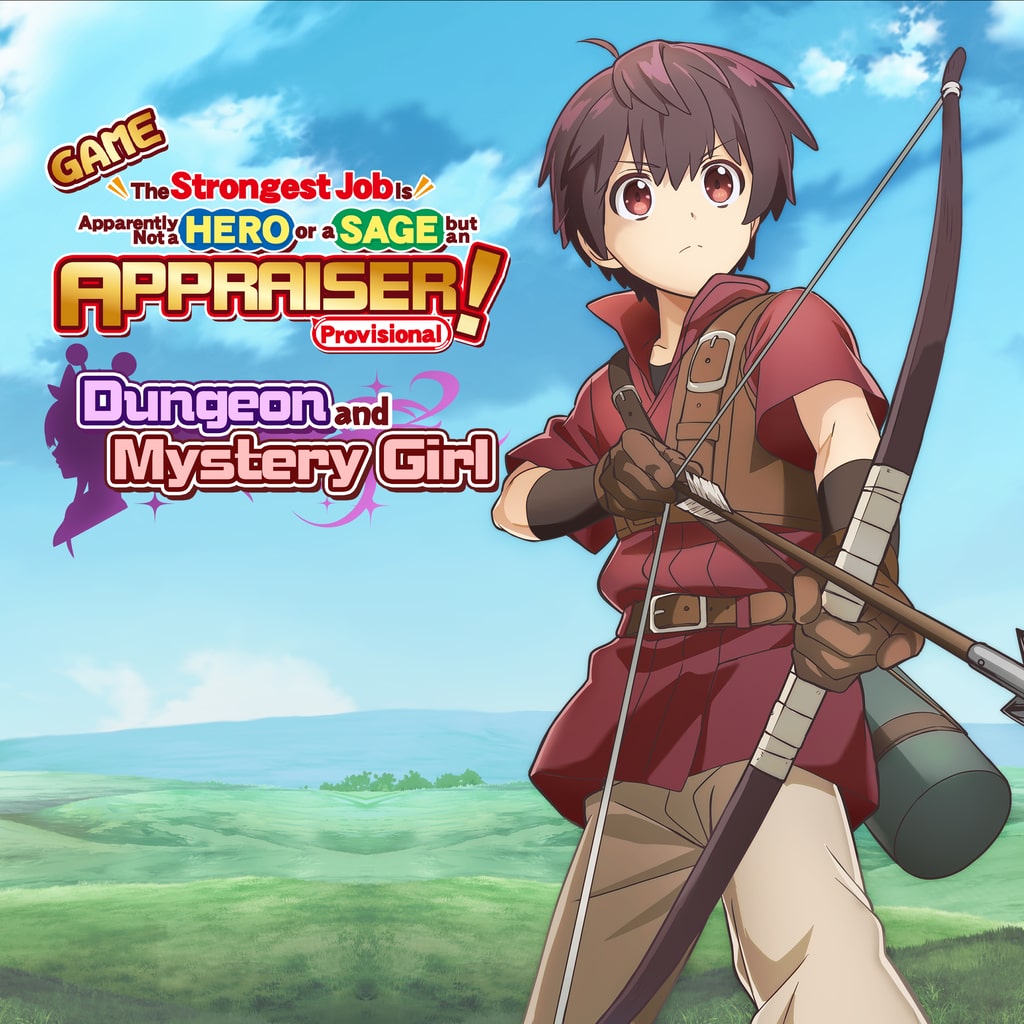
GAME The Strongest Job Is Apparently Not a Hero or a Sage, but an Appraiser (Provisional)! ~Dungeon and Mystery Girl~ is certainly a contender for the Guinness World Records for one of the longest titles in the world. While it is a mouthful, it doesn’t quite reach the extremes set by other titles known for their absurd length, like Natsuiro Haisukūru ★ Seishun Hakusho, comprising 336 characters (including punctuation) which features a massive, sprawling subtitle that runs for hundreds of characters and details a long comedic narrative. While the english champion record-holder is Cthulhu Saves the World: Super Hyper Enhanced Championship Edition Alpha Diamond DX Plus Alpha FES HD – Premium Enhanced Game of the Year Collector’s Edition (without Avatars!), and I’m thankful I’m not reviewing that right now! These titles are intentionally designed to act as a summary or a hook, describing the premise immediately to draw people in.
A game that clearly understands its essence exudes honesty. It avoids grand ambitions or trying to evolve beyond its core concept. Instead, it offers a concise, focused gameplay loop centred on one idea, executed effectively enough to attract repeated play. The Strongest Job Is Apparently Not a Hero or a Sage, but an Appraiser (Provisional)! ~Dungeon and Mystery Girl~ is exactly that kind of game. A spin-off of a newly airing anime, released in April 2026, it trades the expected RPG format for something far more immediate. This is not a sprawling adventure or a deep character-driven system. It’s an arena shooter, through and through. And for better or worse, it commits completely to that identity.
A Familiar World, A Different Genre
Published by SUNSOFT and developed by Rocket Studio, the game arrives alongside the anime adaptation that began airing earlier this month. That connection is clear from the outset.
Characters, tone, and world-building all carry over from the source material. You play as Hibiki and his companions, navigating a mysterious dungeon after a magical mishap pulls them into something far more dangerous than a routine quest.
There’s even a fully voiced, game-exclusive story that branches from early events in the anime. It’s a nice touch, especially for fans, offering something new rather than simply retelling what’s already been shown. But make no mistake. This is not an RPG adaptation.
Simple Controls, Constant Pressure
At its core, Dungeon and Mystery Girl is about survival. You enter arenas, face waves of enemies, and try to stay alive long enough to reach the boss waiting at the end. Movement is fluid, attacks are easy to execute, and the game wastes very little time getting you into the action. It feels approachable almost immediately. But that simplicity is a bit deceptive.
Because layered on top of the standard wave-based combat is the Phantom. A relentless presence that hunts you throughout each run, forcing you to stay mobile and think carefully about positioning. It’s not just about clearing enemies. It’s about managing space, anticipating threats, and making quick decisions under pressure. That constant pursuit adds tension to what might otherwise feel routine.
Build on the Fly
Progression comes through a familiar system of randomised upgrades. As you level up during a run, you’re presented with three choices. Stat boosts, new abilities, passive effects. Each decision shapes how your character plays for the remainder of that attempt. It’s a system we’ve seen many times before, but it works.
Runs begin to feel distinct, even if the core mechanics remain unchanged. One attempt might lean into speed and evasion, another into raw damage or crowd control. There’s a satisfying unpredictability to it, especially when a strong combination clicks into place.
Outside of individual runs, preparation also matters. You choose three party members before entering a dungeon, and that choice has a meaningful impact. Each combination alters your active and passive skills, encouraging experimentation and giving you a reason to try different setups. It’s not deep in a traditional RPG sense, but it’s enough to keep things interesting.
The Rhythm of Repetition
Like many arena shooters, the game lives and dies by its loop. Enter dungeon. Survive waves. Level up. Adapt. Face the boss. Repeat. In short bursts, it works beautifully.
The pacing is brisk, the controls are responsive, and there’s a clear sense of progression within each run. It’s easy to pick up, play for a while, and feel like you’ve achieved something. But over longer sessions, the repetition becomes more noticeable.
Enemy variety is limited. Environments, while functional, don’t change dramatically. The structure remains consistent, sometimes to a fault. You begin to recognise patterns, anticipate encounters, and move through content with less surprise. That’s not unusual for the genre, but it does place more weight on the moment-to-moment gameplay.
Where It Shines
What keeps Dungeon and Mystery Girl engaging is how cleanly everything fits together. Controls feel good. Movement is responsive. Combat, while simple, has enough weight to feel satisfying. The Phantom mechanic adds just enough pressure to keep you from settling into autopilot. There’s also a certain charm to its presentation.
Character designs are lively, voice acting adds personality, and the connection to the anime gives the world a bit more context than you might expect from a game like this. Even if you’re not familiar with the source material, there’s enough here to make the cast feel distinct. It’s not trying to overwhelm you with systems or complexity. It just wants you to play.
Where It Falls Short
That simplicity, though, is a double-edged sword. There’s a ceiling to what the game offers. Once you’ve seen the core loop, there are few surprises left. Builds can vary, but the structure doesn’t evolve in meaningful ways. The excitement of early runs gradually gives way to a more routine experience.
The story, while appreciated, also feels secondary. It’s there for context and flavour, but it doesn’t carry the emotional weight that might elevate the experience beyond its mechanics. Players unfamiliar with the anime may find it serviceable rather than compelling. And while the Phantom is an excellent addition, it can occasionally feel more like a constant annoyance than a dynamic threat, especially once you’ve learned how to manage it effectively.
A Game That Knows Its Lane
What’s interesting about Dungeon and Mystery Girl is how comfortable it is staying within its boundaries. It doesn’t try to be a full RPG. It doesn’t overcomplicate its systems. It takes a familiar structure and applies it to an existing world, creating something that feels accessible and easy to engage with.
For fans of the anime, it’s a welcome extension. For players who enjoy arena shooters and roguelite-style progression, it’s a solid, if straightforward, addition to the genre. For those looking for depth or innovation, it may feel a little light.
Verdict
The Strongest Job Is Apparently Not a Hero or a Sage, but an Appraiser (Provisional)! ~Dungeon and Mystery Girl~ is a focused, fast-paced arena shooter that succeeds by keeping things simple and consistent. Its responsive controls, flexible builds, and constant pressure from the Phantom create an engaging loop, even if that loop doesn’t evolve much over time.
It’s not ambitious, but it doesn’t need to be. Sometimes, a game just needs to be fun. And for a while at least, this one is.