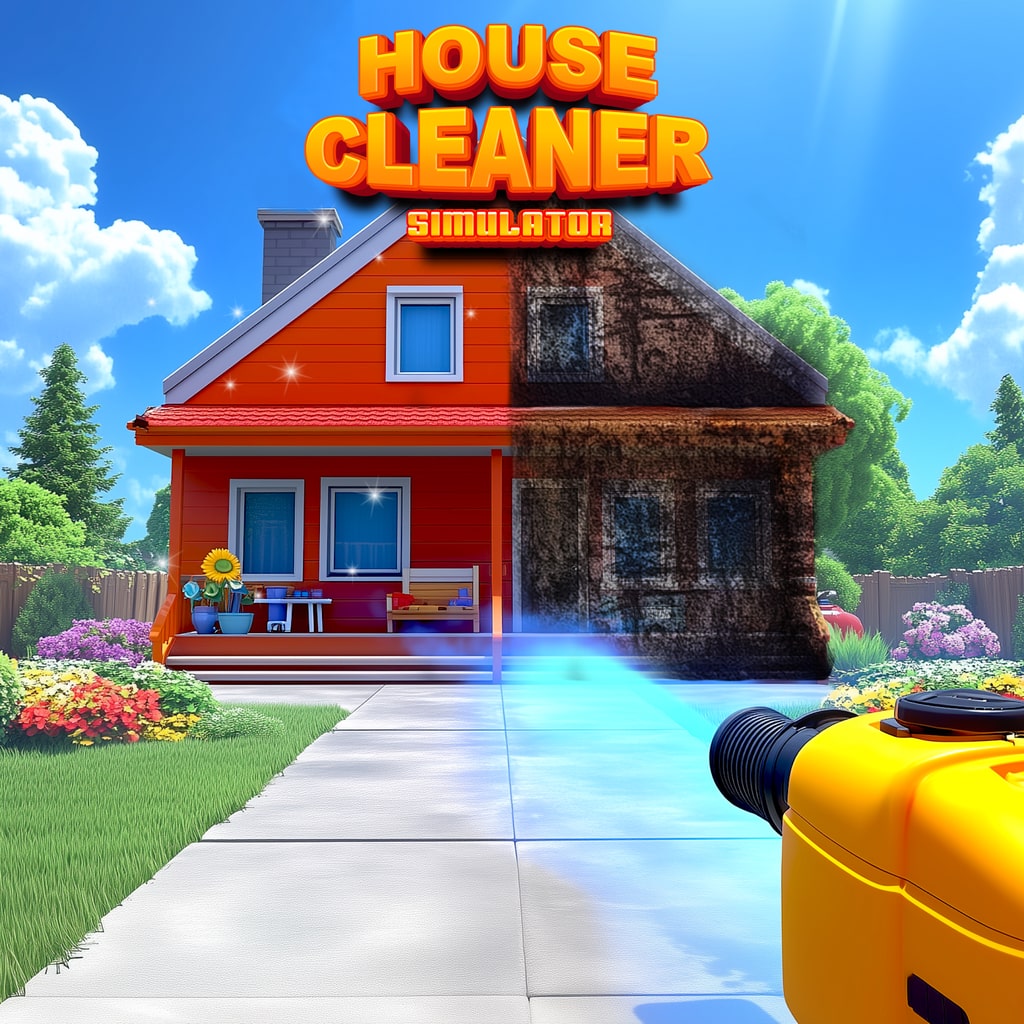
There is something strangely satisfying about taking a space that looks as if it has been completely abandoned by civilisation and turning it into somewhere you would actually want to live. That simple pleasure sits at the heart of House Cleaner Simulator, a game that takes one of the least glamorous jobs imaginable and somehow makes it surprisingly relaxing. Instead of fighting monsters, building empires or saving the world, you are armed with cleaning products, equipment and a willingness to get stuck into other people’s mess. It is a wonderfully uncomplicated premise, yet it understands the appeal of watching chaos slowly disappear beneath your efforts.
Published by Testagamercreations, House Cleaner Simulator belongs to an increasingly popular group of games that turns ordinary jobs into strangely compelling virtual experiences. There is no great mystery to what you are doing here. You arrive at a property, assess the damage, grab the appropriate equipment and start cleaning until the place looks presentable again. Yet there is an undeniable satisfaction in watching a filthy floor become spotless, piles of rubbish vanish and neglected rooms gradually regain some personality.
From Filthy to Fresh
The basic gameplay loop is immediately accessible, which is probably one of the game’s greatest strengths. Every property presents a different challenge, with some jobs involving relatively modest amounts of cleaning while others look as though their occupants have been actively trying to destroy the place. You might find rubbish scattered across floors, filthy surfaces that desperately need attention, and rooms so cluttered that simply working out where to begin becomes part of the challenge. There is something almost therapeutic about slowly working through that mess rather than being expected to magically fix everything at once.
Cleaning itself is broken down into a series of practical tasks. Removing rubbish provides the first satisfying signs of progress, while scrubbing surfaces, washing floors and dealing with dirt require a little more patience. The game encourages you to pay attention to your surroundings rather than simply charging through each room, because completing a job properly means finding those little areas that are easy to overlook. That attention to detail gives House Cleaner Simulator a pleasant rhythm, particularly when you get into a routine and start moving through a property with confidence.
The most rewarding aspect is undoubtedly the transformation. A dirty room can initially look rather miserable, but after a sustained cleaning session the difference becomes obvious. There is a genuine sense of achievement in stepping back and seeing that the space is cleaner because of the work you have put in. It is the same basic appeal that makes organising a messy bedroom or finally tackling an overdue cleaning job in real life so satisfying, except here there is no actual dust to inhale and nobody is asking when you are going to finish.
The Right Tool for the Job
A good cleaning simulator needs more than a mop and a bin bag, and House Cleaner Simulator offers players a respectable selection of equipment to work with. Different forms of dirt require different approaches, so choosing how to tackle particularly unpleasant areas requires thought. Having the right equipment makes the process quicker and more efficient, while upgrades provide a useful sense of progression as your career develops.
That progression is important because cleaning the same sort of small property forever would eventually become repetitive. Fortunately, successful jobs allow you to build your reputation and take on increasingly demanding contracts. Bigger homes and more complicated jobs gradually become available, giving you something to work towards beyond simply achieving a high level of cleanliness. Equipment improvements also help make those later contracts feel more manageable, creating a satisfying relationship between your growing business and the increasing scale of the properties you are asked to restore.
There is also something enjoyable about becoming more efficient. Early on, you are still working things out and taking your time with every task. Eventually, you begin to understand which tools are best suited to particular situations and develop your own routine for tackling each room. It may sound mundane, but that gradual mastery is precisely what makes job simulators work when they are done well.
More Than Just Cleaning
One of the nicer touches is that House Cleaner Simulator does not treat cleaning as simply removing dirt from a series of identical boxes. Different jobs have their own conditions, layouts and levels of complexity, giving each contract a slightly different character. Some properties are relatively straightforward, while others require considerably more patience and attention before you can confidently declare the work complete.
Organisation also plays an important role in making spaces feel properly restored. A clean room can still look untidy if objects are scattered everywhere, so putting things back where they belong becomes part of the wider process. That makes the experience feel less like an exercise in removing grime and more like an attempt to return a home to a comfortable state. There is a subtle difference between a room being technically clean and a room actually feeling finished, and the game understands that distinction.
The client satisfaction system adds another reason to take your time. Completing the required work accurately and thoroughly affects how successful each contract feels, encouraging you not to simply rush towards the exit. For players who enjoy completionist mechanics, there is plenty of appeal in trying to leave every property in the best possible condition. It gives those tiny finishing touches more importance and makes the final result feel earned rather than automatic.
The Joy of Watching the Mess Disappear
Visually, House Cleaner Simulator understands the importance of contrast. A filthy environment only feels rewarding to clean if the player can clearly see the difference afterwards, and the game makes that transformation central to the experience. Watching dirt disappear from surfaces and seeing rooms become brighter and more welcoming provide the visual feedback necessary to keep the process engaging.
The presentation does not try to compete with the latest blockbuster, nor does it need to. The focus is firmly on clarity and function, allowing you to see what needs cleaning and appreciate the results when you are finished. That simplicity works in the game’s favour, as there is little distraction from the core appeal. You are here to make a mess disappear, and the game gives you plenty of opportunities to enjoy doing exactly that.
The audio complements the relaxing nature of the experience. The sounds of cleaning equipment, movement around rooms and general household activity create a surprisingly calming atmosphere. There is something particularly pleasant about the steady rhythm of working through a room while the outside world is temporarily forgotten. It is not quite meditation, but there are moments when House Cleaner Simulator comes surprisingly close to providing that same sense of switching your brain off.
Finding the Fun in Routine
Naturally, there is a limit to how much entertainment some players will find in cleaning virtual houses. The very simplicity that makes the game accessible can also make the experience feel repetitive if you are looking for constant excitement. There are no dramatic plot twists or adrenaline-fuelled action sequences waiting around the corner. Instead, the reward comes from incremental progress, increasingly challenging properties, and the simple pleasure of leaving somewhere better than you found it.
That makes House Cleaner Simulator a game best enjoyed in shorter, relaxed sessions. It is perfect for those evenings when you do not necessarily want something demanding. You can load it up, tackle a contract, watch a revolting room gradually become respectable, and feel like you have actually accomplished something before putting the controller down. In an industry increasingly obsessed with bigger worlds and more complicated systems, there is something refreshing about a game that knows exactly what it wants to be.
There is also a strangely human quality to the whole experience. Cleaning is rarely glamorous, and nobody is going to tell stories about the heroic bathroom you scrubbed on a Tuesday afternoon. Yet there is dignity in making a neglected space feel pleasant again, and House Cleaner Simulator manages to capture some of that satisfaction. Beneath all the simulation mechanics lies a simple idea that remains surprisingly powerful: sometimes making something better is reward enough.
Final Verdict
House Cleaner Simulator is not going to reinvent the simulation genre, but it does not need to. Its strength lies in understanding the appeal of a job well done and turning an everyday chore into something genuinely relaxing. The cleaning mechanics are straightforward, progression gives you a reason to keep working, and the visual transformation from disgusting to delightful provides exactly the kind of feedback that makes this sort of game so addictive.
It will not appeal to everyone, particularly those who need constant action or dramatic storytelling from their games. For everyone else, though, there is something wonderfully calming about its approach. House Cleaner Simulator gives you a pile of problems, hands you the tools to solve them, and then lets you enjoy the results at your own pace. Sometimes, after a long day, that can be exactly what you need.