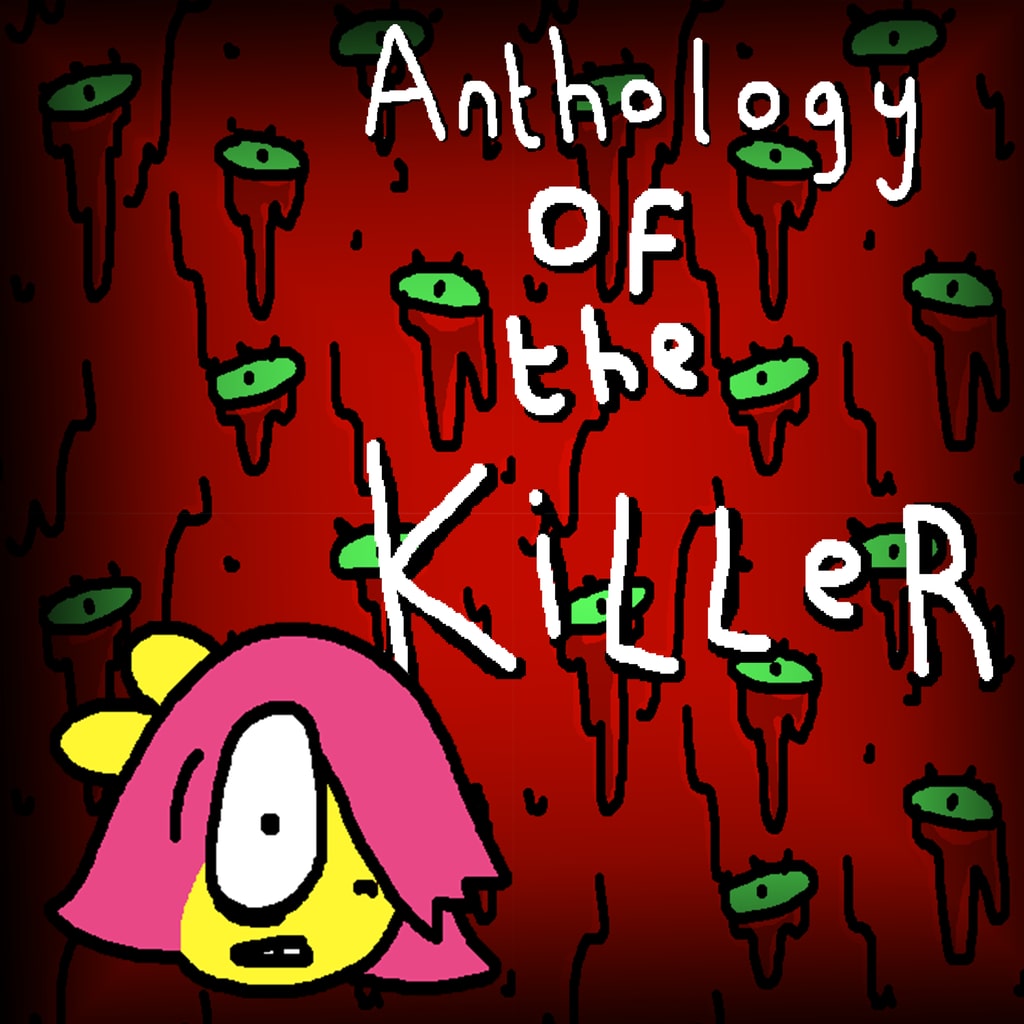
There are horror games that want to scare you, and then there are horror games that want to unsettle you—to crawl under your skin, rearrange your expectations, and leave you thinking about them long after you’ve put the controller down. Anthology of The Killer firmly belongs in the latter camp.
Originally released on PC in 2024 and now arriving on PlayStation 5 and Nintendo Switch, this nine-part collection from Stephen Gillmurphy (aka thecatamites), with art by A. Degen and music by Tommy Tone, feels less like a conventional game and more like a curated exhibit of interactive nightmares. The new console release, complete with a fully explorable 3D hub and a digital museum, finally gives this cult series the presentation it deserves—without sanding down any of its rough, deeply intentional edges.
“Anthology of The Killer isn’t here to scare you—it’s here to confuse you, amuse you, and quietly horrify you in ways you didn’t expect.”
A City Where Horror Is Mundane
At the centre of the anthology is BB, a zine-maker navigating a surreal city where serial killers aren’t extraordinary—they’re part of the everyday texture of life. It’s a premise that immediately reframes horror, stripping away shock and replacing it with something far more insidious: normalisation.
Each of the nine games—Voice, Hands, Drool, Eyes, Flesh, Blood, Ears, Heart, and Face of the Killer—offers a distinct slice of this world. Rather than forming a linear narrative, they function as fragmented vignettes, loosely linked by recurring themes, imagery, and the ever-present sense that something is deeply, fundamentally wrong.
The writing is sharp, often darkly comic, and frequently absurd. One moment you’re navigating a call centre haunted by an indistinct noise from the sea; the next, you’re wandering through a waterpark where something beneath the tiles is trying to be born. The tone swings wildly, yet never loses its sense of identity.
This is horror filtered through zine culture—messy, personal, confrontational, and unapologetically weird.
Lo-Fi Aesthetic, High-Impact Design
Visually, Anthology of The Killer embraces a deliberately lo-fi aesthetic. Chunky models, low-resolution textures, and jarring colour palettes give each game a raw, almost unfinished feel. But make no mistake—this is intentional.
The roughness enhances the atmosphere. Environments feel unstable, as if they could glitch or collapse at any moment. Characters are uncanny in ways that hyper-realistic graphics rarely achieve. There’s a constant sense of unease, driven not by jump scares but by the uncanny dissonance of what you see.
A. Degen’s art direction shines particularly in the new console-exclusive hub and digital museum. These additions contextualise the anthology, offering players a chance to explore behind-the-scenes assets, dioramas, and visual concepts. They transform the collection into something closer to an interactive gallery—part game, part exhibition.
Nine Games, Nine Flavours of Unease
Each entry in the anthology plays differently, but they all share a commitment to experimentation.
- Voice of the Killer leans into slow-burn tension, blending mundane tasks with creeping dread.
- Hands of the Killer turns confined spaces into sources of paranoia, using sound design to devastating effect.
- Drool of the Killer is perhaps the most abstract, presenting a bizarre, almost dreamlike descent into something unknowable.
- Eyes of the Killer skewers performance and spectacle, wrapping horror in the trappings of theatre.
- Flesh and Blood delve into body horror and folk horror respectively, each with their own twisted logic.
- Ears, Heart, and Face round out the collection with explorations of music, desire, and identity.
What ties them together isn’t gameplay consistency, but thematic cohesion. These are games about systems—social, artistic, and psychological—and how they shape our understanding of violence.
Gameplay: Intentionally Uneven
If there’s one area where Anthology of The Killer will divide players, it’s the gameplay.
This is not a collection focused on mechanical depth or polish. Controls can feel awkward, objectives are often unclear, and pacing varies wildly across entries. Some segments may feel frustrating or even unfinished to players expecting traditional design standards.
But criticising the game purely on those terms misses the point.
The awkwardness is part of the experience. It reinforces the sense of dislocation, of being in a world that doesn’t quite follow the rules you expect. Interactions feel strange because the world itself is strange.
That said, this approach won’t work for everyone. Players seeking tight, refined gameplay loops may find the anthology difficult to engage with. It demands patience, curiosity, and a willingness to embrace discomfort.
Sound and Music: A Constant Undercurrent
Tommy Tone’s soundtrack is integral to the experience. It shifts between ambient unease, distorted melodies, and moments of unexpected levity, perfectly mirroring the anthology’s tonal shifts.
Sound design is equally effective. From distant, unidentifiable noises to abrupt, jarring audio cues, the game uses sound to build tension in ways visuals alone cannot. It’s subtle, often unsettling, and always deliberate.
The Console Upgrade: A Definitive Edition?
The move to consoles isn’t a simple port—it’s a thoughtful re-presentation.
The 3D hub ties the anthology together, giving players a physical space to inhabit between experiences. It adds context without over-explaining, preserving the series’ sense of mystery while making it more accessible.
The digital museum is an inspired addition, particularly for fans interested in the creative process. It highlights the collaborative nature of the project and reinforces its identity as an artistic work as much as a game.
Performance is solid on both the PlayStation 5 and the Nintendo Switch, with the lo-fi aesthetic ensuring smooth gameplay across platforms.
Where It Falters
Anthology of The Killer is unapologetically niche. Its experimental nature, uneven gameplay, and abstract storytelling will inevitably alienate some players.
At times, the lack of clarity feels less like intentional design and more like a barrier. Certain segments can drag, and not every idea lands with equal impact.
Yet these flaws are, in many ways, inseparable from what makes the anthology unique. It’s messy, inconsistent, and occasionally frustrating—but also bold, distinctive, and memorable.
Final Verdict
Anthology of The Killer is not a game you simply play—it’s a game you experience. It challenges conventional ideas of what horror games should be, prioritising mood, theme, and artistic expression over polish and accessibility.
For those willing to meet it on its own terms, it offers a deeply original experience—one that lingers long after the credits roll. For others, it may feel impenetrable.
Either way, it’s impossible to ignore.