There’s something quietly enduring about the marble-shooter genre. Ever since classics like Zuma carved out their niche, developers have revisited the formula time and again—sometimes refining it, sometimes merely repainting it. With Zumba – Treasure of Marble Island, developer EpiXR Games transports the familiar chain-matching chaos to a colourful island setting, adding light exploration elements and a handful of mechanical tweaks. The result is a game that feels instantly recognisable, occasionally refreshing, but not always essential.
Island Life: A Fresh Coat of Paint
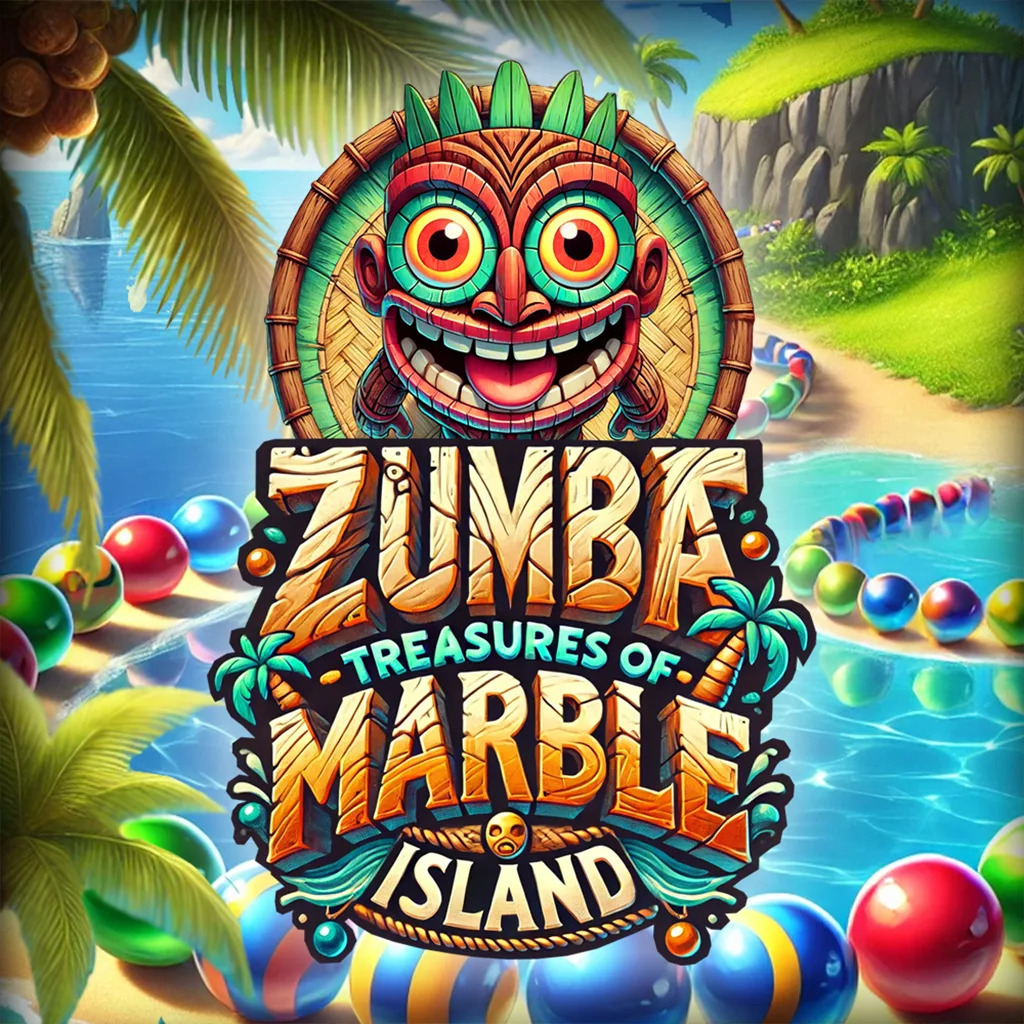
From the moment you boot up Zumba – Treasure of Marble Island, it’s clear that presentation is one of its strongest assets. The tropical theme is vibrant and inviting, with lush greens, golden sands, and fiery volcanic backdrops that provide a steady sense of progression as you move through its four distinct realms.
Each environment—whether it’s the Sunlit Beach Temples or the steamy Volcano Springs—feels visually cohesive, even if the underlying gameplay doesn’t evolve much alongside it. The addition of a central hub world is a welcome touch, giving players a small sense of agency as they move between stages, discover secrets, and unlock new areas. It’s not an open world by any means, but it adds a layer of personality that elevates the experience beyond a simple level-select menu.
Still, beneath the tropical veneer, the structure remains very familiar. You choose a stage, position your tiki warrior, and begin firing marbles into a steadily advancing chain. Match three or more of the same colour, create combos, and prevent the line from reaching its endpoint. It’s a formula that works—and here it’s as polished as ever—but it rarely surprises.
Core Gameplay: Simple, Addictive, Predictable
At its heart, Zumba – Treasure of Marble Island thrives on accessibility. The controls are intuitive, responsive, and easy to pick up within minutes. Aiming is precise across all platforms, and the feedback loop—shoot, match, clear, repeat—is inherently satisfying.
The game attempts to distinguish itself through its pacing and the use of “Blessings”—special abilities such as Time Freeze or Repaint that let you manipulate a stage’s flow. These powers can be the difference between a narrow victory and a frustrating defeat, especially in later levels, where marble chains accelerate to near-chaotic speeds.
However, while these additions provide momentary bursts of strategy, they don’t fundamentally change how you approach the game. Most levels still boil down to quick reflexes and pattern recognition rather than long-term planning or creative problem-solving. That’s not inherently a flaw—this genre thrives on simplicity—but it can make the experience feel repetitive over extended sessions.
Difficulty Curve: Fair, But Occasionally Frantic
One of the more successful aspects of Zumba – Treasure of Marble Island is its difficulty progression. The early stages ease players into the mechanics, gradually introducing new marble colours, obstacles, and path complexities. By the time you reach the later realms, the game demands sharper reactions and more effective use of power-ups.
That said, the difficulty sometimes spikes in ways that feel chaotic rather than challenging. Faster marble chains and tighter pathways can push the game into a reactive frenzy, where success depends more on quick thinking than careful execution. While this can be exhilarating in short bursts, it occasionally undermines the sense of control that the best puzzle games strive for.
The three-star scoring system adds replayability, encouraging players to revisit levels to improve their performance. For completionists, this offers a satisfying challenge—but for more casual players, it may feel like an unnecessary grind.
Variety and Progression: Style Over Substance
Despite its four themed realms and numerous levels, Zumba – Treasure of Marble Island struggles to sustain long-term variety. While visual changes keep things fresh on the surface, the core gameplay loop remains largely unchanged from start to finish.
New obstacles and mechanics are introduced sparingly, and when they do appear, they rarely alter the player’s strategy in any meaningful way. This results in a game that feels front-loaded with charm but gradually settles into a predictable rhythm.
The hub world, while charming, also feels underutilised. Hidden treasures and bonus stages are a nice touch, but they don’t significantly expand the experience. There’s a sense that the game is brushing up against something more ambitious, but it never quite commits to it.
Performance and Platform Differences
Across all platforms, Zumba – Treasure of Marble Island runs smoothly, with stable performance and minimal technical issues. Load times are short, and the game’s stylised visuals translate well across hardware.
On PlayStation 5, the experience benefits slightly from faster load times and subtle controller feedback, though these enhancements are modest rather than transformative. The Nintendo Switch version, meanwhile, holds up well in both docked and handheld modes, making it a particularly good fit for short, on-the-go sessions.
Ultimately, this is a game that prioritises consistency over technical ambition—and in that regard, it succeeds.
Sound Design: Energetic but Forgettable
The audio design complements the game’s tropical theme, with upbeat tracks and rhythmic sound effects that match the pace of the gameplay. The music maintains energy during intense moments, though it lacks the kind of memorable hooks that might elevate the experience.
Sound effects, on the other hand, are crisp and functional. Each marble shot, combo, and explosion provides clear feedback, reinforcing the core gameplay loop. It’s effective, if not particularly standout.
Longevity: A Casual Companion
Zumba – Treasure of Marble Island is best enjoyed in short bursts. Its pick-up-and-play design makes it ideal for quick sessions, whether you’re aiming to clear a few levels or chase a higher score.
However, its lack of deeper systems or meaningful progression limits its long-term appeal. Once you’ve seen what the game offers, there’s little incentive to return beyond personal score-chasing or completionist goals.
For players seeking a relaxing, low-commitment experience, this won’t be an issue. But for those looking for something more substantial, it may feel a bit lightweight.
Final Verdict
Zumba – Treasure of Marble Island is a polished, accessible entry in the marble-shooter genre that delivers exactly what it promises—no more, no less. Its vibrant presentation, intuitive gameplay, and steady difficulty curve make it an easy recommendation for casual players or fans of the genre.
However, its reliance on familiar mechanics and limited innovation prevent it from standing out in a crowded field. While the tropical setting and hub world add charm, they don’t significantly enhance the core experience.
This is comfort gaming at its finest—reliable, enjoyable, and easy to pick up—but it rarely reaches the heights of truly memorable puzzle design.