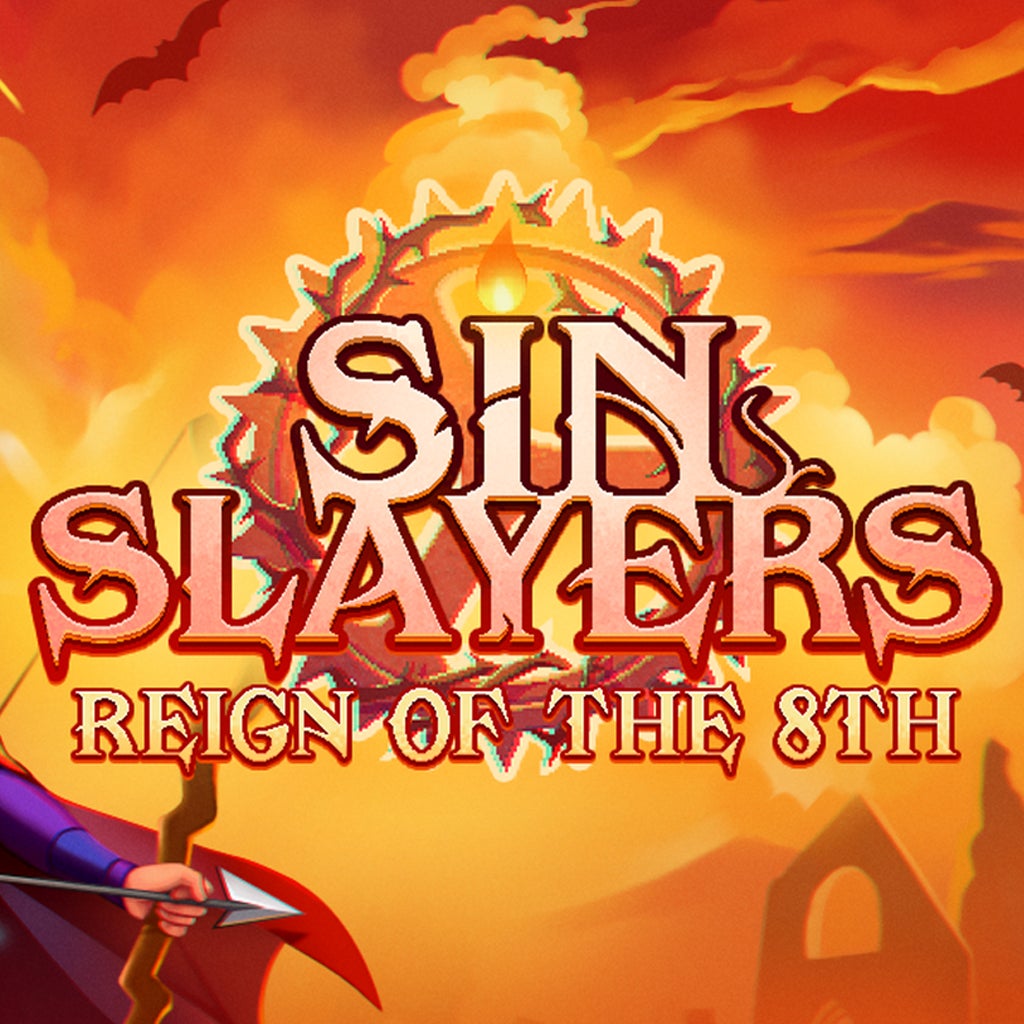
Sin Slayers: Reign of The 8th arrives on Xbox Series X|S and Xbox One as a definitive, enhanced edition of Goonswarm Games’ original 2019/2024 tactical RPG roguelite. Released on 2 April 2026, this version not only refines the experience—it significantly expands it with a new 8th region, rebalanced progression systems, and improved technical performance, including a stable 60 FPS on current-gen hardware.
At its core, this is a turn-based RPG that proudly displays its identity: a dark fantasy roguelite centred on temptation, consequence, and escalation. But what sets it apart from the crowded field of gridless dungeon crawlers and party-based roguelites is its key mechanic—the Sinometer.
This system doesn’t just track progress. It defines it.
The Sinometer: Risk, Reward, and Ruin
The Sinometer is the beating heart of Reign of The 8th. Every decision you make—whether it’s looting extra treasure, choosing riskier encounters, or indulging in greed-driven actions—pushes the meter higher. As it rises, so does the difficulty of the world around you. Enemies become stronger, encounters more punishing, and environmental hazards more severe.
On paper, it sounds like a straightforward risk-reward system. In practise, it becomes a constant psychological tension between restraint and ambition. Do you play safe, keeping your sin low and enemies manageable? Or do you push further, stacking risk for greater rewards at the cost of future survival?
This tension gives every run a sense of narrative weight, even though the game is structurally roguelite. Each expedition feels like a moral spiral as much as a tactical journey.
What makes the system particularly effective is that it never feels abstract. You see the consequences of your actions immediately. Enemy behaviours shift, encounters escalate, and boss fights gain new layers of complexity depending on how far you’ve pushed the system. It’s one of the most cohesive risk mechanics in the genre.
Turn-Based Combat with Sharp Edges
Combat in Sin Slayers is rooted in traditional turn-based mechanics: party positioning, ability cooldowns, status effects, and elemental interactions all influence the battle. However, it stands out through its pacing and sense of pressure.
Encounters are rarely static. The Sinometer often adjusts battles in real time, introducing modifiers that require players to adapt rather than repeat strategies. An enemy that was previously manageable might suddenly gain aggressive buffs, or environmental effects could change turn order dynamics.
Party composition becomes increasingly important. You assemble a group of “wicked adventurers,” each linked to specific archetypes and moral flaws. These aren’t heroic fantasy champions—they’re flawed, often selfish individuals whose abilities reflect their sins. A greed-driven rogue might excel at resource theft during combat, while a wrath-aligned warrior sacrifices defence for overwhelming damage.
This thematic link between character identity and mechanics is one of the game’s greatest achievements. It reinforces the idea that sin isn’t just a narrative theme but a functional gameplay layer.
That said, combat can sometimes experience pacing issues during longer encounters. Some battles extend slightly beyond their ideal length, particularly when Sinometer modifiers stack heavily in later regions. While this adds tension, it can also slow momentum.
The 8th Region: Expansion with Purpose
The addition in Reign of The 8th is, unsurprisingly, the new 8th region. Rather than feeling like a simple content drop, it integrates seamlessly into the game’s structure with impressive cohesion.
This new area introduces more complex enemy behaviours and environmental hazards that directly interact with the Sinometer system. It also pushes the game’s narrative tone further into existential horror territory, emphasising themes of consumption, corruption, and inevitability.
Visually, the region stands out with greater contrast and a more oppressive design language. Where earlier zones feel like twisted fantasy landscapes, the 8th region feels almost claustrophobic in presentation. It is less about exploration and more about endurance.
Importantly, it also serves as a mechanical stress test for everything the game has taught you up to that point. Builds that previously seemed overpowered are forced into tighter decision-making, and Sinometer management becomes absolutely critical.
Progression, Structure, and Replayability
As a roguelite, Sin Slayers depends on repetition— but not on dullness. Runs vary significantly based on party makeup, Sinometer choices, and route decisions. The updated game flow in this edition smooths out some pacing issues from earlier versions, making progression feel more steady and less grind-heavy.
Loot gathering and character growth are closely linked to risk-taking. The more you venture into sin-heavy areas, the greater the rewards— but also the harsher the consequences in future encounters. This creates a cycle where success and failure continually influence each other.
There is a rewarding sense of long-term mastery here. As you become more familiar with the systems, you start to intentionally manipulate the Sinometer rather than fear it. This shift—from avoidance to control—is where the game reveals its deepest strategic potential.
Presentation and Performance
On Xbox Series X|S, the 60 FPS performance update makes a noticeable difference. Combat animations are smoother, input response is sharper, and the overall experience feels more stable than in previous versions.
Visually, the game maintains a stylised dark fantasy aesthetic. It is not aiming for realism but rather mood—heavy shadows, exaggerated character designs, and environments that seem perpetually corrupted. While not technically cutting-edge, it remains thematically consistent and effective in reinforcing the game’s tone.
The soundtrack complements this with brooding, atmospheric compositions that swell during boss encounters and fade into minimal ambient tension during exploration phases.
Final Thoughts
Sin Slayers: Reign of The 8th succeeds because it fully embraces its core concept: that morality, greed, and risk should directly influence difficulty and experience. The Sinometer system elevates it beyond typical turn-based roguelite design by giving each decision real weight.
Although it has some flaws—such as occasional pacing issues in combat and inevitable repetition common to the genre—it offers a mechanically rich and thematically cohesive experience that stands out in a crowded market.
This is a game about pushing your boundaries, fully aware that the world will punish you for doing so.
And that punishment is precisely what makes it compelling.