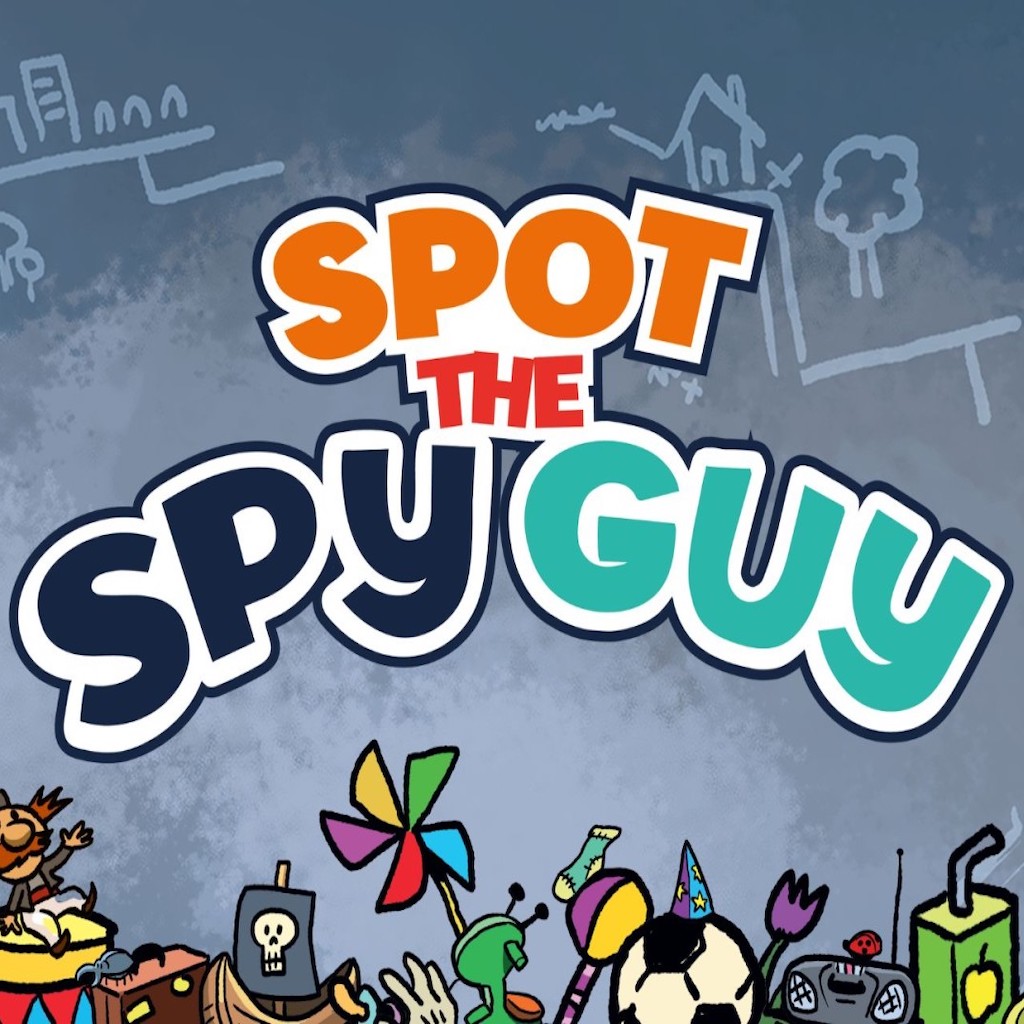
There’s something inherently reassuring about hidden-object games. They don’t require lightning-fast reflexes or deep mechanical mastery—just a sharp eye, a little patience, and a willingness to get lost in beautifully illustrated worlds. Spot the Spy Guy, the latest digital entry in Trefl’s steadily growing Spy Guy franchise, fully embraces that comfort. Yet, while it exudes charm in abundance, it also prompts the question: how much simplicity is too much?
Developed and published by Trefl S.A., this new instalment builds on the foundation established by earlier titles like Spy Guy Hidden Objects Deluxe Edition, while introducing a twist that shifts the experience. Instead of simply finding individual objects scattered across busy scenes, players are now challenged to locate matching pairs. It’s a subtle change, but one that alters the pacing and, at times, the entire feel of the game.
A World Built on Detail
The first thing that stands out in Spot the Spy Guy is its visual design. The hand-drawn art style remains the series’ defining feature, and it’s as inviting as ever. Each location—whether it’s a bustling city square, a cluttered museum, or a sun-soaked seaside—is packed with personality. Characters go about their routines, small visual gags are tucked into corners, and the sheer density of detail encourages players to linger.
There’s a clear lineage here from the franchise’s board game origins. Much like its tabletop predecessor, the digital version thrives on visual chaos—but in a controlled, intentional way. Objects aren’t just hidden; they’re integrated into the environment, often blending seamlessly with surrounding elements. A pair of sunglasses might be mirrored in a shop window display, or two identical pastries might be disguised among dozens of similar treats.
This design philosophy is where the game shines brightest. It’s not just about spotting objects—it’s about reading the scene, understanding its visual language, and noticing the small inconsistencies that reveal a match.
The Pair-Matching Twist
The core gameplay loop centres on finding matching pairs of items within each scene. At first glance, this may seem like a simple evolution of the hidden-object formula, but it has a surprisingly notable effect.
Traditional hidden-object games often depend on checklists: find a hat, a key, a magnifying glass. Here, the challenge is more abstract. You’re not given exact instructions on what to find — you’re scanning the environment for patterns, similarities, and repetitions.
This generates a different form of engagement. Instead of systematically ticking off a list, you’re continually reassessing the scene, asking yourself: Have I seen this before? It’s a more dynamic process, and one that can be very rewarding when you spot a cleverly hidden pair.
Nevertheless, this system isn’t without its flaws. The absence of clear guidance can sometimes lead to aimless searching, especially in more cluttered scenes. Without a specific target, it’s easy to feel like you’re wandering rather than solving. For some players, this will be part of its appeal — a more relaxed, exploratory experience. For others, it might seem to lack focus.
Designed for Everyone—Perhaps Too Much So
One of the key features of the Spy Guy series has always been its accessibility, and Spot the Spy Guy continues that tradition. The controls are straightforward, the interface is uncluttered, and the overall setup is easy to understand within minutes.
This makes it an excellent choice for younger players or families seeking a cooperative experience. Passing the controller around, pointing at the screen, and debating whether two objects truly match—all of these actions feel very much in keeping with the social spirit of the original board game.
However, accessibility can be a double-edged sword. For more experienced players, the game might seem a little too simple. There is little in the way of increasing complexity or introducing new mechanics over time. While the scenes differ, the core activity remains largely the same from beginning to end.
This lack of progression can cause longer play sessions to feel repetitive. The initial excitement of the pair-matching mechanic eventually turns into a routine, and without additional elements—such as time limits, puzzles, or story twists—the experience risks becoming dull.
The Hunt for Dr. Moritz
Narratively, the game adheres to the series’ familiar premise: assisting the titular detective in tracking down the elusive Dr. Moritz. It’s a straightforward setup, providing just enough context to justify the globe-trotting structure.
Don’t anticipate a deep or evolving story here. The narrative elements are sparse, serving more as a framing device than as a driving force. That said, the light-hearted tone and whimsical presentation suit the game’s overall vibe. This isn’t a game about high stakes—it’s about the joy of observation.
Performance and Presentation
On the Nintendo Switch, Spot the Spy Guy runs smoothly with no noticeable performance issues. The touch screen functionality is a natural fit for this type of game, providing a more intuitive way to interact with the scenes. Whether you’re playing in handheld mode or on a TV, the experience remains consistent.
The audio design is pleasing but unremarkable. Background music offers a gentle, unobtrusive backdrop, while sound effects deliver subtle feedback for successful matches. It all functions well, but it rarely stands out.
A Niche That Knows Its Audience
Ultimately, Spot the Spy Guy is a game that knows exactly what it aims to be—and who it’s for. It doesn’t try to reinvent the genre or push boundaries. Instead, it refines a specific style of play and delivers it with polish and charm.
For fans of hidden-object games, especially those who enjoy a more relaxed, low-pressure experience, there’s plenty to appreciate here. The artwork alone is worth the price of admission, and the pair-matching mechanic provides just enough of a twist to keep things interesting—at least for a while.
For players looking for depth, challenge, or variety, the game might seem a bit too safe. It’s an experience that’s easy to pick up but also easy to put down.
Final Verdict
Spot the Spy Guy is a charming, accessible hidden-object game that shines in presentation but struggles to sustain long-term engagement. Its pair-matching mechanic is a clever twist, yet one that isn’t fully developed.