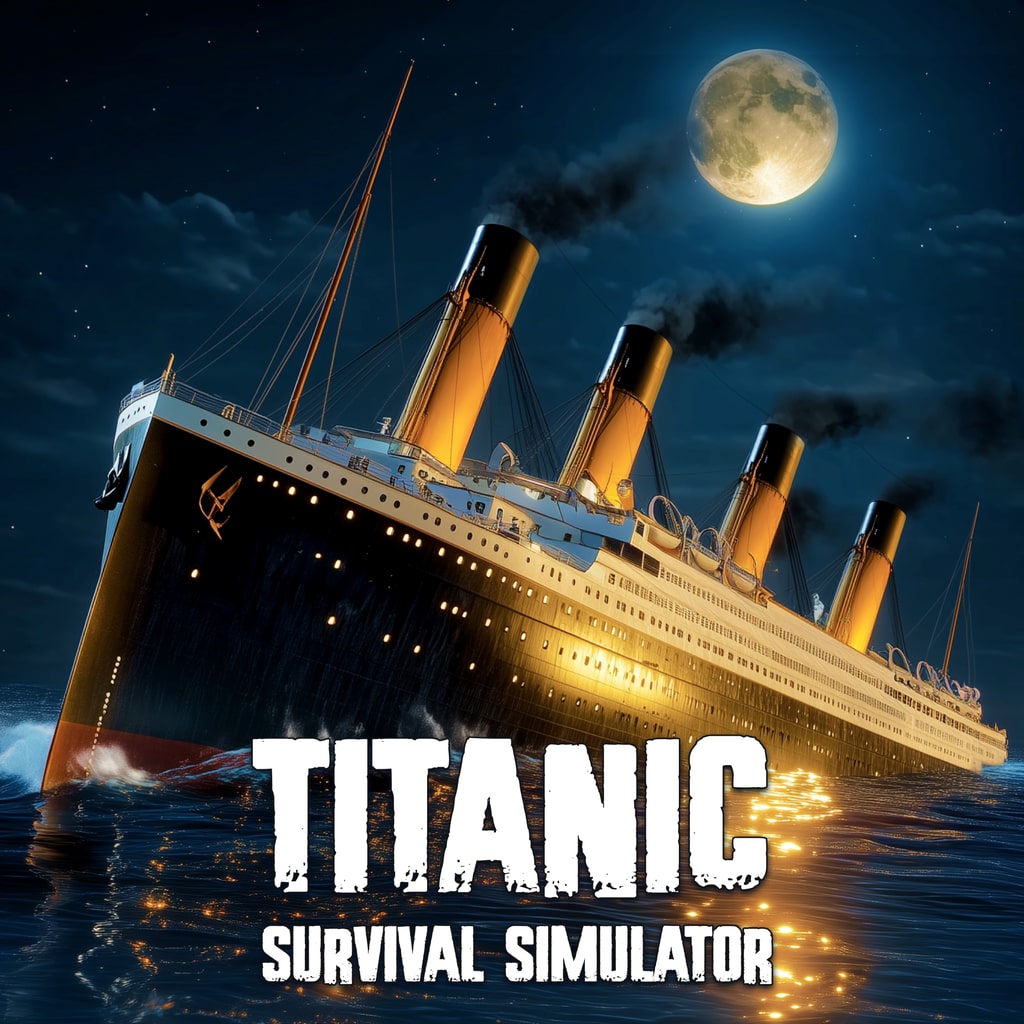
Few historical events have remained as deeply embedded in public memory as the sinking of the RMS Titanic. More than a century later, the story of the world’s most famous ocean liner still carries powerful emotional weight, not only because of the tragedy’s scale but also because of the countless individual stories hidden within it. Titanic Survival Simulator takes that familiar disaster and transforms it into a first-person survival experience, placing players directly in the panic, uncertainty, and desperation of those final hours in April 1912. Rather than focusing on the ship’s grandeur before disaster struck, this is a game about fear, survival, and the impossible decisions faced when time is running out.
Developed and published by SUCCESS GAMES, Titanic Survival Simulator presents a dramatic recreation of the sinking from the perspective of an ordinary passenger caught in extraordinary circumstances. There are no heroic superpowers, no easy solutions, and no guarantee that every decision will lead to safety. The game’s greatest strength is its ability to capture the helplessness of the situation, making the player feel small against the sheer scale of the disaster unfolding around them.
The premise is simple but immediately effective. The ship has struck the iceberg, water is rising, and the race for survival begins. From the moment the disaster starts, Titanic Survival Simulator creates a sense of urgency that drives every movement through the ship’s increasingly dangerous corridors. It understands that the Titanic story is not just about a sinking vessel but about the people trapped inside it, and that human element gives the experience its strongest moments.
Exploring a Ship Slowly Consumed by the Sea
The heart of Titanic Survival Simulator lies in exploration. Players must navigate the ship’s interior, searching cabins, corridors, and flooded areas while seeking a route to safety. The Titanic itself becomes the main antagonist, with every passing moment altering the environment and rendering previously accessible areas more dangerous or completely unreachable.
There is something genuinely unsettling about walking through familiar luxury spaces as they transform into places of desperation. Grand staircases become obstacles, elegant rooms become flooded chambers, and once-impressive corridors become dark, unstable pathways. The contrast between the ship’s original beauty and its destruction creates some of the game’s most memorable atmosphere.
The flooding system is where the experience tries to stand apart from a traditional walking simulator. Water slowly spreads throughout the vessel, forcing players to adapt their plans and reconsider their routes. A path that was safe moments earlier may become blocked, prompting a quick search for an alternative escape route. While the mechanics are not always as complex as they could be, the idea of the ship itself changing around you creates a constant sense of uncertainty.
Navigation can occasionally feel frustrating, particularly when trying to work out exactly where to go next. The Titanic was an enormous ship, and that scale can sometimes work against the game. Some players may find themselves wandering through similar-looking corridors without a clear sense of direction. However, this confusion also adds to the realism in a strange way, as a passenger caught in a real disaster would not have the benefit of a convenient map or objective marker guiding every step.
Survival Against the Elements
Titanic Survival Simulator introduces several survival mechanics designed to heighten tension. Players must manage stamina, avoid hypothermia, and collect essential resources such as food and light sources while trying to reach safety. These systems are not particularly deep, but they add another layer of pressure to the experience and reinforce the feeling that survival is not guaranteed.
The cold Atlantic Ocean is perhaps the most intimidating threat outside the sinking ship itself. The game does a good job of making the environment feel hostile, particularly when spent outside on exposed sections of the vessel or in the freezing water below. The contrast between the warmth of the ship’s interior and the deadly conditions outside creates a powerful sense of danger.
The moral choices are another interesting addition. Titanic Survival Simulator asks whether you focus purely on your own survival or spend valuable time helping others. These moments are not always as developed as they could be, but they capture an important part of the Titanic story. Survival during a disaster is not only about reaching safety, but also about deciding what kind of person you want to be when everything around you is falling apart.
The strongest moments come when the game slows down and allows these choices to breathe. Helping another passenger or taking a risky route to reach a possible escape point creates a stronger emotional connection than simply following objectives. The game understands that tragedy is built from personal moments, not just large-scale destruction.
Atmosphere Carries the Experience
Visually, Titanic Survival Simulator prioritises atmosphere over technical spectacle. The recreation of the ship’s interiors provides a believable sense of place, with detailed rooms, historic design elements, and environmental changes that mirror the disaster unfolding around the player. The rising water and damaged areas help sell the sense that the Titanic is gradually becoming a place of chaos.
Sound design plays an equally important role. The creaking of the ship, rushing water, distant panic, and moments of eerie silence all contribute to the tension. Some of the most effective scenes are those where the game simply allows the player to stand still and absorb the sounds of a massive vessel slowly giving way beneath them.
However, Titanic Survival Simulator shows signs of its smaller scale. Character interactions and animations can feel limited, and some areas lack the level of detail that would make the experience feel truly immersive. The foundation is strong, but the presentation occasionally reminds you that you are playing a simulation rather than experiencing a fully realised historical drama.
A Worthwhile Voyage Despite Rough Waters
Titanic Survival Simulator is not a perfect recreation of the Titanic disaster, nor does it aim to be a vast survival adventure with endless mechanics. Instead, it offers a focused, atmospheric experience centred on one of history’s most tragic events. Its greatest success lies in creating a sense of vulnerability and placing players in a situation where every choice feels important.
The game’s strongest moments are not necessarily the dramatic ones. They are the quiet moments of exploration, the uncertainty of choosing a path, and the feeling of watching a place once filled with luxury descend into a desperate fight for survival. It captures the emotional side of the Titanic story better than many disaster simulations because it focuses on the human experience rather than simply the spectacle.
There are areas where Titanic Survival Simulator could have been expanded. Deeper survival systems, stronger character interactions, and more meaningful choices would have elevated the experience considerably. At times, the limited mechanics prevent the game from reaching its full potential. Yet despite these shortcomings, there is an undeniable atmosphere that keeps the journey engaging.
Titanic Survival Simulator offers a respectful and tense interpretation of one of history’s most famous tragedies. It is not a game about winning, because there was never a true victory on that cold April night. Instead, it is about experiencing the fear, confusion, and fragile hope of those who found themselves aboard a ship believed to be unsinkable.
For players interested in historical experiences, survival games, or atmospheric exploration, Titanic Survival Simulator offers a memorable journey through a disaster that continues to fascinate generations. It may not reach the emotional heights of the best historical storytelling, but it succeeds in making the player feel the weight of the moment.