Rhythm games rely on a straightforward yet powerful formula: great music, responsive controls, and gameplay that make players feel connected to the beat. From arcade classics to modern console experiences, the genre has always centred on capturing that perfect moment when timing, sound, and flow all align.
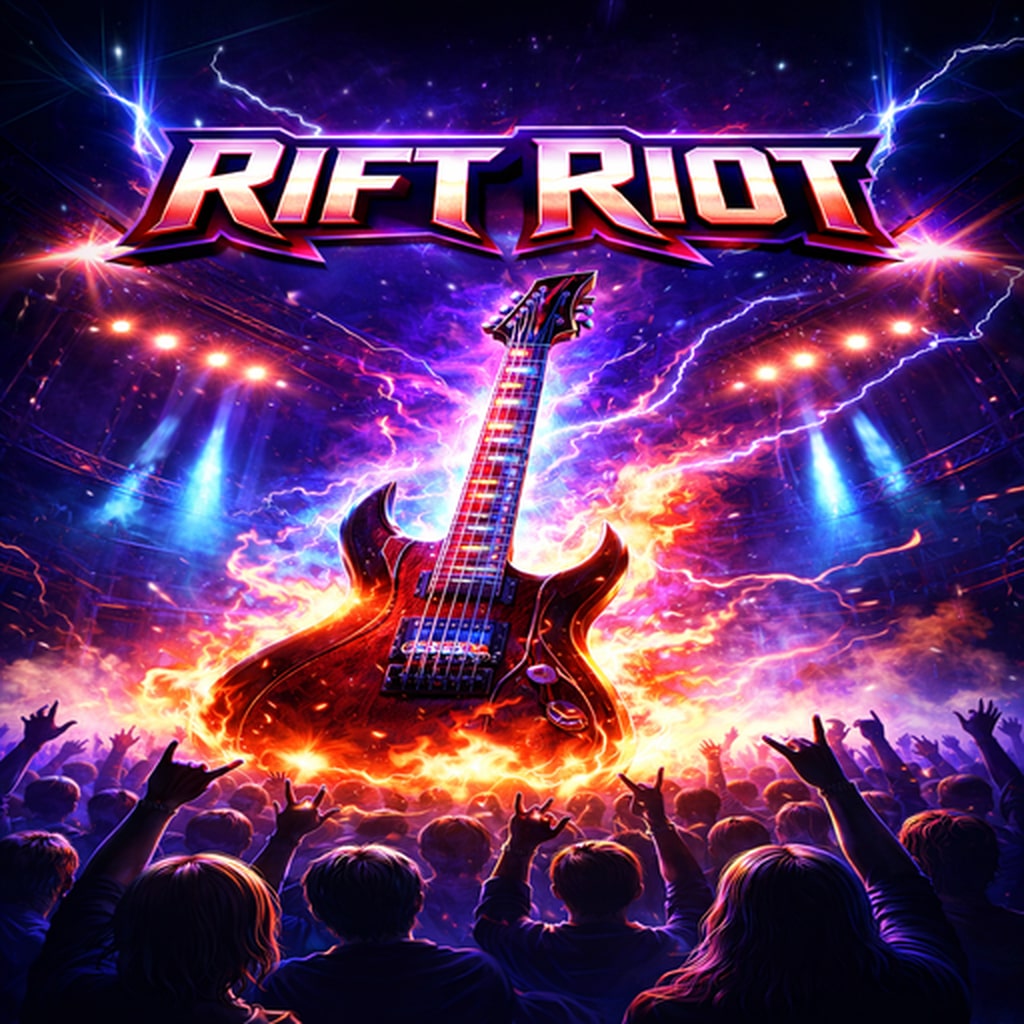
Rift Riot, developed and published by GGMUKS INC, enters the rhythm scene with a pared-back, arcade-inspired approach. Instead of offering a vast library of tracks or complex modes, the game concentrates on delivering a handful of finely crafted musical challenges designed for quick, energetic sessions.
Released on PlayStation 4 and PlayStation 5 on 6 March 2026, Rift Riot positions itself as an affordable rhythm title priced at around £3.29. With six tracks covering various musical styles — from laid-back acoustic rhythms to explosive heavy metal — the game promises intense bursts of gameplay focused on precision and combo mastery.
But does Rift Riot manage to provide a satisfying rhythm experience despite its limited tracklist, or does its narrow scope hold it back?
Gameplay
At its core, Rift Riot follows a classic rhythm game structure. Notes appear on screen in sync with the music, and players must hit the corresponding inputs at exactly the right moment.
Success builds combos. Miss a beat, and your streak is broken.
The game emphasises timing and consistency rather than complicated mechanics. As notes flow across the screen, players must stay focused and keep rhythm to sustain their combo meter. The longer the streak lasts, the higher the score multiplier climbs.
This creates a familiar yet addictive gameplay loop. Early sections of each track seem manageable, but as the tempo quickens and note patterns become more complex, maintaining that perfect flow becomes more challenging.
It’s a design that rhythm enthusiasts will instantly recognise: simple to understand, difficult to master.
Combo & Multiplier System
The real appeal of Rift Riot lies in its scoring system.
Instead of just completing songs, the game motivates players to aim for higher scores by maintaining long combo streaks. Every accurately hit note increases your multiplier, making even small improvements lead to significant score gains.
This creates a constant drive for perfection. Finishing a track with only a few missed notes can be frustrating when you know a flawless run was possible.
This setup makes Rift Riot especially attractive for players who enjoy replaying levels to achieve “Full Combo” scores. Each track becomes a challenge of muscle memory, timing, and focus.
Over time, players naturally start to memorise the patterns and anticipate tricky sections, turning previously chaotic note sequences into smooth, satisfying streaks.
Track Variety
Although Rift Riot features only six tracks, the developers clearly aimed to make each one feel unique.
The soundtrack spans a variety of musical styles, creating different gameplay atmospheres across the tracklist.
Some songs embrace relaxed acoustic rhythms, with slower tempos and smoother note patterns. These tracks are ideal for warming up and getting familiar with the mechanics without feeling overwhelmed.
Others go in the opposite direction. Heavy metal tracks introduce fast tempos, aggressive note patterns, and intense bursts of input that require near-perfect timing.
This contrast helps prevent the experience from becoming repetitive despite the small number of songs. Switching from a laid-back groove to a fast-paced metal track significantly alters the pacing and challenge.
That said, six tracks still represent a relatively limited amount of content compared to many modern rhythm games. Players who enjoy the core mechanics might find themselves wishing for more songs quite quickly.
Pick-Up-and-Play Design
One of Rift Riot’s greatest strengths is how quickly players can jump into the action.
There is very little setup required. Load the game, select a track, and start playing within seconds. This simplicity makes the game perfect for short sessions—whether you have five minutes or just want to test your rhythm skills quickly.
Because songs are relatively brief and restarts are instant, the game naturally encourages repeated attempts. Missing a perfect combo often results in an immediate restart as players try again for a cleaner run.
This arcade-like cycle works especially well for a budget title. The game avoids overwhelming players with complex menus or modes; instead, it focuses entirely on delivering tight, responsive rhythm gameplay.
Visual Style
Visually, Rift Riot features a sleek and energetic presentation.
The interface employs bright colours, animated effects, and dynamic lighting to reflect the energy of the music. As combos increase and multipliers grow, visual feedback becomes more intense, emphasising the sense of building momentum.
These visual cues are vital in keeping the game’s rhythm-driven flow. Strong performances feel more exhilarating thanks to escalating visual effects that accompany high combo streaks.
While the presentation isn’t overly elaborate, it suits the arcade aesthetic perfectly. The visuals enhance the gameplay without distracting from it.
Sound & Music
Naturally, the soundtrack plays a vital role in the experience.
The six tracks included in Rift Riot are lively and well-suited for rhythm gameplay. Each song features distinct beats and prominent musical cues, making it easier for players to align their inputs with the music.
Although the selection isn’t extensive, the variety of genres helps keep the experience fresh. Switching between acoustic grooves and heavy metal intensity maintains an engaging pace.
For a rhythm game centred on replaying tracks for higher scores, the quality of the music is essential — and fortunately, Rift Riot offers solid tracks that remain enjoyable even after multiple plays.
Replay Value
Despite its limited content, Rift Riot still provides decent replay value due to its score-focused design.
The pursuit of perfect runs and higher scores naturally motivates players to revisit each track multiple times. Rhythm enthusiasts who enjoy honing their skills and achieving flawless performances will likely spend a good deal of time chasing better results.
However, the game’s longevity ultimately hinges on how committed players are to mastering its six songs. Without extra tracks or modes, the experience may start to feel restricted once those patterns are fully learned.
For a budget rhythm game, though, the replayability is quite respectable.
Pros & Cons
Pros
- Tight, responsive rhythm gameplay
- Addictive combo and multiplier system
- Music styles vary across the six tracks
- Perfect for short pick-up-and-play sessions
- Strong arcade-style score chasing
Cons
- Only six tracks included
- Limited modes and content variety
- Experienced rhythm players may master it quickly
Final Verdict
Rift Riot is a rhythm game that clearly defines its identity.
Instead of trying to compete with large-scale music games featuring hundreds of songs, it focuses on delivering a compact yet polished arcade experience. Its precise controls, satisfying combo system, and lively soundtrack make it easy to pick up and enjoy right away.
The main limitation of the game is simply its scope. With only six tracks available, even dedicated rhythm fans might eventually exhaust the challenges.
However, given its affordable price, the gameplay still offers good value. For players who enjoy replaying songs to perfect their timing and improve their scores, Rift Riot provides plenty of opportunities to hone skills and aim for that elusive full combo.
It may not revolutionise the rhythm genre, but it offers a focused burst of musical action that feels rewarding during quick sessions.
For a budget-friendly rhythm title, Rift Riot succeeds in delivering exactly what it promises: fast, energetic gameplay centred on precision, flow, and the thrill of maintaining an unstoppable streak.