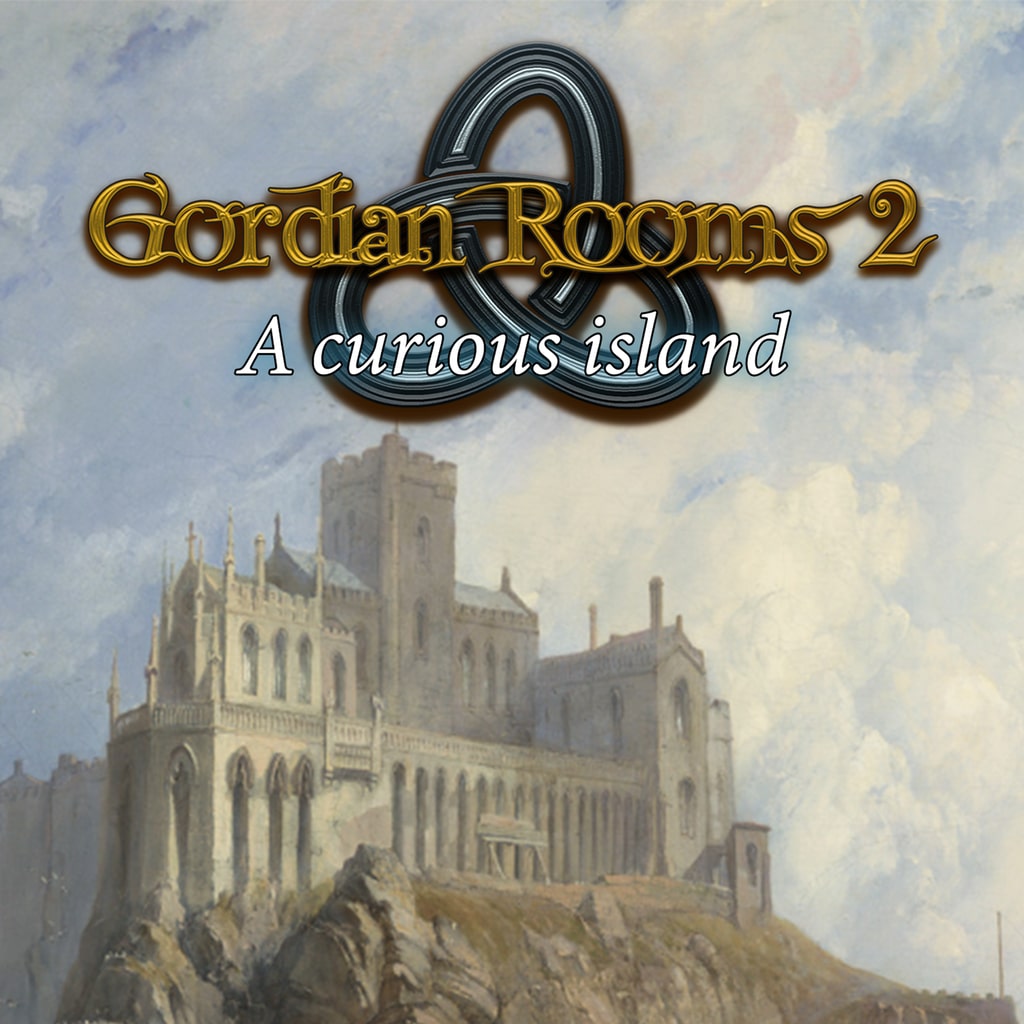
When Crimsonite Games released the first Gordian Rooms, it felt like a love letter to traditional escape-room logic, set in a mysterious aristocratic setting. With Gordian Rooms 2: A Curious Island, the studio doesn’t just iterate — it expands dramatically.
Originally launching on PC in early 2024, the sequel has now arrived on PlayStation 4 and PlayStation 5, bringing its Unreal Engine 5-powered environments and intricate puzzle design to console audiences. Make no mistake: this isn’t just “more rooms.” It’s a fully explorable island — the Isle of Lye — serving as a sprawling testing ground for the secretive Gordian Society.
The scale has grown. The ambition has grown. Fortunately, so has the quality.
The Isle of Lye: An Escape Room Without Walls
The first game confined players largely to a mansion. Here, you’re free to roam forests, cliffsides, underground chambers, and multiple estates scattered across the island. Yet despite the expanded scope, Gordian Rooms 2 never loses its escape-room DNA.
Every building, courtyard, or hidden laboratory functions as a self-contained puzzle ecosystem. Locked mechanisms interconnect across locations. Clues discovered in one wing of the island may solve a contraption in another.
This open design gives the sequel a Metroidvania-like sense of progression — not through combat upgrades, but through knowledge acquisition.
That’s the core brilliance of the game: progress is purely intellectual.
Puzzle Design: Clever, Layered, and Demanding
If you’re here for hand-holding, look elsewhere.
Gordian Rooms 2 trusts its players. It assumes you’re observant, expects note-taking, and demands lateral thinking.
Puzzles range from:
- Multi-step mechanical devices requiring environmental clues
- Cipher decoding tied to family lore
- Inventory-based logic chains
- Symbol interpretation puzzles embedded in architecture
Some challenges feel satisfyingly straightforward. Others are layered, requiring you to piece together information from scattered letters, drawings, and cryptic hints.
Importantly, solutions rarely feel unfair. They are difficult — sometimes very — but almost always grounded in logic rather than obscurity.
This balance is crucial. When you finally unlock a door after an hour of contemplation, the reward is genuine satisfaction, not relief that randomness worked in your favour.
Exploration That Feels Purposeful
Open-world puzzle games can sometimes dilute focus. Here, exploration feels deliberate.
The Isle of Lye is carefully crafted, not procedurally generated. Every room has meaning. Every object has potential relevance. Environmental storytelling is woven into the architecture.
Letters reveal family tensions. Portraits hint at betrayals. Symbols recur across the island, slowly forming a cohesive narrative web.
There’s a quiet joy in simply walking the island, observing details, and speculating on connections. The atmosphere invites curiosity rather than urgency.
Unlike traditional adventure games, there’s no combat, no time pressure, no fail states. The challenge lies entirely in deciphering the Gordian Society’s tests.
Unreal Engine 5: A Significant Visual Leap
The move to Unreal Engine 5 is immediately noticeable.
Lighting is dynamic and moody, casting soft shadows through stained-glass windows and illuminating hidden mechanisms with a subtle glow. Environmental textures — stone walls, wooden beams, brass machinery — are richly detailed without overwhelming the minimalist puzzle design.
The island feels believable. Weather shifts gently. Interiors feel grounded and tactile.
While it’s not pushing graphical boundaries like blockbuster AAA titles, for an indie puzzle game, the presentation is impressively polished.
Performance on PS5 is stable, with smooth movement and minimal load interruptions — an essential feature in a game built on immersion.
Storytelling Through Mystery
Narratively, Gordian Rooms 2 deepens the intrigue surrounding the secretive Gordian Society and the eccentric Lye family.
You aren’t spoon-fed exposition. Instead, lore is pieced together through:
- Personal letters
- Hidden journals
- Environmental clues
- Subtle visual storytelling
The mystery centres on family secrets, betrayals, and hidden ambitions. Questions linger: Who is the black sheep? Who is the traitor? What truly defines membership of the Gordian Society?
The ambiguity works in the game’s favour. Rather than providing cinematic cutscenes, it lets players interpret events through discovery.
It’s a slow-burn narrative — one that rewards patience.
Accessibility and Challenge Balance
While the difficulty is commendable, it can also be intimidating.
Optional hint systems are available, but they’re minimal and restrained. Crimsonite Games clearly prioritises intellectual integrity over accessibility.
For puzzle veterans, this is a dream. For newcomers, it may feel overwhelming at times.
One of the game’s strengths, however, is that you’re rarely locked into a single solution path. If one puzzle stumps you, there are often other areas to explore, providing a mental reset before returning with a fresh perspective.
This flexibility keeps frustration manageable.
Audio Design: Subtle but Effective
The soundscape is understated — ambient island winds, distant waves, and faint mechanical clicks.
Music is sparse, appearing mainly during significant discoveries or pivotal moments. This restraint enhances immersion rather than distracting from problem-solving.
The lack of intrusive audio ensures that concentration remains intact — vital in a logic-heavy experience.
Where It Falls Short
Despite its strengths, Gordian Rooms 2 isn’t flawless.
Some puzzles verge on being overly complex, bordering on exhausting rather than stimulating. Extended sessions can feel mentally draining.
Navigation, while open, occasionally lacks clear mapping, leading to backtracking that feels more tedious than purposeful.
Additionally, players expecting dynamic gameplay elements beyond puzzles may find the experience too singularly focused.
This is a pure puzzle adventure. Nothing more, nothing less.
A Sequel That Earns Its Expansion
What makes Gordian Rooms 2 impressive is how confidently it expands without losing its identity.
The shift from mansion to island could have diluted its design. Instead, it enhances it — offering scale without sacrificing puzzle precision.
Crimsonite Games understands its niche and executes within it masterfully.
For players who love escape-room logic, cryptic mysteries, and atmospheric exploration, this sequel is a substantial step forward.
Pros & Cons
Pros
- Deep, intellectually satisfying puzzle design
- Beautiful Unreal Engine 5 environments
- Strong environmental storytelling
- Non-linear exploration supports varied problem-solving
- Immersive, atmospheric presentation
Cons
- Difficulty may overwhelm newcomers
- Occasional excessive complexity
- Minimal guidance or hint structure
- Backtracking can become repetitive
Final Verdict
Gordian Rooms 2: A Curious Island is a bold evolution of its predecessor — transforming a contained escape-room experience into a sprawling island of layered mysteries.
It respects its players’ intelligence, demands careful observation, and rewards patience with genuine “aha” moments.
While not for those seeking fast-paced action or cinematic spectacle, it stands as one of the more ambitious indie puzzle adventures of recent years — now finally accessible to PlayStation players.
For dedicated puzzle enthusiasts, this is an island worth getting lost on.