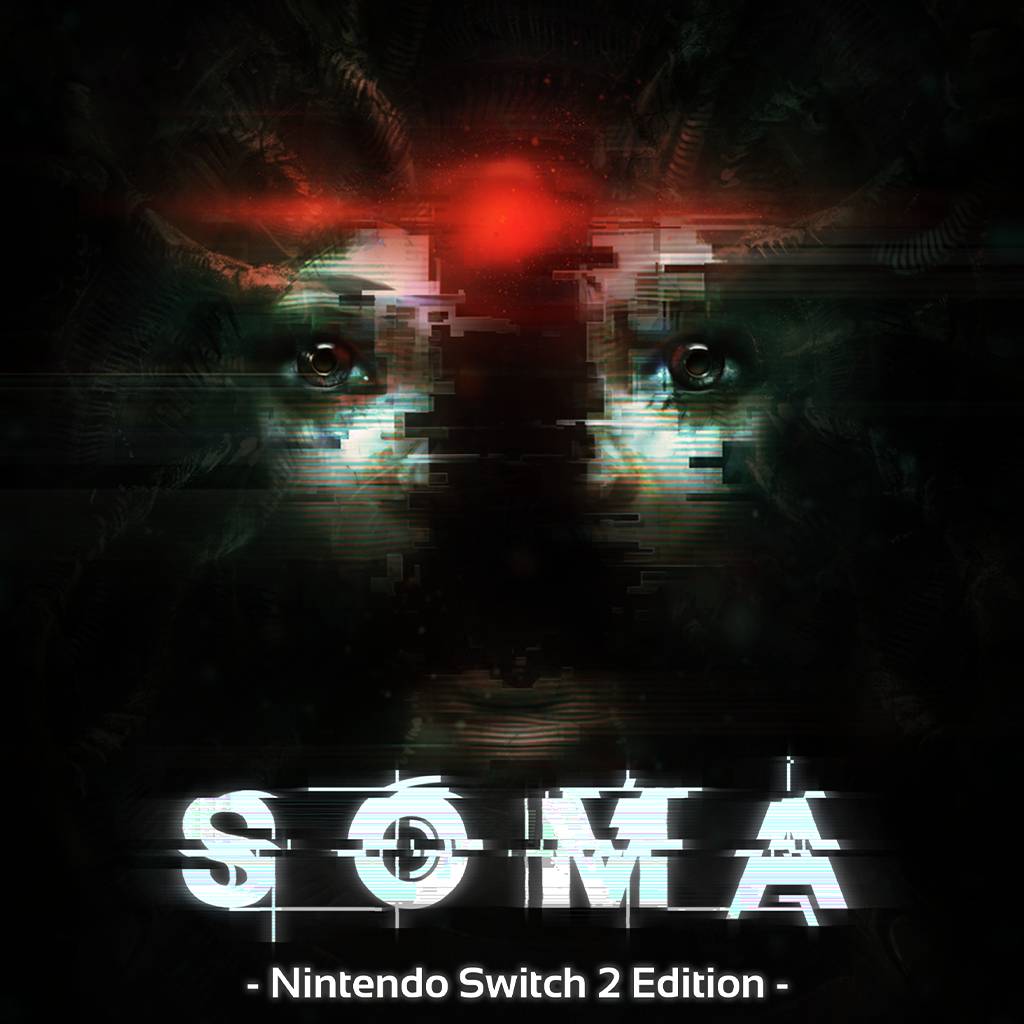
Horror games often rely on familiar tricks. They throw grotesque monsters into dark corridors, bombard players with loud jump scares, and delight in making every shadow feel threatening. SOMA certainly has its fair share of terrifying encounters, but fear has never been its true purpose. Long after the monsters disappear and the credits roll, the questions the game asks linger in your mind.
Originally released in 2015 by Frictional Games, SOMA quickly established itself as one of the finest narrative-driven horror games ever made. More than a decade later, the Nintendo Switch 2 Edition brings Simon Jarrett’s unforgettable journey to Nintendo’s latest hardware, with meaningful visual improvements, smoother performance, and faster loading times. Rather than reinventing an already celebrated classic, this version simply allows one of the medium’s greatest stories to shine brighter than ever.
The result is an experience that feels every bit as haunting today as it did on release. If anything, its exploration of artificial intelligence, digital consciousness, and humanity’s dependence on technology feels even more relevant now than it did eleven years ago. SOMA is not simply about surviving monsters beneath the Atlantic Ocean. It is about confronting uncomfortable truths that few games have dared to explore with such honesty.
Gameplay
Unlike many modern horror titles that arm players with increasingly powerful weapons, SOMA strips away almost every conventional safety net. Simon is not a soldier or an action hero. He is an ordinary man trapped in circumstances far beyond his understanding, and survival depends far more on observation than confrontation.
Most of your time is spent exploring the crumbling PATHOS II research facility, searching abandoned offices, laboratories, maintenance tunnels, and flooded corridors for clues. Computer terminals, scattered documents, and voice recordings slowly reveal what happened to the station and its remaining inhabitants. Each discovery adds another piece to an increasingly disturbing puzzle that constantly reshapes your understanding of the world around you.
Environmental puzzles break up the exploration without ever becoming frustrating. Restoring power, rerouting systems, repairing machinery, and unlocking sealed sections all feel grounded in the setting rather than existing simply to slow your progress. Frictional Games understands that immersion is strengthened when every interaction feels like a believable part of the environment.
The stealth mechanics remain intentionally vulnerable. Monstrous creatures roam several sections of the facility, forcing Simon to hide, distract enemies, or carefully sneak past danger. These sequences create genuine tension because fighting back simply is not an option. Every encounter becomes a test of patience, observation, and nerve rather than reflexes alone.
For players who primarily want to experience the narrative, Safe Mode makes a welcome return. Hostile creatures remain present throughout the story, but they no longer kill the player, allowing the philosophical themes and world building to take centre stage without removing the atmosphere entirely. It is an excellent accessibility option that broadens the game’s appeal without compromising its identity.
A Story That Refuses to Leave You
The greatest achievement of SOMA has always been its writing. Simon Jarrett begins as an ordinary man undergoing an experimental brain scan after a traumatic accident. Moments later, he awakens inside PATHOS II, over a century in the future, with no understanding of how he arrived there. What follows is not simply a mystery about a failed research facility but a deeply personal journey into identity, mortality, memory, and what truly defines a human being.
Few games handle philosophical concepts with this level of confidence. Rather than presenting simple right-or-wrong answers, SOMA constantly places players in morally impossible situations. Every decision feels uncomfortable because there is rarely a perfect solution. Instead, you are left questioning your own beliefs long after each choice has been made.
Without revealing spoilers, the game’s final hours remain among the most emotionally devastating ever written. The closing scenes do not rely on spectacle or explosive action. Instead, they quietly dismantle everything players think they understand about consciousness and existence, delivering an ending that continues to spark discussion years after release.
This is storytelling that trusts its audience. It never over-explains its ideas or forces emotional moments through melodrama. Instead, it quietly allows players to reach their own conclusions, making its impact all the more powerful.
Atmosphere
PATHOS II is one of the most convincing settings ever created in horror gaming. The facility feels genuinely lived-in despite its abandonment. Offices remain cluttered with personal belongings, research stations sit frozen in time, and damaged corridors tell silent stories without a single line of dialogue. Every location contributes to an overwhelming sense that this was once a thriving workplace before unimaginable tragedy unfolded.
The ocean itself becomes a constant source of unease. Looking through reinforced observation windows into the endless darkness beyond reminds you just how isolated Simon truly is. Even the quieter moments carry an oppressive loneliness that few games sustain for such an extended runtime.
Mikko Tarmia’s exceptional soundtrack deserves enormous praise. Rather than relying on constant music, the score emerges sparingly, allowing environmental ambience to dominate much of the experience. Mechanical groans, distant echoes, dripping water, and distorted machine noises become just as frightening as any monster encounter.
The creature design also deserves recognition. Every enemy feels unsettling because they blur the boundaries between machine and humanity. Their appearance reflects the game’s central themes, making them disturbing on both a visual and psychological level.
Nintendo Switch 2 Performance
This new edition is the strongest portable version of SOMA to date. Visual improvements are immediately apparent. Higher-resolution textures, cleaner image quality, improved lighting, and more consistent performance make PATHOS II feel richer without sacrificing the oppressive atmosphere that defines the original release. The underwater environments, in particular, benefit enormously from the enhanced clarity.
Performance remains impressively stable throughout the adventure. Frame rates hold consistently, even during more demanding sections, while loading times between major facility areas have been dramatically reduced. These technical improvements help maintain immersion, preventing interruptions during some of the game’s most emotionally charged moments.
Perhaps most importantly, the atmosphere has not been compromised in the transition to Nintendo’s hardware. Darkness remains genuinely unsettling, environmental effects retain their impact, and the haunting sound design translates beautifully whether playing docked or using headphones in handheld mode.
For players discovering SOMA for the first time, this is an outstanding introduction. Returning fans will likewise appreciate seeing one of Frictional Games’ finest achievements run so comfortably on a portable system.
Horror Beyond Monsters
What sets SOMA apart from countless other horror games is its understanding that fear extends far beyond physical danger. The monsters certainly create moments of panic, but they are never the true source of terror. Instead, the game explores the frightening possibility that technology may eventually blur the line between humanity and machinery beyond recognition. Each new revelation forces players to reconsider their assumptions about identity, consciousness, and the value of individual existence.
Very few games attempt ideas this ambitious, and even fewer execute them this successfully. Frictional Games balances philosophical exploration with compelling storytelling in a way that never feels pretentious or inaccessible. It remains thought-provoking without sacrificing emotional sincerity. That balance is what elevates SOMA to something genuinely special.
Verdict
SOMA Nintendo Switch 2 Edition remains one of the most intelligent and emotionally affecting horror games ever created. Its unforgettable narrative, remarkable atmosphere, and deeply philosophical themes continue to set a benchmark for narrative-driven storytelling. Combined with meaningful visual enhancements, smoother performance, and faster loading times, this new edition offers the definitive portable way to experience a modern masterpiece.
While its stealth encounters occasionally interrupt the pacing and players expecting traditional action may find its deliberate structure demanding, these are minor criticisms in an otherwise extraordinary experience. Safe Mode also ensures that players primarily interested in the story can experience every moment without unnecessary frustration, making the game more accessible than ever.
More than ten years after its original release, SOMA has lost none of its power. It remains haunting, deeply human, and intellectually fearless, delivering a story that refuses to fade from memory long after the console has been switched off. Few games ask questions this profound, and even fewer have the confidence to leave players wrestling with the answers.