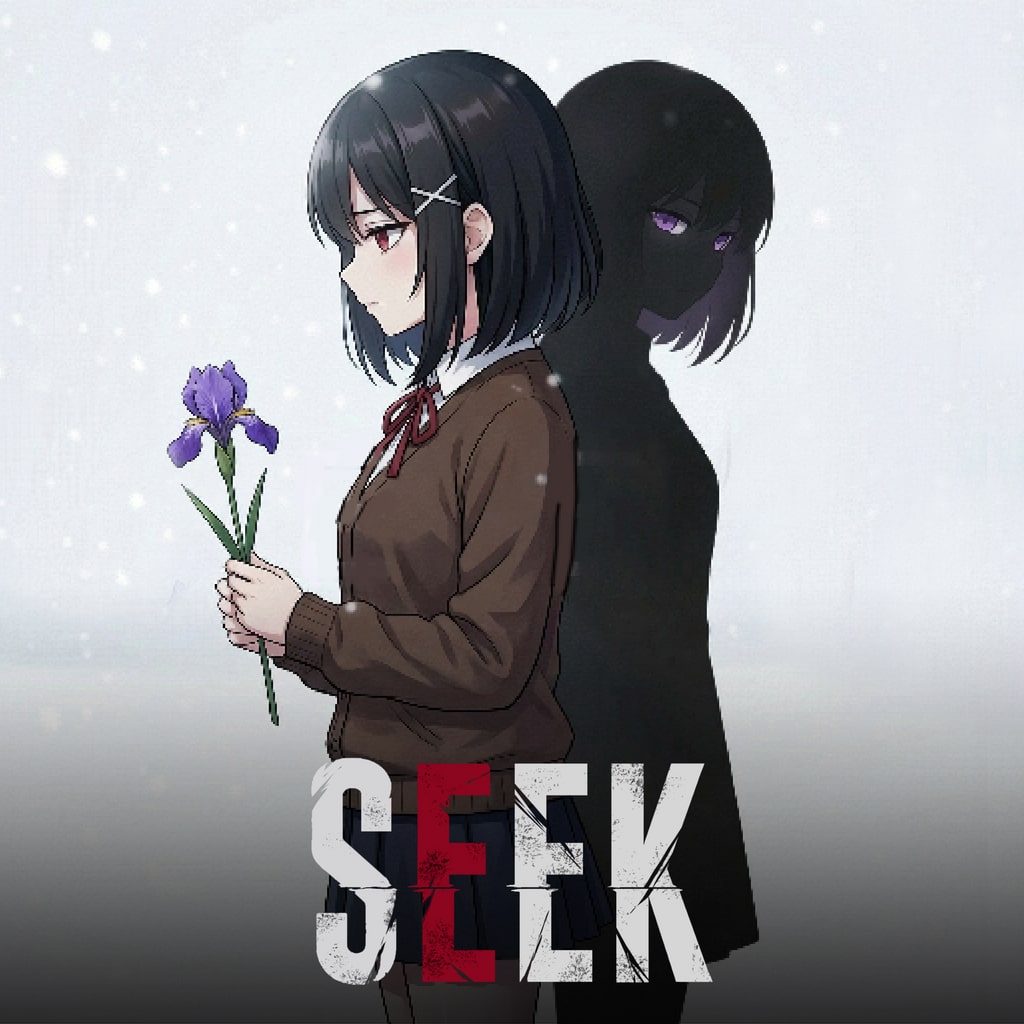
There is something particularly unsettling about a place that was supposed to be safe. An orphanage should be filled with warmth, noise and the comforting presence of other people, yet SEEK takes that familiar idea and freezes it solid. You wake as Alice in a strange, snowbound orphanage that seems to shift around you, with darkness lurking in its corridors and the unsettling feeling that reality itself cannot quite be trusted. It is an immediately intriguing premise, one that wears its love of classic survival horror on its sleeve.
Developed by cloud_li, SEEK is a top-down 2D survival horror adventure that draws heavily on the likes of Resident Evil, Silent Hill and the modern retro horror revival. Rather than attempting to reinvent the genre, it takes many of its most recognisable ingredients and combines them into a compact adventure built around exploration, puzzles, scarce resources and an increasingly disturbing story. There is something reassuringly old-fashioned about the experience, particularly if you remember when survival horror was more concerned with making you nervous about opening a door than giving you an arsenal capable of flattening everything in sight.
Yet SEEK is not simply nostalgia dressed up in pixel art. Its frozen orphanage has a personality of its own, and its use of classical music gives the whole experience an unusual identity. The result is a game that can feel strangely beautiful one moment and deeply uncomfortable the next.
Welcome to the Cold
The first thing SEEK gets right is atmosphere. The orphanage is an excellent setting for survival horror because it combines familiarity with isolation. There are classrooms, corridors, rooms and other spaces that suggest people once lived and worked here, but Alice encounters them without the reassuring presence of another human being. Instead, there is snow, darkness and silence.
The cold becomes part of the world’s identity rather than simply a visual effect. Everything feels hostile, from the empty rooms to the creatures lurking beyond the edges of the screen. There is a constant sense that Alice has wandered somewhere she absolutely should not be, and the game does a good job of maintaining that unease even when nothing particularly frightening is happening.
Lighting plays an important role too. Shadows can obscure what lies ahead, while carefully placed illumination draws your attention towards certain areas and leaves others deliberately uncertain. You are constantly encouraged to look beyond what you can immediately see, and that creates a tension that does not require the game to throw enemies at you every few seconds.
Then there is the music. The decision to intertwine classical music with psychological horror is one of SEEK’s most interesting touches. Beautiful compositions set against disturbing environments create an uncomfortable contrast, making the orphanage feel less like a conventional horror setting and more like a place caught between elegance and decay. It is a small detail, but one that gives the game a distinct character.
Old School Survival Horror
If you have fond memories of survival horror games where ammunition was something to worry about rather than something you picked up by the handful, SEEK should feel familiar almost immediately. Resources are limited, and deciding whether to confront an enemy or find another way around it becomes a key part of survival.
There are firearms available, but the presence of weapons does not turn Alice into an unstoppable action hero. You still need to consider your supplies, your surroundings, and whether the fight is actually worth having. That tension is central to the experience, because every bullet can feel like something you might regret using later.
Resource management works particularly well alongside exploration. You are encouraged to search rooms for useful items while keeping an eye on your inventory and considering what you might need further down the line. It is a familiar formula, but familiarity is not necessarily a weakness when the fundamentals are this effective.
There is also something satisfying about discovering an item and immediately wondering where it might be useful. A key is never just a key. A mysterious object could be connected to a puzzle several rooms away, while an apparently insignificant note might provide the missing piece of a larger mystery. That sense of anticipation is one of the reasons traditional survival horror remains so compelling.
Getting Lost Has Its Price
The orphanage is not a simple straight line from beginning to end. Exploration involves unlocking new areas, revisiting previous locations, and gradually piecing together how the different sections connect. This gives the environment a sense of permanence that many modern horror games lack.
Unfortunately, it can also be one of SEEK’s more frustrating aspects. It is easy to lose track of where you are supposed to go, particularly once the game sends you back through previously explored areas. Backtracking is an important part of the classic survival horror formula, but there is a fine line between encouraging players to think about their surroundings and simply leaving them wandering around, hoping to stumble across the right door.
There are moments when SEEK crosses that line. The lack of clear direction can make progression feel less like solving a mystery and more like searching every room until something changes. For players who enjoy old-school design, this may be part of the appeal. For everyone else, it could become an unnecessary source of frustration. Still, when you do finally work out where you need to go, the satisfaction is genuine.
Puzzles in the Darkness
Puzzle-solving is another important part of the experience, and thankfully SEEK understands that survival-horror puzzles should make you pay attention rather than simply asking you to click everything until something happens.
Clues are scattered throughout the orphanage, often hidden in notes, objects and environmental details. The best puzzles prompt you to reflect on what you have already seen and to connect seemingly unrelated pieces of information.
That creates a lovely sense of discovery. You are not simply solving puzzles because the game has decided that the next door needs a combination. You are gradually learning how this strange place works, and that makes each successful solution feel like another small piece of the mystery falling into place.
Not every puzzle is equally memorable, and some of the progression can feel a little more obscure than it needs to be. Nevertheless, the overall approach works because it encourages observation. SEEK wants you to pay attention to the environment, and that is exactly what a game built around mystery and psychological horror should be doing.
When the World Starts Changing
Perhaps the most intriguing element of SEEK is the orphanage itself, which refuses to remain stable. Areas can shift, familiar surroundings can suddenly feel different, and unexplained events can occur without warning.
This is where the game moves beyond simply recreating classic survival horror and begins to play with psychological uncertainty. When you know a room has changed, you start questioning your own memory. Did that object really exist before? Was that door always there? Did you somehow miss something on your first visit, or has the environment genuinely altered itself? That uncertainty is far more effective than simply placing a monster in front of you. A monster can be understood. A changing environment is much harder to trust.
Alice’s journey becomes increasingly tied to uncovering the truth behind her situation, and the scattered notes and environmental clues gradually build towards that larger mystery. The story is not necessarily the most complex horror narrative you will encounter, but it provides enough intrigue to keep the investigation moving forward.
The Things Waiting in the Dark
Of course, this would not be survival horror without monsters, and SEEK provides plenty of unpleasant company. The creatures lurking within the orphanage are dangerous enough to make encounters meaningful, while limited resources ensure that combat is never entirely comfortable.
There is a pleasing tension between fighting and fleeing. Sometimes putting down a threat is the sensible option, particularly if it is blocking an important route. Other times, conserving ammunition and finding another way past can be the wiser decision.
That balance is important because fear stems partly from uncertainty. You do not always know what is waiting around the next corner, and you cannot simply assume you have enough resources to deal with everything. The result is a more cautious style of play, where every new area is approached with at least a little suspicion.
Occasional difficulty spikes can make this balance wobble. A section that previously felt manageable can suddenly become considerably more demanding, which may leave you wondering whether you missed something rather than simply accepting that the challenge has increased. These moments are not disastrous, but they can interrupt the otherwise carefully maintained rhythm.
A Love Letter to Survival Horror
There is no getting away from the fact that SEEK is deeply influenced by the games that came before it. That influence is obvious in its inventory management, exploration, puzzles, resource scarcity and approach to combat. Rather than hiding those influences, the game embraces them. And honestly, that is part of its charm.
There is a certain comfort in playing something that understands why those older survival horror mechanics worked in the first place. SEEK remembers that uncertainty can be more powerful than spectacle and that giving the player limited resources can make an ordinary hallway feel dangerous.
Its 2D presentation also helps set it apart from the crowded field of retro-inspired horror games. The top-down perspective allows the developers to control what you can see without relying entirely on traditional first- or third-person camera tricks. You can see enough to understand your surroundings, but rarely enough to feel completely safe.
Final Verdict
SEEK is a genuinely atmospheric survival horror adventure that understands the appeal of the genre’s roots. Its snowbound orphanage is an excellent setting; its classical soundtrack creates a wonderfully unusual contrast with the horror, and its combination of exploration, resource management and puzzle-solving provides a satisfying old-school rhythm. The shifting environments also add an interesting psychological layer, ensuring that the world itself cannot always be trusted.
It is not without its problems. Getting lost during the game’s more open-ended backtracking can be frustrating; some difficulty spikes feel abrupt, and the English localisation occasionally lacks polish. A few of the rougher edges are understandable given the game’s smaller scale, but they do prevent SEEK from reaching the same level of refinement as the classics it clearly admires.
Even so, there is a lot to like here. SEEK is not trying to overwhelm you with spectacle. It wants you to walk cautiously through a dark corridor, listen to the music, wonder what happened to the people who once occupied this place, and think twice before wasting your last few bullets. That slower, more deliberate approach feels increasingly refreshing in a horror landscape that often seems determined to make everything louder and bigger.
Most importantly, SEEK has atmosphere to spare. The combination of snow, darkness, classical music, unsettling creatures and a world that seems to shift when you are not looking creates an experience that can get under your skin. It may occasionally leave you wandering in circles, but there is something strangely satisfying about getting lost in a nightmare when the nightmare is this well realised.