Horror games often place players in terrifying locations — haunted houses, abandoned hospitals, or cursed villages. Order 13 takes a very different approach. Instead of gothic castles or supernatural landscapes, its setting is something far more mundane: a warehouse.
Developed by Cybernetic Walrus, Order 13 combines the peaceful monotony of a job simulator with creeping psychological horror. By day, the premise sounds almost dull — packing and shipping orders in a fulfilment centre. But when night falls and the lights flicker across endless storage aisles, the routine becomes something much more sinister.
Originally released on PC via Steam in March 2025, the game gained attention for its unusual blend of workplace simulation and unpredictable horror. With its console launch arriving on PlayStation 5 and Xbox Series X|S on 6 March 2026, a wider audience now has the chance to experience what many players have dubbed a “warehouse horror sim.”
But does Order 13 successfully turn mundane labour into a terrifying experience, or does its slow-paced design struggle to sustain tension?
Gameplay
At its core, Order 13 is exactly what the title suggests: a game about fulfilling orders.
Each shift begins with the player waking inside a vast, dimly lit fulfilment centre. After reviewing a terminal for incoming orders, the job begins. Players must locate the requested items within the warehouse, retrieve them, package them, and send them out for shipment.
On paper, the task sounds simple.
However, the warehouse itself is enormous, with long corridors of shelves stretching into darkness. Navigating these aisles while searching for the correct items quickly becomes unsettling, especially as the game slowly reveals that something else is moving through the facility.
The longer a shift continues, the more dangerous the warehouse becomes. Strange noises echo through the building, shadows shift where they shouldn’t, and unexplained events begin interrupting your work.
Despite the creeping horror elements, the job never stops. Orders keep coming in, quotas must be met, and failure to work efficiently can make each shift significantly harder.
This constant balance between routine and fear forms the backbone of Order 13’s gameplay.
A Job Simulator with Teeth
Much like Papers, Please or Voices of the Void, the game relies on its mundane mechanics. Players must actually carry out their duties — scanning items, transporting packages, and verifying shipments.
The difference is that Order 13 adds tension to every task.
Walking down a dark aisle to fetch a product suddenly feels risky. The sound of something knocking over a box across the warehouse might be nothing… or it might be something lurking in the shadows.
Because the game never fully removes the work aspect, the horror feels far more personal. You aren’t fleeing from danger in a scripted sequence — you’re simply trying to do your job while something watches from the darkness.
This design makes even simple moments tense and nerve-wracking.
Procedural Horror
One of Order 13’s most interesting features is its procedural structure.
Each time the player dies, they restart in a new version of the warehouse. Layouts shift, events occur differently, and threats behave in unpredictable ways. This means that scares are rarely identical between runs.
Instead of relying on scripted jump scares, the game creates tension through uncertainty.
One playthrough might involve subtle disturbances — flickering lights, distant noises, or objects moving unexpectedly. Another might escalate into full-blown danger, forcing players to sprint through the aisles while trying to complete their tasks.
Because players can never fully predict what will happen during a shift, every playthrough feels slightly different.
This procedural design significantly enhances the game’s replayability, encouraging players to delve deeper into the warehouse to uncover its secrets.
The Cat Mechanic
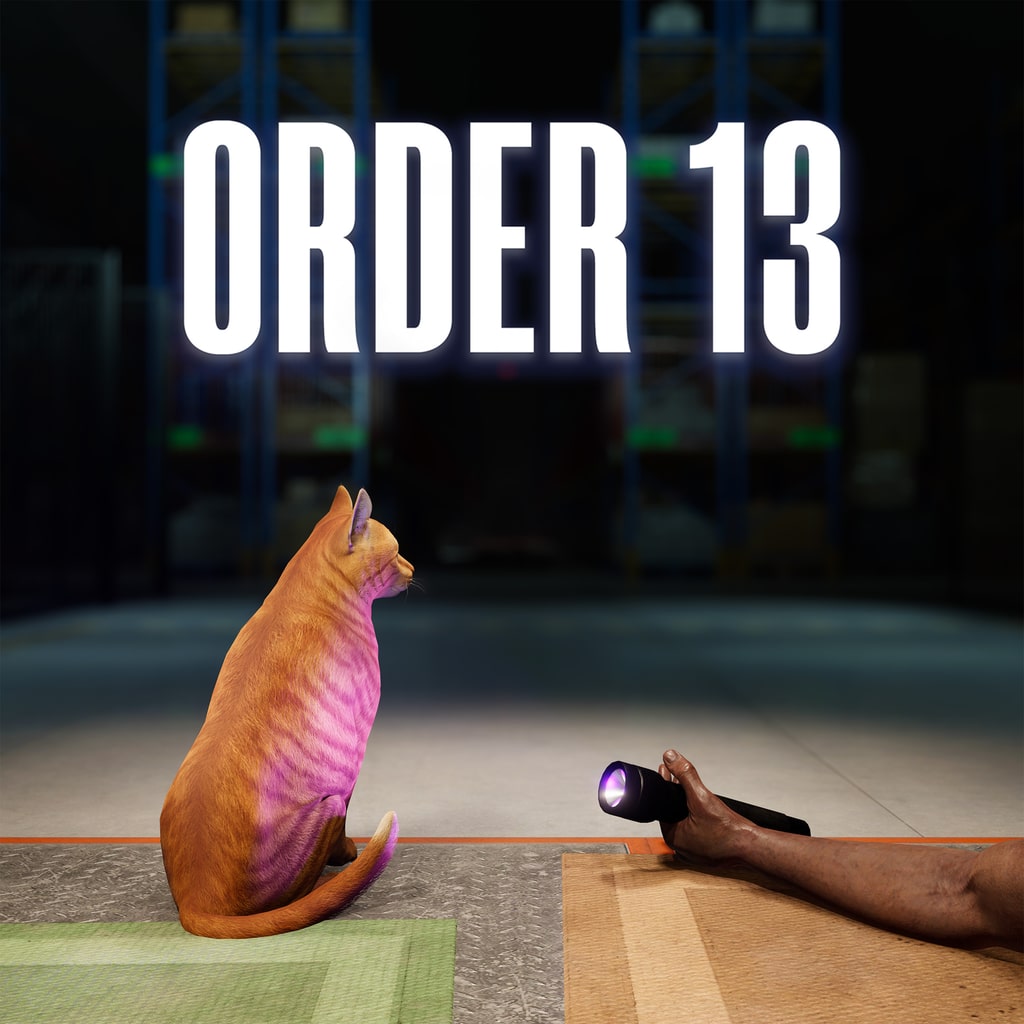
If there is one element that truly sets Order 13 apart, it’s the presence of your cat.
Your feline companion acts as the only comforting presence in an otherwise oppressive environment. At the start of each shift, the cat stays near your workstation, offering a small emotional anchor before you venture deeper into the warehouse.
However, the cat isn’t simply decorative.
Players must actively care for and protect their pet throughout the game. Neglecting the cat — or allowing it to be placed in danger — can have serious consequences.
This mechanic adds an emotional layer that many horror games lack. Instead of focusing solely on your own survival, you’re constantly aware that something innocent depends on you.
It’s a clever design choice. Protecting the cat gives players a reason to stay calm and careful, even when the warehouse becomes increasingly hostile.
Few horror mechanics are as effective as making players responsible for something vulnerable.
Progression & Upgrades
As players complete orders and survive shifts, they earn access to upgrades and new tools.
These improvements can facilitate warehouse navigation, accelerate order fulfilment, or offer limited protection against the dangers lurking within the building.
Unlocking deeper sections of the warehouse also uncovers fragments of the game’s mysterious narrative. Documents, environmental clues, and strange discoveries hint at what might have transpired inside the facility before your arrival.
The story is deliberately fragmented, encouraging players to piece together the truth themselves.
Although the narrative never fully explains everything, this ambiguity works in favour of the game. The unanswered questions make the warehouse feel significantly more unsettling.
Atmosphere & Sound Design
The true strength of Order 13 is in its atmosphere.
The warehouse feels oppressive. Tall shelves cast long shadows, dim lighting creates blind corners, and the vast scale of the environment constantly reminds players how isolated they are.
Sound design is key to building tension. The hum of machinery, distant metallic clangs, and sudden noises from unseen areas produce a constant feeling of unease.
Often, the scariest moments are the quiet ones — standing alone in a dark aisle, listening for something moving just out of sight.
The game rarely depends on traditional jump scares. Instead, it crafts dread through anticipation and uncertainty.
This approach makes the horror far more psychological.
Pros & Cons
Pros
- Unique blend of job simulation and survival horror
- Procedural warehouse layout increases replayability
- Excellent atmosphere and sound design
- Emotional connection through the cat mechanic
- Gradual progression and mystery-driven exploration
Cons
- Slow pacing may not appeal to all players
- Repetitive job tasks can occasionally feel grindy
- Story remains somewhat vague by the end
Final Verdict
Order 13 stands out as one of the most unusual horror games in recent years — and that is precisely why it works so well.
By blending the mechanics of a job simulator with psychological horror elements, Cybernetic Walrus has crafted a game that feels both banal and terrifying. Packing orders in a warehouse shouldn’t be frightening, yet the game’s oppressive atmosphere turns ordinary tasks into nerve-wracking challenges.
The procedural setup ensures that each shift feels unpredictable, while the constant pressure to meet quotas forces players to keep moving even when danger lingers.
Perhaps the game’s most striking feature, however, is the cat. In a genre often focused solely on survival, introducing something vulnerable to protect creates a compelling emotional hook. Suddenly, every decision carries more weight.
That said, Order 13 isn’t a horror game built for quick thrills. Its slow pacing and repetitive job mechanics can sometimes feel dull, especially for players expecting a more traditional survival horror experience.
But for those willing to embrace its unique concept, the game offers a deeply atmospheric and memorable experience.
Order 13 shows that horror doesn’t have to be haunted mansions or monsters in castles. Sometimes, all it takes is a lonely warehouse, a night shift… and the unsettling feeling that you’re not actually alone.