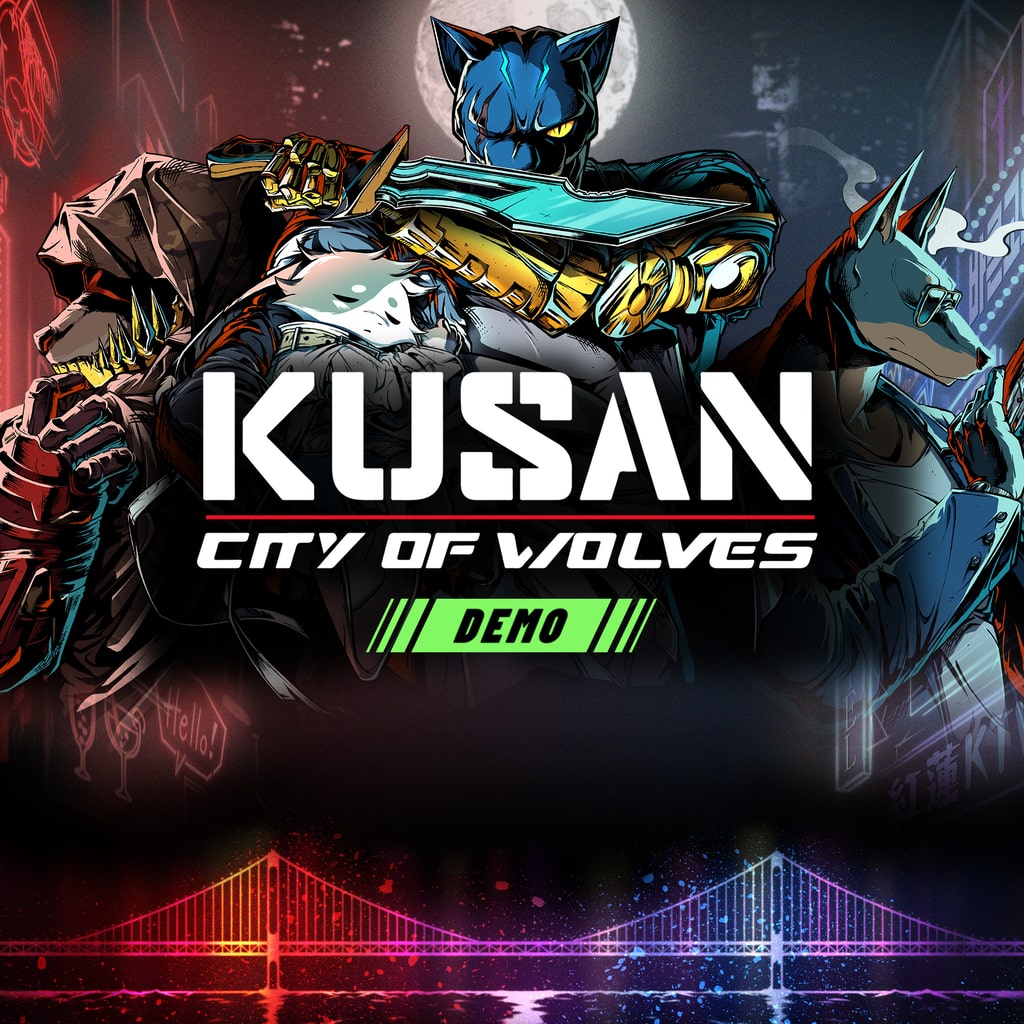
Some games ask you to survive. Others ask you to master them. Kusan: City of Wolves firmly belongs in the second category, and it wastes no time making that clear. From the opening moments, it establishes a ruthless rhythm in which hesitation is punished, confidence is rewarded, and every room feels like a deadly puzzle waiting to be solved. It proudly wears its inspirations on its sleeve, drawing obvious comparisons to Hotline Miami, John Wick, and classic arcade action games, yet it never feels like a simple imitation.
Instead, developer CIRCLEfromDOT delivers something remarkably focused. This is a game that knows exactly what it wants to be. It is fast, brutally unforgiving, stylish without becoming self-indulgent, and endlessly satisfying once its systems begin to click. There is very little wasted motion here. Every mechanic serves the relentless pace, creating an experience that constantly pushes players to improve rather than simply survive. The result is an action game that feels wonderfully old-school in philosophy while embracing modern presentation and quality-of-life improvements.
Every Encounter Is a Puzzle
Kusan’s greatest strength lies in its combat design. Rather than flooding arenas with endless enemies, each stage is carefully handcrafted to test positioning, movement and decision-making. Every doorway hides danger, every corridor becomes a tactical consideration, and every enemy placement is clearly intentional.
Jin, the game’s protagonist, controls beautifully. His movement feels immediate, responsive and incredibly precise, making failures feel like genuine player mistakes rather than frustrating control issues. Death often comes in a single hit, which initially feels harsh, but quick restarts encourage experimentation rather than frustration. Before long, failed attempts become learning opportunities as muscle memory gradually replaces panic.
Combat revolves around firearms, melee attacks and Jin’s cybernetic War Hand. Each weapon carries a distinct personality, encouraging players to adapt to enemy layouts. Pistols reward accuracy, shotguns offer devastating close-range power, while blades allow for swift executions when ammunition runs low. The War Hand adds another welcome layer, giving players powerful abilities that can completely change the flow of difficult encounters.
Success depends on momentum. Standing still almost guarantees failure, while constant movement keeps enemies guessing. There’s an addictive rhythm to sprinting through a room, eliminating one opponent with a pistol shot, then throwing a knife into another, dodging incoming fire, and finally finishing the last survivor with a perfectly timed melee strike. Those moments feel spectacular because they’re entirely player-driven.
Demanding But Fair
Difficulty is often described as unforgiving, yet Kusan rarely feels unfair. The game consistently teaches through repetition rather than lengthy tutorials. Enemy behaviour becomes predictable with experience, allowing players to devise increasingly efficient routes through each encounter.
The 54 handcrafted stages offer excellent variety throughout the campaign. While the core mechanics remain familiar, fresh enemy combinations, environmental hazards and increasingly elaborate arena layouts prevent repetition from setting in. New challenges arrive at a satisfying pace, keeping players engaged while steadily raising the skill ceiling.
Boss battles deserve particular praise. Rather than acting as oversized bullet sponges, each major encounter introduces unique attack patterns that demand observation and adaptation. Learning these encounters is immensely rewarding, especially when what once seemed impossible suddenly becomes manageable through improved timing and execution.
Players chasing perfection will find plenty to enjoy thanks to the ranking system. Achieving S Ranks requires efficient movement, flawless execution and intimate knowledge of each stage. It transforms completed levels into tempting opportunities for mastery rather than content to simply leave behind.
Style Dripping From Every Pixel
Visually, Kusan is striking from beginning to end. Its rain-soaked pixel-art city immediately establishes a distinctive atmosphere of flickering neon signs, dim alleyways and bloodstained interiors. Every environment feels dangerous, yet oddly beautiful in its own grim way.
The lighting deserves special recognition. Bright neon reflections shimmer across wet streets, while muzzle flashes briefly illuminate darkened rooms during intense firefights. These effects create an impressive sense of depth without compromising the crisp clarity needed for fast-paced action.
Character animation is equally impressive. Jin moves with purpose, enemies react convincingly to gunfire, and combat flows with an almost choreographed elegance when everything comes together. The visual feedback remains consistently satisfying, making every successful room clear feel like an expertly directed action sequence.
Graphic-novel-inspired storytelling also proves surprisingly effective. Rather than interrupting gameplay with lengthy cinematics, comic-panel sequences maintain momentum while delivering enough narrative context to keep players invested.
A Story That Knows When to Step Forward
Narrative rarely takes centre stage in games built around relentless action, yet Kusan manages to tell a compelling tale without slowing the pace. Jin is an engaging protagonist, driven by guilt, loyalty and determination rather than exaggerated heroics.
The central mystery surrounding Haru gradually unfolds across the campaign, supported by themes of betrayal, corruption and personal redemption. While the plot occasionally leans into familiar action-thriller territory, strong pacing prevents it from overstaying its welcome.
Supporting characters add welcome emotional weight, particularly during quieter moments between missions. They never dominate the experience, but they provide enough humanity to ensure the violence always serves a larger purpose rather than existing purely for spectacle.
The comic presentation reinforces the game’s neo-noir atmosphere beautifully, delivering dramatic reveals with style while respecting the player’s desire to return to the action.
Music That Drives Every Trigger Pull
Audio plays a central role in Kusan’s identity, and Loptimist’s soundtrack proves an inspired choice. Heavy hip-hop beats blend seamlessly with electronic influences, creating a pulse that constantly propels players forward. Every firefight feels more intense thanks to the driving rhythms underpinning each encounter.
Weapons sound powerful and distinct, while environmental audio helps sell the illusion of a living city, even during quieter exploration sequences. Enemy voices, ambient rainfall and distant urban sounds combine to create an immersive backdrop that complements the visual presentation.
The soundtrack never becomes repetitive despite the game’s relentless pace. Instead, it evolves alongside the action, helping sustain tension throughout longer play sessions.
Built for Replayability
Completing the campaign is only the beginning. Players seeking mastery will find substantial replay value thanks to ranking systems, upgraded abilities, unlockable equipment and alternative approaches to stage completion.
Experimenting with different weapon combinations significantly alters combat dynamics, while improving Jin’s War Hand unlocks new tactical possibilities that encourage revisiting earlier missions. The game respects player skill progression by allowing increased confidence to naturally unlock more stylish approaches.
Because individual stages remain relatively concise, replaying them never feels like a chore. Instead, they become opportunities to shave seconds off completion times, improve rankings and discover more efficient combat routes. That addictive “just one more attempt” quality persists throughout the experience, making Kusan remarkably difficult to put down.
Final Verdict
Kusan: City of Wolves understands the appeal of precision action better than many big-budget releases. Every mechanic feels carefully considered, every level has been crafted with purpose, and every victory feels genuinely earned. It refuses to compromise its challenging identity while providing enough accessibility to encourage determined newcomers to improve.
The story may not reinvent the action genre, and some players may find the demanding difficulty intimidating in the opening hours, but perseverance reveals one of the year’s most rewarding action experiences. The combination of stylish presentation, exceptional combat design, memorable music and consistently satisfying progression creates a game that feels polished from beginning to end.
Fans of challenging arcade shooters, score-chasing action games and stylish top-down combat should absolutely make time for Kusan: City of Wolves. It delivers exactly what it promises, then elevates the experience through confident design and impeccable execution.