There is something particularly unsettling about a horror game that understands the difference between being frightened and feeling genuinely uncomfortable. While many titles rely on sudden noises, grotesque creatures and relentless violence to get under your skin, Heartworm takes a more intimate approach, drawing its horror from grief, isolation and the painful memories we sometimes struggle to leave behind. Developed by Vincent Adinolfi and published by DreadXP, this retro-inspired survival horror adventure takes us back to an era when limited technology often made the imagination work harder than any elaborate visual effects ever could. Its low-poly environments, haunting atmosphere and deliberately measured pace are not simply nostalgic flourishes but integral to a story that explores what happens when the desire to reconnect with someone we have lost begins to consume us.
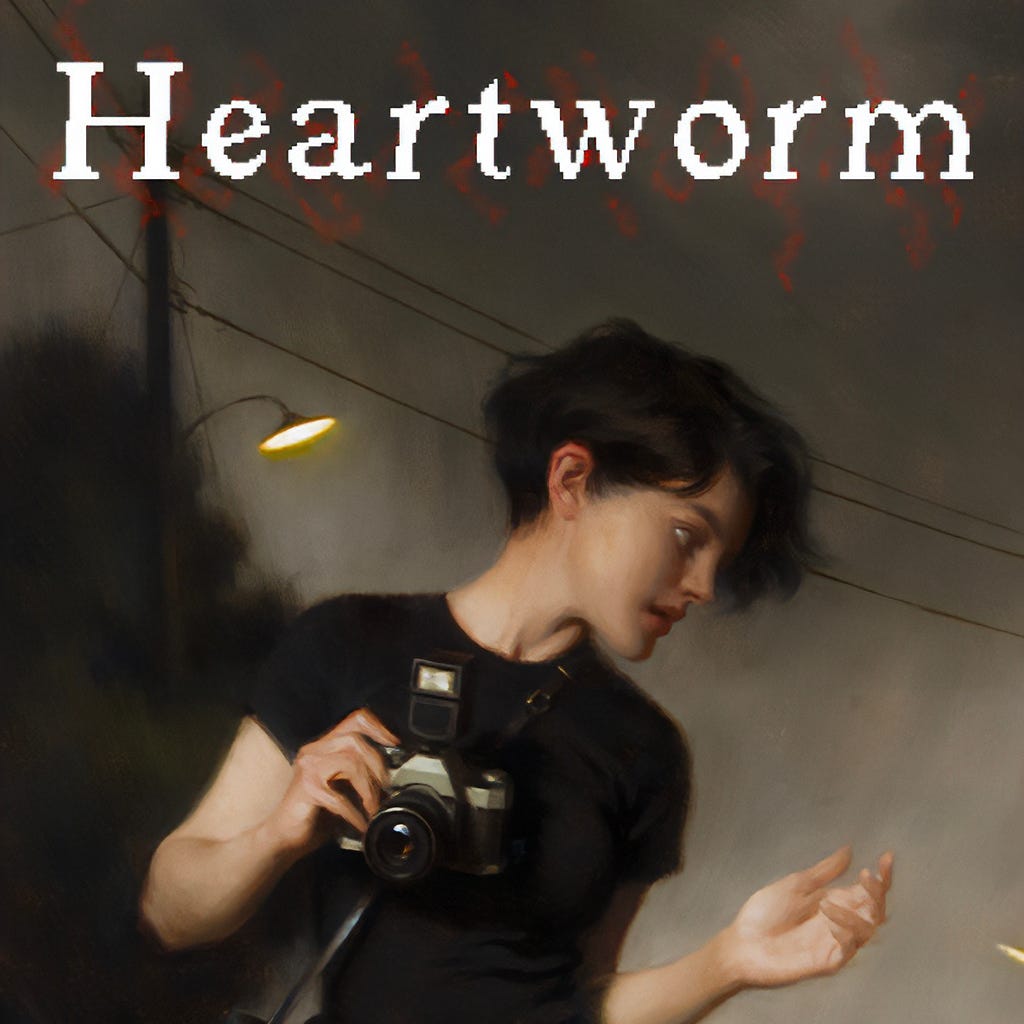
At the heart of Heartworm is Sam, a young woman struggling to come to terms with the death of her beloved grandfather. Unable to move forward, she becomes increasingly absorbed in an internet rabbit hole that promises something almost impossible: a chance to communicate with those who have passed away. A mysterious online forum eventually leads her to an isolated house in the mountains, a place rumoured to offer a connection to the other side. It is a premise that feels suitably rooted in the early days of internet horror, where anonymous messages, obscure websites and whispered rumours could be every bit as frightening as anything lurking in the darkness. What makes Sam’s journey compelling is that her search is not driven by simple curiosity but by an emotional need that threatens to blur the boundary between hope and obsession.
A Love Letter to Survival Horror
Anyone who spent time with survival horror during the original PlayStation era will recognise the foundations on which Heartworm is built. Its visual style, deliberate exploration and carefully managed encounters evoke the spirit of genre classics such as Silent Hill, Resident Evil and Fatal Frame, while establishing an identity of its own. The low-poly character models and environments are intentionally rough around the edges, recalling a period when developers had to communicate fear through restricted viewpoints, suggestive details and carefully constructed spaces. Rather than disguising those limitations, Heartworm embraces them, using its retro aesthetic to create a world that feels distant, lonely and unsettling.
The environments are central to the experience, with abandoned rooms, shadowy corridors and forgotten spaces encouraging players to look closely at their surroundings. These locations have a distinctive melancholy, as though the world itself has become trapped in the past, unable to escape the memories that cling to it. The game’s optional pixelation and retro visual effects offer an additional layer of nostalgia for those who want a more authentic early 3D console experience, although their appeal will naturally depend on individual preference. Crucially, the presentation is more than an exercise in imitation, because its rough textures and restricted visibility complement the emotional themes running beneath the surface.
The Camera Sees More Than It Should
One of Heartworm’s most distinctive features is its use of a camera as Sam’s primary means of defence. It is an interesting twist on familiar survival horror mechanics, particularly given the genre’s long association with firearms, ammunition shortages and increasingly elaborate weaponry. Here, the camera becomes both a practical tool for confronting hostile manifestations and a symbolic extension of the game’s central themes, linking the act of capturing an image to the struggle to preserve memories. Its use gives encounters a different rhythm from conventional combat, requiring players to adapt to the mechanics rather than simply relying on familiar action-game instincts.
The game combines over-the-shoulder aiming with fixed camera perspectives, creating a deliberate contrast between moments of direct control and sequences in which the environment dictates what can be seen. Modern controls make the experience more accessible to contemporary players, while optional classic tank controls offer an alternative for those who prefer the more rigid movement associated with the genre’s early years. Switching between perspectives can take some getting used to, particularly during combat, where changes in viewpoint can make positioning and aiming feel less immediately intuitive. However, this approach also reinforces the sense of vulnerability that is so important to the experience, reminding players that Sam is not a trained fighter stepping confidently into danger.
Combat is deliberately limited, and that restraint is welcome in a game so focused on atmosphere and exploration. Hostile encounters are not simply opportunities to clear a room before moving on, but interruptions to an already uncomfortable journey through a world that feels emotionally and physically hostile. Managing the camera and deciding how to approach danger gives each encounter a degree of tension, although the perspective shifts may frustrate players who prefer more immediate and consistent controls. It is a system that takes patience, but it fits the game’s broader refusal to turn Sam into an unstoppable action hero.
Puzzles, Exploration and the Fear of the Unknown
Exploration forms the backbone of Heartworm, with classic environmental puzzles that encourage players to pay close attention to their surroundings and connect seemingly unrelated clues. Rather than constantly directing players towards the next objective, the game invites them to investigate, observe and occasionally retrace their steps. This approach gives the environments a stronger sense of purpose, making each discovered item or unlocked passage feel like a small victory in an increasingly oppressive place. The puzzles are described as cryptic, and that traditional design philosophy will appeal to players who enjoy working things out for themselves, although those accustomed to constant prompts and clearly marked objectives may find the experience less accommodating.
Inventory management also plays an important role, bringing another familiar survival horror mechanic into the experience. Limited space encourages players to consider what they carry and how best to use the resources available, adding a layer of decision-making to the otherwise exploratory structure. These systems work together to create a sense of vulnerability that extends beyond the immediate threat of hostile creatures. Even when there is no obvious danger nearby, the need to conserve resources and think carefully about the next step helps maintain an underlying tension.
With an estimated four to six hours of gameplay, Heartworm is a relatively compact experience by modern standards. That shorter length can be an advantage for a story built around a focused emotional journey, allowing the atmosphere and central mystery to remain at the forefront without requiring an unnecessarily prolonged adventure. Multiple endings also provide an incentive to revisit the experience, giving players an opportunity to explore how different outcomes might alter their understanding of Sam’s journey. The value of those endings ultimately rests on how meaningfully they expand the narrative, but the possibility of alternative conclusions is well suited to a story about loss, acceptance and the choices people make when confronted with the past.
Grief at the Centre of the Horror
What gives Heartworm its emotional identity is its willingness to make grief the driving force behind its horror. Sam’s inability to move on is not treated as a simple character motivation that can be resolved by defeating a monster or uncovering a secret. Instead, her determination to reconnect with her grandfather gives the supernatural elements a deeply personal context, making the mysteries surrounding the mountain house feel like an extension of her emotional struggle. The horror is therefore not just about what might be waiting in the darkness, but about the possibility that the answers Sam seeks may not bring the comfort she hopes to find.
This focus gives the game an opportunity to explore the complicated relationship between memory and loss. Memories can be comforting, painful, or both at once, and the desire to hold on to someone can make accepting their absence feel almost unbearable. The supernatural premise provides an appropriately unsettling framework for these ideas, while the abandoned settings and melancholic tone help convey the weight of Sam’s emotional state. The result is a horror adventure that aims to leave an impression beyond its frightening moments, grounding its mystery in a recognisable human experience.
The narrative is not without its difficulties, however. Critical responses have noted that the story loses some of its momentum in the second half, which can weaken the sense of progression as the mystery develops. This is a particular concern for a game whose emotional themes are central to its appeal, because atmosphere alone cannot always sustain interest when the narrative begins to lose direction. Nevertheless, the underlying premise gives Heartworm a strong foundation, and its willingness to approach horror through personal loss helps distinguish it from experiences that rely more heavily on spectacle.
Sound, Silence and Atmosphere
A haunting original soundtrack plays a key role in shaping the mood, supporting the game’s quieter moments as effectively as its more frightening encounters. In survival horror, sound is often most effective when it leaves space for uncertainty, allowing a distant noise or an uncomfortable silence to suggest danger without immediately revealing its source. Heartworm’s melancholic tone lends itself naturally to this approach, helping to create an atmosphere that feels more sorrowful than relentlessly aggressive. The combination of music, restricted visibility and retro-inspired environments gives the experience a distinctive identity that suits its exploration of grief.
The use of both pre-rendered and in-game cutscenes also reflects the game’s connection to classic survival horror. This mixture of presentation styles can help establish a deliberate cinematic rhythm, separating key narrative moments from the exploration that surrounds them. It reinforces the impression of a game that understands the appeal of older genre conventions while using modern control options to make those conventions more approachable. When its various elements come together, Heartworm creates the kind of unsettling atmosphere that encourages players to keep moving forward, even when part of them would rather turn around.
A Few Cracks Beneath the Surface
For all its strengths, Heartworm is unlikely to appeal equally to every horror fan. Its retro presentation is a deliberate creative choice, but players seeking realistic visuals, fluid action or contemporary cinematic spectacle may struggle to connect with its aesthetic. The camera-based combat system also introduces a learning curve, and the shifts between fixed viewpoints and over-the-shoulder aiming can occasionally interrupt the flow of an encounter. These issues are not necessarily failures of the game’s design, but they are noticeable compromises that come with its commitment to older survival horror traditions.
The narrative’s slower second half is another area where the experience could have been more consistent. A mystery built around such an emotionally charged premise needs to maintain a strong sense of purpose as it approaches its conclusion, and any loss of momentum risks diluting the impact of the journey. Even so, the game’s relatively short length helps prevent these shortcomings from becoming overly exhausting, while the multiple endings offer some reason to return after the initial playthrough. Heartworm is at its most effective when its atmosphere, puzzles and emotional storytelling work together, rather than when any one element is expected to carry the entire experience.
Final Verdict
Heartworm is a thoughtful and atmospheric return to the traditions of classic survival horror, combining low-poly visuals, fixed-camera exploration, cryptic puzzles and limited combat with a story rooted in grief and the struggle to let go. Its camera-based combat is an intriguing departure from more conventional weapon systems, even if the perspective shifts can take time to master. Its retro presentation feels purposeful rather than purely nostalgic. The emotional premise gives the experience an intimate character, while the haunting soundtrack and unsettling environments help create a world that feels as sorrowful as it is frightening. Although the narrative loses some momentum in its second half and certain mechanics may test the patience of less experienced players, there is much to appreciate in its focused approach to horror.
For fans of the genre’s early years, Heartworm offers a compelling reminder that fear does not always need elaborate visuals or relentless action to be effective. Its greatest strength lies in the relationship between its supernatural mystery and Sam’s personal struggle, giving its exploration and encounters an emotional purpose that extends beyond survival. It may not completely escape the limitations of its inspirations, but it demonstrates a clear understanding of what made those older experiences so memorable. Heartworm is a melancholic, unsettling and often affecting adventure that deserves attention from anyone who appreciates survival horror with a little more on its mind than simply keeping the player alive.