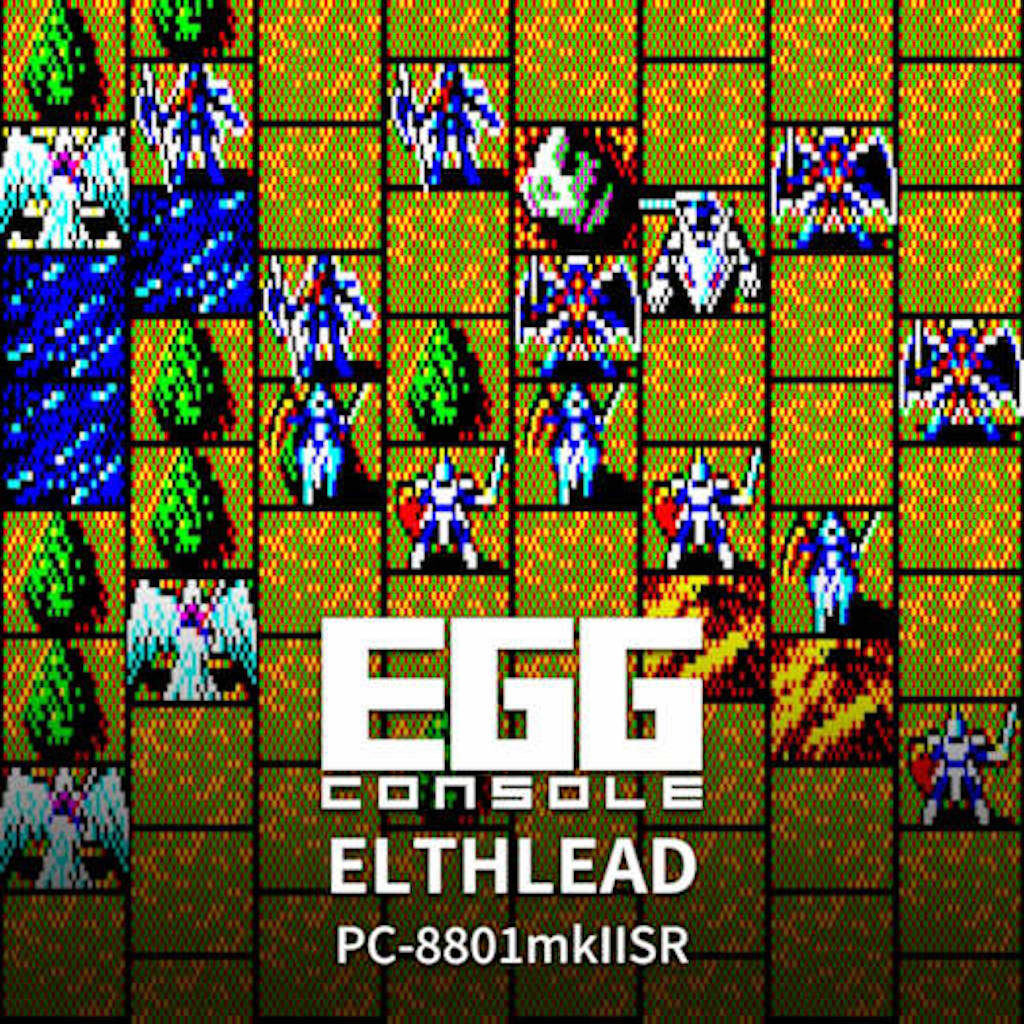
Retro re-releases often do more than preserve old games. At their best, they remind us where entire genres found their footing, allowing modern players to trace ideas back to their earliest forms. That is exactly what the EGGCONSOLE series continues to achieve. While many of these releases appeal primarily to gaming historians, every so often one arrives that feels particularly significant. ELTHLEAD is one of those games.
Originally released in 1988 by NCS and Masaya for the PC 8801, ELTHLEAD occupies an important place in tactical role-playing history. Long before Langrisser became one of Japan’s most respected strategy franchises, many of its ideas were already taking shape here. Familiar names such as King Sieghart and the villainous Bozel make their first appearance, while many of the battlefield mechanics would eventually evolve into systems that strategy fans still enjoy decades later.
That historical importance naturally raises expectations. Does ELTHLEAD remain enjoyable beyond its legacy, or is it simply an interesting museum piece? The answer lies comfortably between the two. While modern tactical games have refined almost every aspect of the formula, there is still genuine satisfaction to be found beneath this classic’s ageing exterior.
Gameplay
ELTHLEAD presents its battles across two distinct layers. The first is an Area Map, where armies manoeuvre across the continent of Gaia, positioning themselves for conflict and planning their next engagement. Once opposing forces meet, the action shifts to a Tactical Map, where every movement, attack and spell must be carefully considered.
This structure remains surprisingly engaging. The strategic layer creates a welcome sense of scale, making battles feel part of a larger military campaign rather than isolated encounters. Transitioning to the tactical view then slows the pace considerably, encouraging players to think several turns ahead before committing valuable units.
Unlike many early strategy titles that rely purely on overwhelming numbers, ELTHLEAD consistently rewards thoughtful positioning. Terrain provides meaningful defensive advantages, forcing players to consider forests, hills and fortified locations rather than simply charging towards the enemy. Even relatively straightforward encounters become far more interesting once these environmental factors influence every decision.
Magic also plays a crucial role throughout the campaign. Area-effect spells can dramatically alter the balance of power when deployed effectively, punishing careless formations while rewarding patient planning. Successfully combining terrain advantages with carefully timed magical attacks creates moments that still feel remarkably satisfying despite the game’s age.
Building An Army
One of ELTHLEAD’s greatest strengths is the diversity of its military roster. Rather than relying solely on traditional swordsmen and cavalry, players gradually command an impressive array of fantasy units, each offering distinct tactical advantages on the battlefield.
Falcon Knights provide exceptional mobility, allowing them to bypass obstacles and strike vulnerable enemy positions. Archers excel at long range, softening opponents before frontline units move into combat. Fighters and Light Knights form dependable defensive cores, while the imposing Grandinos, enormous Earth Dragons, deliver devastating offensive power capable of turning seemingly hopeless battles in your favour.
White Dragons and other mythical creatures add further variety without feeling needlessly complicated. Every unit fills a clear battlefield role, encouraging players to assemble balanced armies rather than simply recruiting whichever soldiers have the highest statistics.
This balance between accessibility and strategic depth is perhaps ELTHLEAD’s most enduring achievement. While later tactical role-playing games would introduce countless additional mechanics, the foundations established here remain remarkably solid.
A Product Of Its Time
As enjoyable as the underlying strategy remains, there is no escaping ELTHLEAD’s age. Players accustomed to modern tactical role-playing games will immediately notice slower pacing, limited interface conveniences, and a presentation that reflects late nineteen-eighties home computer technology.
Menus often require more navigation than contemporary players might expect, while information that modern strategy games present clearly sometimes demands experimentation or careful observation. None of these issues make the game unplayable, but they do require patience during the opening hours.
Battle animations are understandably simple by today’s standards, with much of the imagination supplied by the player rather than lavish visual effects. Yet there is undeniable charm in that simplicity. The pixel artwork possesses a distinctive character that modern high-resolution graphics cannot easily replicate, and the clean battlefield layouts keep tactical information easy to understand.
Those willing to approach ELTHLEAD on its own terms will discover a game that values careful thinking over spectacle. It asks for patience, but rewards that patience with consistently satisfying strategic encounters.
Modern Conveniences Make A Difference
The EGGCONSOLE release wisely introduces a number of modern quality-of-life features without compromising the original experience. Save states alone transform overall accessibility, allowing players to experiment with different tactical approaches without repeating lengthy sections after every mistake.
Display options and control customisation also make the ageing software feel considerably more comfortable on modern hardware. These improvements never interfere with the original mechanics, instead smoothing away frustrations that stem more from outdated technology than from deliberate game design.
Perhaps most valuable is the inclusion of the integrated digital manual. Games from this era often expected players to consult printed documentation, making certain systems confusing when experienced decades later. Having those materials readily available helps bridge the historical gap while preserving authenticity.
These additions highlight exactly why preservation projects like EGGCONSOLE matter. They allow important classics to remain playable rather than simply viewable, ensuring historical significance is accompanied by genuine accessibility.
Presentation
Visually, ELTHLEAD reflects the strengths and limitations of the PC 8801 platform. Character portraits have an appealing, handcrafted quality, while battlefield sprites convey information clearly despite their modest level of detail. There is a sincerity to the artwork that continues to appeal to fans of classic Japanese computer games.
The soundtrack similarly embraces the hardware’s distinctive sound capabilities. Melodies are memorable without becoming repetitive, effectively reinforcing both triumphant victories and desperate last stands. Although the audio naturally lacks the orchestral scale of modern strategy games, it complements the adventure remarkably well.
Performance is exactly what players should expect from an archival release. Emulation remains stable, controls respond reliably, and the experience faithfully recreates the original software while benefiting from contemporary hardware stability.
Final Verdict
EGGCONSOLE ELTHLEAD PC-8801mkIISR is far more than a nostalgic curiosity. It marks an important chapter in the evolution of tactical role-playing games, introducing ideas that would later flourish within one of the genre’s most respected franchises. While its interface and pacing inevitably reveal its age, the strategic depth beneath those limitations remains surprisingly compelling.
Players seeking fast-moving modern strategy may struggle with its deliberate tempo, but those interested in gaming history or classic tactical design will find plenty to admire. Thoughtful battlefield positioning, meaningful unit variety and rewarding long-term planning combine to create an experience that continues to command respect nearly four decades after its original release.
This is not simply a preserved relic behind museum glass. It is a reminder that many of the mechanics we now take for granted were once bold innovations created by developers willing to experiment. Thanks to the EGGCONSOLE initiative, ELTHLEAD once again has the opportunity to inspire both curious newcomers and veteran strategy fans alike.