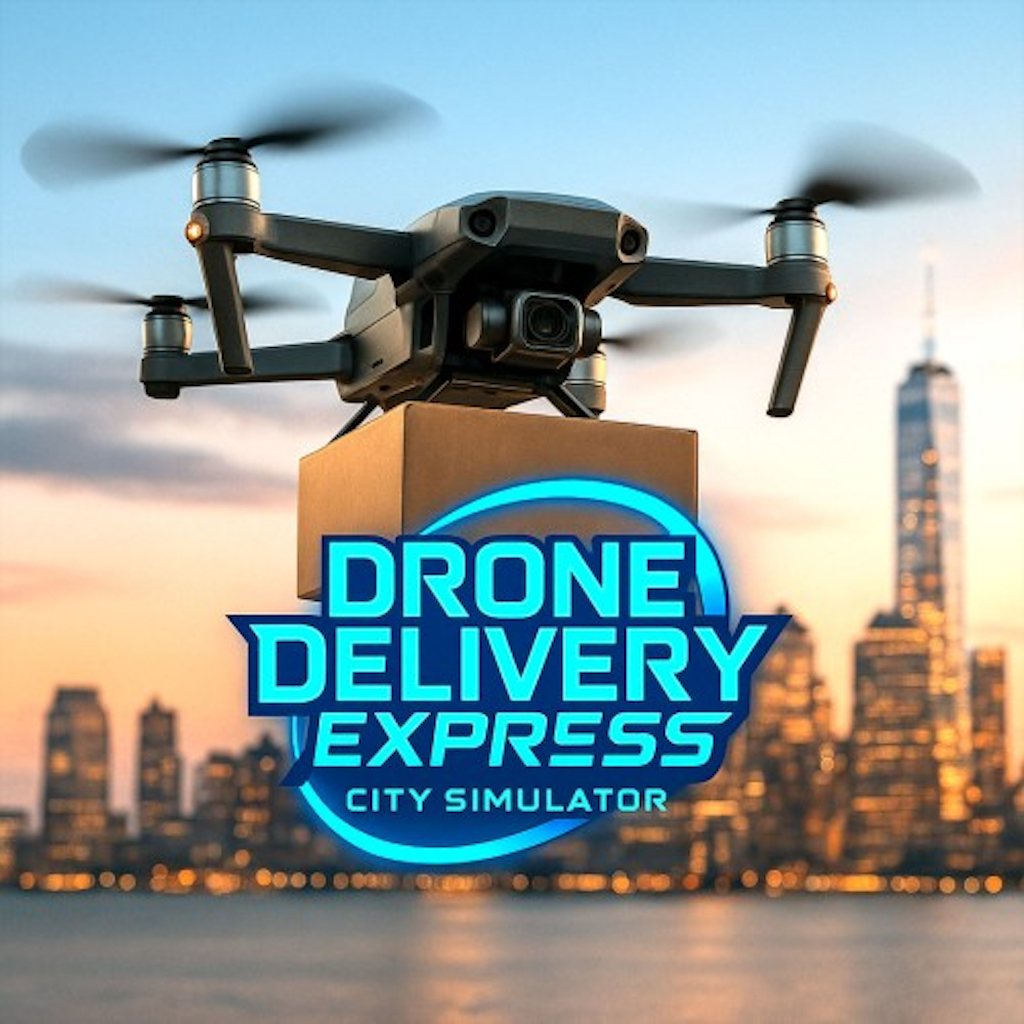
There’s a quiet promise at the heart of Drone Delivery Express: City Simulator: not every game about flying needs explosions, dogfights, or time trials measured in milliseconds. Sometimes, all you need is a humming set of rotors, a cardboard box strapped underneath, and a city waiting to be crossed at your own pace. Eclipse Interactive’s latest release aims directly at the relaxation crowd, offering a low-pressure simulation about delivering packages by drone through a modern urban landscape.
It’s an idea that sounds almost mundane on paper — yet in practice, the game manages to carve out a surprisingly cozy niche somewhere between job simulator and digital meditation.
Take Off, Tune Out
The core loop couldn’t be simpler. You select a drone, accept a delivery job, lift off from a rooftop hub, and navigate to a marked drop zone somewhere across the city. There are no rival pilots trying to shoot you down, no ticking bomb strapped to the parcel — just distance, obstacles, and the gentle challenge of staying airborne.
Controls are immediately approachable. Throttle, altitude, and camera orientation are mapped intuitively whether you’re using a controller or keyboard. Within minutes you’ll be weaving between apartment blocks and gliding over traffic like a seasoned courier of the skies.
What makes the experience work is the emphasis on flow rather than friction. The physics model feels forgiving but believable; drones have weight and momentum without becoming unwieldy. It’s less a test of reflexes and more an exercise in smooth planning — exactly the tone the developers seem to be aiming for.
A City Built for Breathing Room
The urban environment is the game’s true star. Eclipse Interactive has crafted a believable modern metropolis filled with glass towers, construction cranes, parks, and busy intersections. While not hyper-detailed to blockbuster standards, the city has a lived-in quality that encourages sightseeing between objectives.
Dynamic weather and time-of-day systems add welcome variety. Delivering sushi boxes at sunset feels very different from braving a snowy midnight run where visibility shrinks and wind gusts tug at your flight path. These conditions never become punishing, but they gently nudge you to adapt your approach.
Traffic moves below, pedestrians dot sidewalks, and the distant hum of urban life creates a pleasant audio backdrop. It’s the kind of digital space where you might intentionally take the long route just to enjoy the view.
Drones With Personality
Progression comes through unlocking multiple drone models, each with subtle differences in speed, battery life, and handling. None of these variations radically change the formula, yet they provide enough texture to keep things interesting over longer sessions.
Some drones feel nimble and sporty, ideal for tight alleyways; others are heavier workhorses better suited for bulky cargo. The game avoids overwhelming stats screens, instead letting players discover preferences organically — a design choice that fits the relaxed philosophy.
Packages themselves range from tiny envelopes to awkward crates that affect balance. Later missions introduce fragile items that punish reckless landings, encouraging more careful piloting without turning the game into a stress simulator.
Challenge Without Anxiety
Levels are structured as individual delivery contracts rather than an open-world career. Each introduces new routes, landing zones, or mild complications like rooftop construction or temporary no-fly areas. The difficulty curve is gentle, almost polite.
Timers exist, but they’re generous. Failure rarely feels catastrophic; you simply retry with a better understanding of the skyline. This makes Drone Delivery Express ideal for players who want engagement without adrenaline spikes.
That said, veterans seeking deep simulation may find the systems a little light. There’s no complex air traffic management, battery degradation, or economic management layer. The game clearly prioritizes accessibility over realism.
Where the Signal Weakens
While the serenity is admirable, it occasionally drifts into monotony. Mission variety is limited to “fly from A to B,” and even with changing weather, the tasks blur together after a few hours. A narrative thread, rival courier company, or customer interaction system could have added motivation beyond sightseeing.
The city, though attractive, lacks meaningful interactivity. You can’t explore interiors, trigger side activities, or customize your drone beyond model selection. The result is a beautiful stage with relatively few actors.
Technical performance is mostly smooth, but pop-in and repeated building assets remind you of budget limitations. Audio design, while pleasant, loops a small set of ambient tracks that may wear thin on long hauls.
None of these issues break the experience; they simply cap its long-term appeal.
A Game With Good Vibes
What rescues Drone Delivery Express from mediocrity is its confidence in being exactly what it is: a comfort game. In an era dominated by battle passes and competitive pressure, there’s something refreshing about a title that asks nothing more than steady hands and a relaxed mood.
It pairs beautifully with a podcast, late-night unwinding, or younger players discovering flight controls for the first time. The act of skimming over rooftops as rain beads on the camera lens has a strangely therapeutic quality.
Eclipse Interactive clearly understands its audience. This isn’t a drone sim for aviation purists; it’s digital bubble wrap — simple, repetitive, and oddly satisfying.
Who Should Clock In?
- Players seeking a calm, low-stakes simulation
- Fans of games like Euro Truck Simulator but with shorter sessions
- Younger or casual gamers learning 3D navigation
- Anyone who enjoys virtual tourism from the sky
Those craving progression systems, story, or hardcore piloting challenges may want a different flight plan.
Final Verdict
Drone Delivery Express: City Simulator delivers exactly what it promises: a peaceful airborne stroll across a pleasant city. It doesn’t revolutionize simulation design, but it succeeds as a gentle escape where the journey matters more than the package. With a bit more depth and mission variety, this courier could soar even higher.