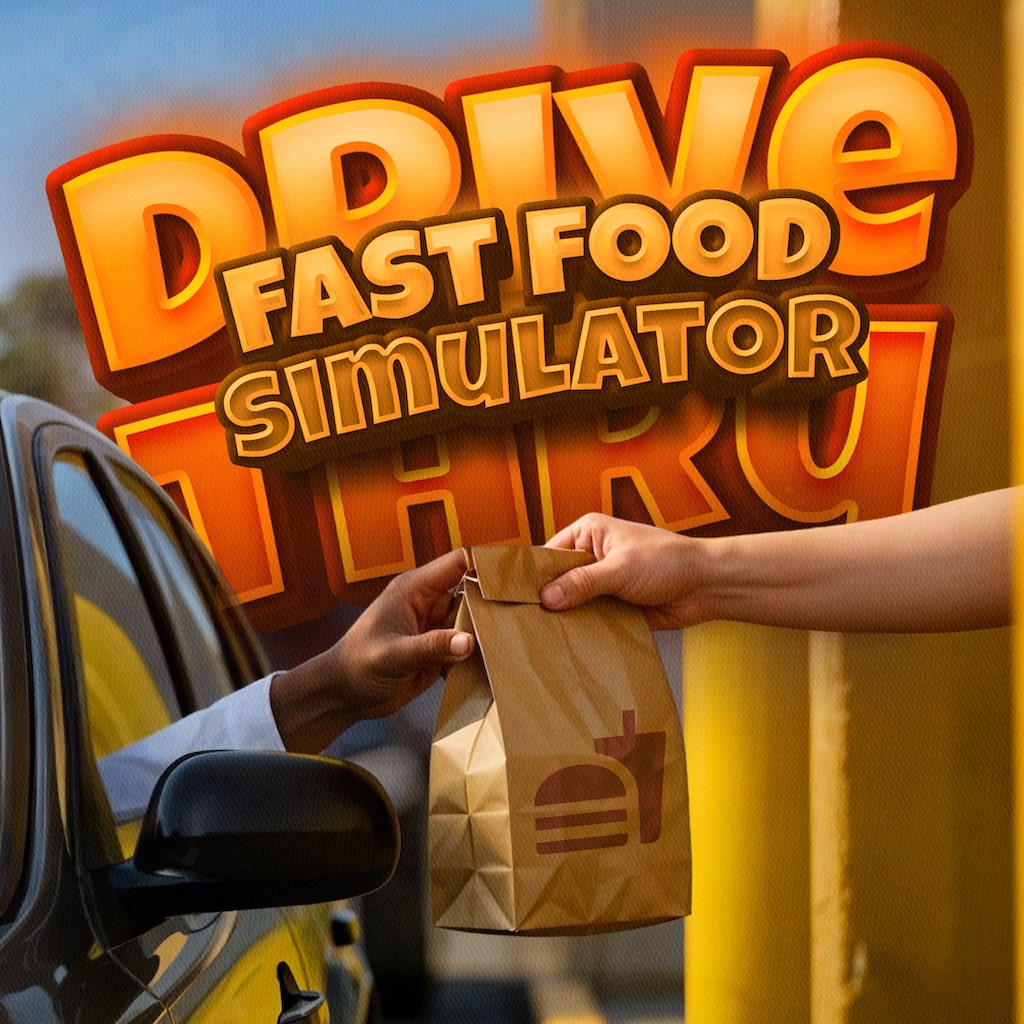
The simulation genre has increasingly embraced chaos over realism, turning everyday jobs into stress-filled playgrounds where things inevitably go wrong. Drive Thru Fast Food Simulator, released February 23, 2026 by Play Games LTD, leans fully into that philosophy — delivering a budget-priced (£3.99) experience built around one of modern life’s most universally relatable pressure cookers: the fast-food drive-thru window.
While its name invites comparisons to the PC hit Fast Food Simulator, this console-focused release carves its own identity by narrowing the experience almost entirely to the drive-thru workflow. Rather than managing an entire restaurant floor, players juggle orders, cooking, payments, cleaning, and customer patience in a tightly compressed gameplay loop designed for quick sessions and escalating chaos.
The result is a surprisingly addictive, occasionally messy, but undeniably entertaining arcade-style simulator that understands exactly what it wants to be — even if its ambition sometimes exceeds its polish.
Story & Setting
There’s no traditional narrative here, and honestly, the game is better for it. Instead of scripted storytelling, Drive Thru Fast Food Simulator builds its identity through situational comedy and emergent gameplay.
You play as both employee and manager of a small roadside fast-food stand attempting to grow into the city’s most popular takeaway spot. Progression unfolds through daily shifts rather than plot beats. Each day introduces new complications: longer queues, stranger customers, equipment failures, and logistical challenges.
The humor comes from recognizable workplace absurdities — impatient customers honking endlessly, malfunctioning ice cream machines at the worst possible moment, and the dreaded “manager request” mid-rush. These moments feel exaggerated but grounded enough to remain relatable, turning mundane service work into controlled chaos.
It’s less a story-driven experience and more a simulation of stress — and that’s precisely the appeal.
Gameplay
The core gameplay loop revolves around four simultaneous responsibilities:
- Taking orders through the speaker
- Cooking food manually
- Assembling and bagging meals
- Processing payment at the window
Each incoming car has a patience timer constantly ticking down, creating immediate tension. Ignore one station too long and everything begins to unravel.
What makes the gameplay compelling is its physics-based interaction system. Burgers must be flipped manually, fries scooped accurately, and drinks poured without overfilling. Toss a wrapped burger too aggressively and it may bounce off the counter, triggering penalties and forcing you to remake the order.
This tactile design creates moments of genuine comedy — and frustration — especially during rush hours when ten tasks compete for attention simultaneously.
Unlike deeper management simulators, strategy here comes from efficiency rather than long-term planning. You learn to optimize movement paths, memorize order patterns, and anticipate rushes before they happen.
The addition of logistics management adds welcome depth. Supplies must be ordered and physically unloaded, meaning poor planning can leave you without buns during peak hours — a disaster that feels hilariously self-inflicted.
One standout mechanic is cleaning. Ignore grease buildup and your character literally slows down, increasing slip risks while carrying food. It’s a small system that meaningfully affects gameplay pacing and reinforces the multitasking theme.
The experience walks a fine line between skill-based mastery and slapstick unpredictability — and usually lands on the right side.
Graphics & Art Direction
Visually, Drive Thru Fast Food Simulator adopts a colorful, high-poly aesthetic that prioritizes clarity over realism. Food items are exaggerated and readable, making it easy to identify ingredients quickly during hectic moments.
Animations are simple but expressive enough to sell the chaos. Flying burgers, spilling drinks, and cluttered counters become visual storytelling tools rather than technical shortcomings.
That said, environmental variety is limited. Most gameplay occurs within the same kitchen layout, and repetition becomes noticeable after extended sessions.
On PS5, performance is smooth and stable, while the PS4 version remains perfectly playable with only minor loading delays between shifts.
The presentation feels appropriate for the budget price — functional rather than impressive.
Sound & Music
Audio design plays a surprisingly important role in maintaining pressure.
Timers beep relentlessly, grills sizzle aggressively, and customer voices overlap in ways that intentionally overwhelm the player. The layered soundscape mirrors real fast-food environments where sensory overload becomes part of the job.
DualSense and DualShock vibration integration is a highlight. Feeling subtle feedback while flipping burgers or hearing coins clink through haptics adds tactile immersion that elevates otherwise simple mechanics.
The soundtrack itself is minimal, mostly stepping aside to let environmental noise drive tension — a smart decision that keeps players focused on workflow.
Performance & Technical State
For a low-cost indie title, performance is commendably stable.
Frame rates remain consistent even during heavy rush periods, and crashes are rare. Controls translate well to a controller, though precision tasks occasionally reveal the limits of analog input compared to mouse control.
Minor physics glitches occur — food clipping through counters or items bouncing unpredictably — but these moments often feel more comedic than game-breaking, aligning with the title’s chaotic tone.
Menus are straightforward, and language support across multiple regions is a welcome inclusion for accessibility.
Replay Value & Content
Replayability stems from progression and mastery rather than content variety.
Earning tips unlocks equipment upgrades like automated soda machines or expanded grills, gradually transforming early chaos into controlled efficiency. Cosmetic upgrades for uniforms and the drive-thru lane add light personalization incentives.
Random events help prevent routines from becoming predictable. One shift might run smoothly, while another collapses into disaster thanks to equipment failures and demanding customers.
However, long-term longevity depends heavily on player tolerance for repetition. Without multiplayer modes or major gameplay variations, the experience works best in short bursts rather than marathon sessions.
At £3.99, though, expectations shift — this feels closer to an addictive arcade game than a full-scale simulator.
Pros & Cons
Pros
- ✔ Addictive, fast-paced gameplay loop
- ✔ Physics-based interactions create genuine comedy
- ✔ Strong use of controller haptics
- ✔ Smart multitasking mechanics with meaningful upgrades
- ✔ Excellent value for its low price
Cons
- ✘ Limited environment variety
- ✘ Repetition sets in during longer sessions
- ✘ Occasional physics jank
- ✘ Lacks multiplayer or deeper management systems
Final Verdict
Drive Thru Fast Food Simulator succeeds because it understands its scale and audience. Rather than chasing realism or complexity, it focuses on delivering concentrated bursts of chaotic fun built around multitasking pressure and physical interaction.
The drive-thru focus proves to be a smart design decision. By narrowing its scope, the game achieves a strong gameplay identity that feels immediately understandable yet surprisingly skill-based. Every improvement — faster movement, smarter cleaning habits, better equipment placement — feels earned through player learning rather than artificial progression.
It’s not a deep simulator, nor does it attempt to be. Instead, it sits comfortably alongside modern “job chaos” games that prioritize emergent humor and moment-to-moment tension over long-term realism.
Technical simplicity and limited variety prevent it from reaching genre-defining heights, but the low asking price dramatically reframes expectations. For the cost of a coffee, players receive a polished, amusing, and replayable stress simulator that’s perfect for short gaming sessions.
Ultimately, Drive Thru Fast Food Simulator is less about running a restaurant and more about surviving one — and that distinction makes all the difference.