Few horror subgenres evoke the same persistent dread as Lovecraftian cosmic horror. Instead of depending on jump scares or monsters lurking in the shadows, these stories focus on something far more disturbing: the notion that humanity is trivial in a universe filled with ancient, incomprehensible beings.
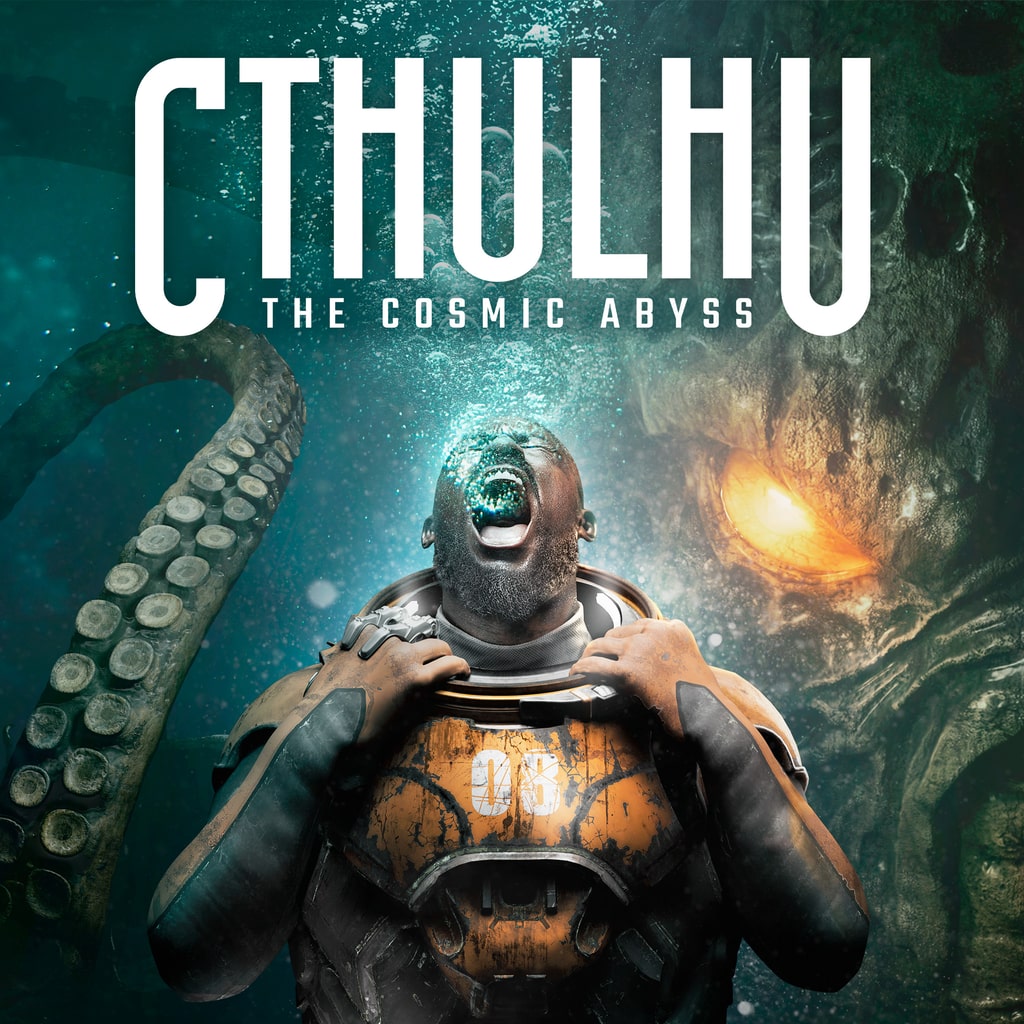
Cthulhu: The Cosmic Abyss, developed by Big Bad Wolf—the studio behind narrative-driven titles like The Council and Vampire: The Masquerade – Swansong—embraces that philosophy completely.
Set in 2053, the game combines Lovecraft’s mythos with advanced technology, creating an intriguing mix of cyberpunk investigation and deep-sea psychological horror. Players assume the role of Noah, an investigator working for Ancile, a secret division of Interpol dedicated to managing occult threats.
Your mission begins with the disappearance of miners at a remote Pacific Ocean facility. But what starts as a corporate investigation soon escalates into a journey to one of Lovecraftian lore’s most notorious locations: the sunken city of R’lyeh.
The further you descend into the abyss, the more reality itself begins to unravel.
A Descent Into Madness
From the very start, Cthulhu: The Cosmic Abyss creates a strong atmosphere of solitude.
The game begins with Noah arriving at a deep-sea mining station where unusual incidents have been reported. The facility itself feels eerily deserted, its faint corridors lit only by flickering emergency lights and distant echoes of machinery.
As you explore the station, it quickly becomes evident that something is terribly wrong.
Strange symbols appear in maintenance tunnels. Audio logs suggest hallucinations experienced by workers. Entire parts of the facility seem warped or distorted, as if the structure itself has started to react to an unseen presence beneath the ocean.
This slow build-up of dread is one of the game’s strongest features.
Rather than presenting supernatural horrors immediately, the story gradually uncovers the influence of something ancient lurking beneath the seabed.
The Role of KEY
Throughout the investigation, Noah is accompanied by KEY, an AI assistant embedded in his neural system.
KEY acts both as a gameplay element and a narrative partner.
From a gameplay perspective, the AI assists in analysing clues, tracking objectives, and providing extra context for discoveries. In many ways, KEY functions like a modern detective’s notebook.
However, narratively, the relationship between Noah and KEY becomes much more complex as the story develops.
While KEY signifies logic and technology, the horrors of R’lyeh exist far beyond rational understanding. As the investigation advances, even the AI struggles to interpret the unfolding events.
This contrast highlights the tension between science and cosmic horror.
Investigative Gameplay
Unlike many horror games that emphasise combat or stealth, The Cosmic Abyss mainly centres on investigation and deduction.
Players explore environments in first-person, examining clues and piecing together what happened at the mining facility.
Gameplay revolves around:
- Gathering documents and recordings
- Analysing environmental details
- Connecting clues to form deductions
- Navigating dialogue choices that influence the narrative
This structure will feel familiar to fans of Big Bad Wolf’s previous work.
Instead of traditional puzzles, the game features logic-based investigations where players must interpret information and arrive at conclusions independently.
These moments can be genuinely rewarding when everything fits together.
Sanity as a Mechanic
A central theme throughout the game is Noah’s mental stability.
Exposure to the influence of Cthulhu gradually erodes the protagonist’s sanity, altering his perception of the world around him.
Initially, the effects are subtle.
Lights flicker unexpectedly. Hallways seem longer than they are. Certain sounds echo unnaturally through the facility.
As the influence intensifies, reality begins to distort.
Rooms shift in impossible ways. Visions of ancient creatures manifest in the darkness. Even the environments start to bend in illogical ways.
This mechanic emphasises that the true horror of Lovecraft’s mythos lies not in physical monsters, but in the disintegration of the human mind.
The City of R’lyeh
Eventually, the story takes players beyond the mining station and into R’lyeh itself.
Rendered in Unreal Engine 5, the ancient city is both breathtaking and deeply unsettling.
Gigantic structures reach upward at impossible angles, their architecture based on alien mathematics that baffle human understanding.
Hallways twist in directions that shouldn’t exist. Entire chambers feel impossibly vast despite their confined surroundings.
The game’s visual design captures the cyclopean scale described in Lovecraft’s writings, making R’lyeh feel both awe-inspiring and terrifying.
It’s easily one of the most memorable environments in the game.
Choices and Consequences
Like previous Big Bad Wolf titles, The Cosmic Abyss features a branching narrative where player choices shape the story’s outcome.
These decisions often occur during dialogue sequences or investigative conclusions.
How you interpret clues, how you interact with characters, and how you respond to supernatural events all influence the direction of the narrative.
Multiple endings await depending on your choices and how well you manage Noah’s sanity.
This system encourages replayability, as different approaches to the investigation may reveal entirely new story paths.
Visual Presentation
Powered by Unreal Engine 5, the game offers some stunning environmental detail.
The deep-sea setting is particularly effective, with vast underwater vistas visible through observation windows and pressure-resistant tunnels.
Lighting plays a significant role in shaping the atmosphere.
Faint bioluminescent creatures drift through the ocean depths outside the station, while interior environments rely heavily on shadow and minimal illumination.
The visual effects used during moments of psychological distortion are especially impressive, subtly warping the environment in deeply unsettling ways.
Sound Design
The sound design warrants equal praise.
Subtle ambient noises—such as distant creaking metal, muffled ocean currents, and faint whispers—generate constant tension.
The soundtrack remains understated, allowing environmental sounds to take centre stage.
This minimalist approach heightens the sense of isolation and vulnerability.
Sometimes, the quiet is far more frightening than any monster.
Pros & Cons
Pros
- Deeply atmospheric Lovecraftian horror
- Strong investigative gameplay mechanics
- Fascinating blend of sci-fi and cosmic horror
- Stunning environmental design in R’lyeh
- Meaningful branching narrative and multiple endings
Cons
- Limited gameplay variety beyond investigation
- Slow pacing may not appeal to all players
- Occasional reliance on exposition through logs
Final Verdict
Cthulhu: The Cosmic Abyss delivers one of the most authentic Lovecraftian horror experiences in recent gaming.
By focusing on psychological tension and investigative storytelling rather than action, Big Bad Wolf has crafted a game that captures the essence of cosmic horror: the terrifying realisation that humanity cannot comprehend the forces lurking beneath reality.
The game’s slow pacing and narrative-heavy design won’t appeal to everyone, particularly players seeking traditional survival horror mechanics.
But for fans of atmospheric storytelling and investigative adventures, the descent into R’lyeh is unforgettable.
Few games manage to translate Lovecraft’s themes into interactive form so effectively.
And in The Cosmic Abyss, the deeper you descend, the more horrifying the truth becomes.