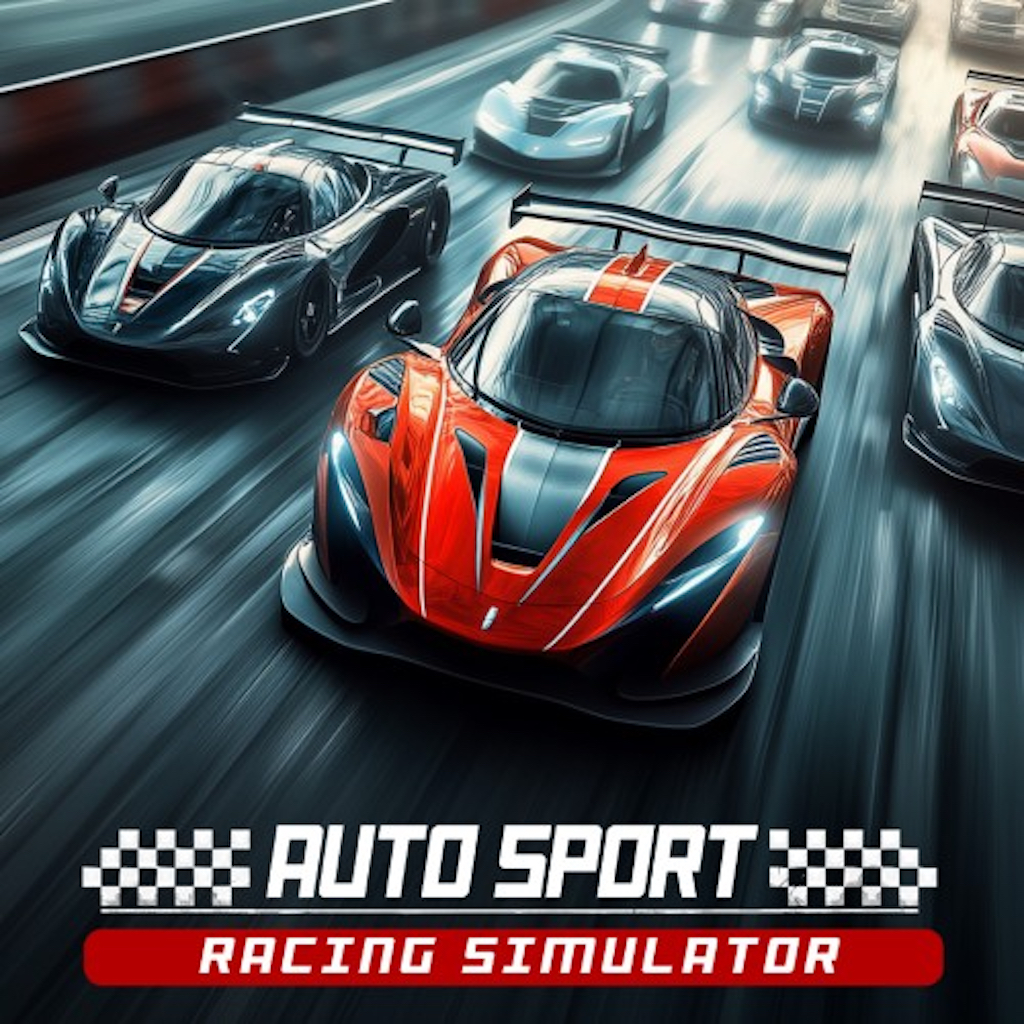
Auto Sport Racing Simulator arrives as a bold entry in the crowded racing simulation genre, aiming to deliver a realistic, strategy-oriented driving experience that bridges the gap between accessible fun and authentic motorsport simulation. It is a game that wears its ambition proudly, offering detailed vehicle mechanics, dynamic weather, and nuanced track behaviour. Yet for all its promise, it delivers a somewhat uneven experience — one with flashes of brilliance tempered by design choices that occasionally undercut its own aspirations.
Auto Sport Racing Simulator is neither the most hardcore racing sim nor the most approachable arcade racer. Instead, it sits somewhere between those poles, challenging players to find their own balance between simulation fidelity and enjoyable accessibility. This dual identity shapes pretty much every aspect of the game, and often in ways that both elevate and frustrate the experience.
First Impressions: Setting the Tone
Upon launch, players are greeted by a polished menu system and a suite of introductory tutorials designed to explain core concepts, from throttle control and braking zones to vehicle setup and tyre management. The presentation is clean and utilitarian — functional rather than flashy — but it serves its purpose well.
The early impression is that this game prioritises substance over spectacle. Tracks open with minimal fanfare; car models are detailed and reflective, but there is no cinematic overture or dramatic flourish. This restraint carries into the driving experience itself: there are no mid-race explosions or arcade-style powerups — just the raw mechanics of speed, grip, and racing lines.
Driving Mechanics: Precision With a Price
The core of any racing sim is the feel of the drive, and Auto Sport Racing Simulator delivers a driving model that is nuanced and weighty. Cars respond differently based on suspension tuning, tyre grip, aerodynamics, and even fuel load. Entering a corner too hot invites understeer; braking too late risks lockups and lost time. These aren’t superficial touches — they are central to how the game plays.
Sim enthusiasts will appreciate the detailed feedback from the car. Steering, audio cues, and vibration feedback (where supported) convey useful information about traction and vehicle behaviour. But this depth is a double-edged sword for newcomers: the learning curve is steep, and mistakes feel punitive early on. Without patience or willingness to experiment with setups and braking points, players may find themselves overwhelmed rather than challenged.
This balancing act — between simulation realism and approachability — is the game’s most persistent tension. At times, the realism feels rewarding; at others, it feels like friction standing between the player and fun.
Tracks, Weather, and Environmental Dynamics
One of the strongest aspects of Auto Sport Racing Simulator is its dynamic track environments. Weather systems are more than cosmetic: rain alters grip, puddles form in low areas, and dry lines emerge as tyres scrub water off the tarmac. These transitions force players to adapt on the fly, transforming familiar tracks into evolving challenges.
Track design is varied and well-researched, with a mix of classic circuits and original layouts that test different aspects of driving skill. Elevation changes, blind crests, and technical chicanes demand respect. Environmental details — grandstand crowds, pit infrastructure, distant landscapes — are solidly realised even if they aren’t showpieces.
Lighting and weather transitions are generally impressive, but occasional visual pop-in and modest draw distances can detract from immersion. Still, the evolving conditions deepen strategy and encourage players to remain engaged with the race rather than treating it as rote memorisation.
Race Modes and Career Structure
Auto Sport Racing Simulator offers a suite of modes designed to appeal to different types of players. Quick races allow casual players to jump in and test their skills, while the career mode provides a structured progression through championships, team contracts, and performance upgrades.
Career mode attempts to simulate the professional racing journey, with decisions about contracts, vehicle upgrades, and sponsor expectations. Players can choose different series and engineer relationships add another layer of depth. Success isn’t just about lap times — it’s about managing resources and reputation.
Unfortunately, while the concepts are strong, the implementation sometimes feels shallow. Career progression can be repetitive, with races blurring together as players grind through similar objectives. Narrative flourishes are rare, and the sense of advancing toward a clear, dramatic climax is weaker than in rival titles.
AI Competitors and Difficulty
Opponent AI is competent and occasionally impressive in how it reacts to player behaviour. Expect on-track battles where rivals defend their lines, brake late, and force you to adapt. However, consistency varies. On some tracks, AI drivers make clever passes and defend positions effectively; on others, they behave predictably, creating artificial difficulty spikes rather than organic competition.
Difficulty scaling is functional but could benefit from more nuance. Lower difficulty settings sometimes feel unrealistically slow, while harder settings lean heavily on perfect execution and punish minor mistakes harshly. Opportunities to customise AI behaviour — defensive aggressiveness, error frequency, pit strategy — help, but more granular control would be welcome.
Audio and Sensory Feedback
Audio design in Auto Sport Racing Simulator is solid. Engine tones, tyre squeal, and environmental ambience all contribute to immersion. The mix between music and race audio is balanced, though some events feel like they could benefit from stronger narration or dynamic commentary to enhance emotional stakes.
Haptic feedback — particularly on console controllers — enhances the sense of speed and surface texture. Losing traction, hitting curbs, and drafting behind competitors all translate into physical sensations that reinforce what’s happening on screen.
While not groundbreaking, the sensory design supports the simulation focus and helps players connect with their machine throughout extended race sessions.
Where the Game Stumbles
Despite its strengths, Auto Sport Racing Simulator has a few persistent shortcomings. The learning curve, while appropriate for a simulation, lacks gentle progression for newcomers. Tutorials are informative but don’t fully bridge the gap between novice and seasoned drivers.
Graphical fidelity is competent, but some visual elements feel dated compared to contemporary racers. Occasional performance dips in larger fields or dynamic weather conditions detract slightly from immersion.
Career mode’s structural weaknesses — repetitive objectives and limited narrative peaks — mean that the long-term journey can feel more grind than grand tour. These issues prevent the game from reaching the upper echelons of racing sims, even if its core mechanics are solid.
Final Verdict
Auto Sport Racing Simulator delivers a satisfying and thoughtful take on motorsport simulation. It captures the technical nuance of racing — weight transfer, grip management, weather adaptation — in a way that will appeal to players who relish mastery and strategic depth. Track variety, dynamic conditions, and the sense of progression all contribute to a racing experience that rewards investment.
However, the game’s ambition is tempered by occasional rough edges: a steep learning curve that isn’t always player-friendly, a career mode that underwhelms narratively, and visual presentation that doesn’t always match the quality of its mechanics.