There are plenty of games about slaying vampires. Very few ask you to help them unpack their feelings.
Vampire Therapist flips centuries of gothic melodrama on its head, casting you not as a brooding antihero or garlic-wielding hunter, but as a licensed (well, apprenticed) cognitive behavioral therapist for the undead. It’s a narrative adventure that blends dark comedy, historical absurdity, and genuine psychological insight into something surprisingly heartfelt.
It’s also one of the most conceptually original games in recent memory.
The Cowboy Therapist
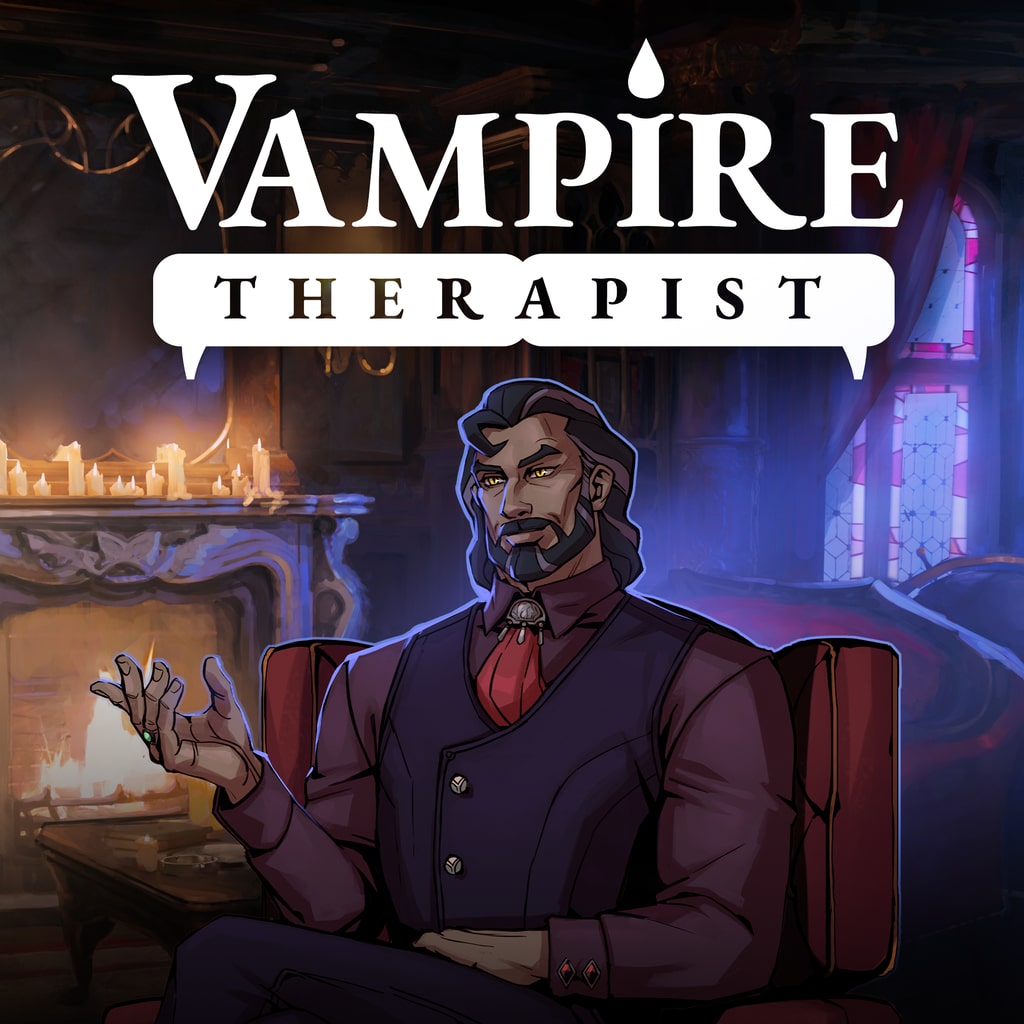
You play as Sam, a former Wild West gunslinger turned vampire who, after centuries of violence and regret, decides to try something radical: self-improvement. Under the mentorship of a 3,000-year-old vampire therapist operating above a moody German goth nightclub, Sam begins training in Cognitive Behavioral Therapy (CBT).
Yes, really.
The setting is absurd in the best way. Therapy sessions take place above a pulsing club filled with willing necks to bite (consensually, of course), blending dark European aesthetics with cozy introspection. It’s gothic velvet meets self-help workbook.
But beneath the humor lies something sincere. Sam isn’t just helping others — he’s working through his own guilt, trauma, and identity crisis as well. The game’s central question isn’t “How do we defeat the monster?” but “How do we live with ourselves after becoming one?”
Real Therapy, Real Concepts
The core gameplay revolves around identifying cognitive distortions in your clients’ statements.
Black-and-white thinking. Catastrophizing. “Should” statements. Mind-reading. Emotional reasoning.
When a vampire from Renaissance Italy spirals into despair because their art is no longer relevant, you listen carefully. When an ancient Greek philosopher insists immortality has rendered everything meaningless, you gently challenge the distortion.
The mechanics are simple but surprisingly engaging. You select which distorted thought to confront, reframe it, and guide the client toward a healthier perspective. The system isn’t about “winning” arguments; it’s about guiding reflection.
Crucially, these therapy concepts were vetted by licensed professionals. The game doesn’t trivialize mental health — it teaches foundational CBT tools in accessible, practical ways.
Few narrative games manage to educate without feeling preachy. Vampire Therapist walks that line skillfully.
A Fangtastic Cast
The writing shines thanks to a stellar voice cast that includes Matthew Mercer, Sarah Grayson, Francesca Meaux, Kylie Clark, and Cyrus Nemati (who also wrote the game).
Performances elevate what could have been a novelty premise into something emotionally resonant. Clients from ancient Greece, Tudor England, Renaissance Italy, and revolutionary France each carry distinct personalities and speech patterns.
One moment you’re counseling a Bronze Age warrior struggling with relevance in the modern world. The next, you’re navigating a centuries-old lovers’ spat in the Couples Therapy DLC (included in the console edition).
The dialogue balances wit and vulnerability. Jokes land frequently, but they don’t undermine the emotional stakes. Think What We Do in the Shadows meets late-night philosophical conversation.
Not Just a Visual Novel
Though largely dialogue-driven, Vampire Therapist resists feeling static. Conversations branch meaningfully based on your choices. Clients react to your approach. Some breakthroughs feel earned; others falter if you misidentify distortions.
Minigames add light interactivity. Guided mindfulness exercises offer short breathing sequences, and yes, there are moments of “consensual neck biting” framed more as symbolic connection than lurid spectacle.
The Couples Therapy DLC expands the format, introducing relationship dynamics that test your understanding of CBT principles in more complex ways.
Controller support has been revamped for consoles, and navigating dialogue trees on PS5 and Switch feels smooth and intuitive. The Switch version’s compatibility with Switch 2 ensures stable performance and crisp visuals.
Humor With Bite
What sets Vampire Therapist apart is tone. It never forgets that its premise is ridiculous — centuries-old bloodsuckers debating attachment styles above a goth club — but it doesn’t treat mental health as a punchline.
The humor comes from character quirks and historical displacement. A vampire from ancient Greece grappling with social media. A Renaissance noble lamenting the death of patronage culture. A French revolutionary still holding grudges about 18th-century politics.
It’s playful without being flippant.
And when sessions turn heavy — dealing with shame, trauma, loneliness — the game doesn’t blink. It trusts players to engage with mature themes thoughtfully.
Where It Excels
Strengths:
- Genuinely educational CBT mechanics
- Strong, witty writing with emotional depth
- Excellent voice performances
- Unique setting and concept
- Console edition includes all DLC and content updates
The therapy system is the star. Identifying distortions feels empowering, especially when you begin recognizing similar patterns in your own thinking.
It’s rare for a game to leave you with tools applicable beyond the screen.
Where It Falters
Weaknesses:
- Dialogue-heavy pacing may not appeal to all players
- Limited mechanical variety outside therapy sessions
- Some sessions follow predictable structural beats
- Shorter runtime compared to larger narrative RPGs
Players expecting traditional gameplay systems may find the experience narrow in scope. This is a conversation-driven game first and foremost.
Its length — while appropriate for the price point — means it’s best experienced as a concentrated narrative rather than a sprawling epic.
The Console Experience
The console launch today brings together all prior free updates and the Couples Therapy DLC in one package. At around $14.99, it’s a strong value proposition.
Performance is stable across PS5 and Switch. On Switch (including Switch 2 compatibility), the moody club lighting and gothic aesthetic display cleanly, though this is primarily a dialogue-driven experience rather than a graphical showcase.
The accessibility of playing on a couch — perhaps ironically — makes the therapy theme feel even more intimate.
Final Verdict
Vampire Therapist is a rare kind of game: one that entertains, educates, and empathizes in equal measure.
Its premise is absurd on paper — cowboy vampire therapist above a German goth nightclub — but its execution is deeply sincere. The CBT mechanics are thoughtfully implemented, the writing sharp and humane, and the performances excellent.
It won’t appeal to players seeking action or mechanical depth. It demands patience and engagement with dialogue. But for those willing to lean into its unusual structure, it offers something genuinely valuable: insight.
In a medium often obsessed with power fantasies, Vampire Therapist asks a different question: what if healing is the real adventure?
Even vampires deserve to love themselves.