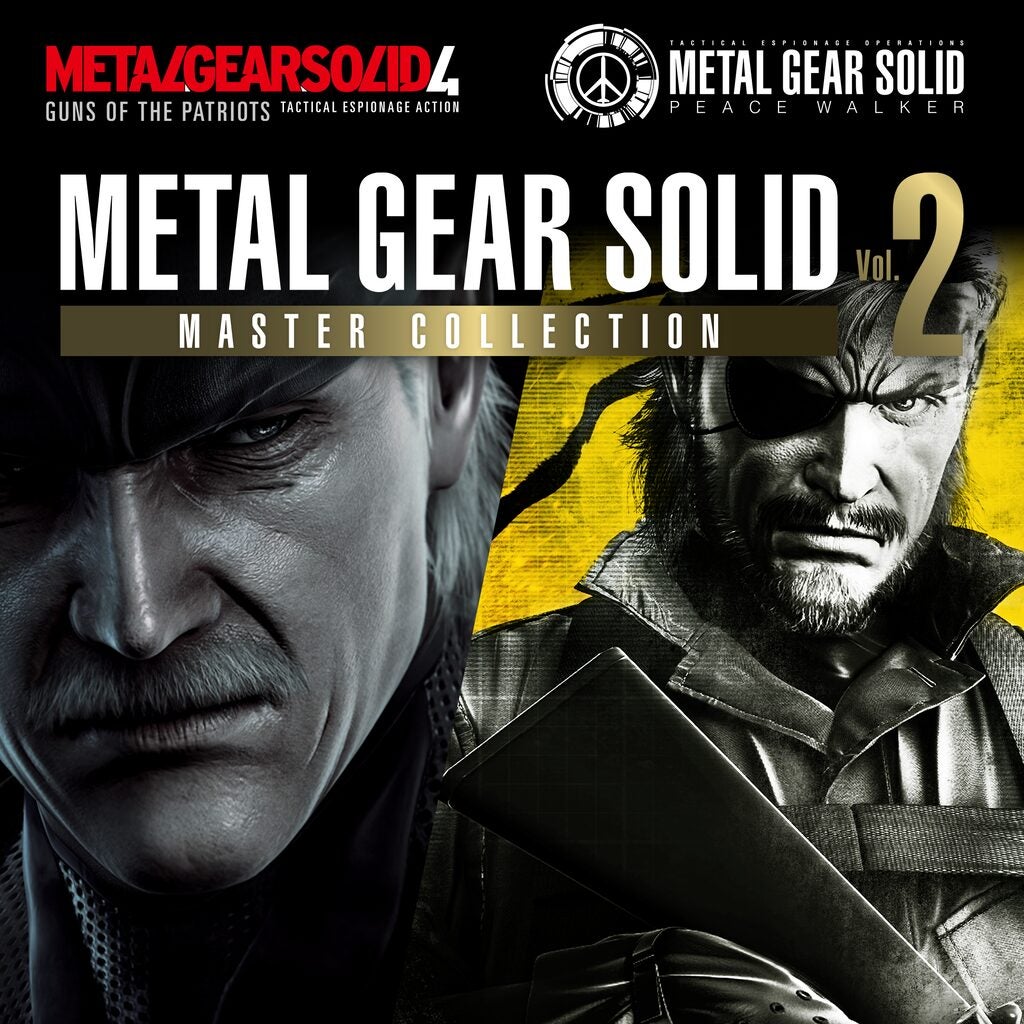
When Konami confirmed that METAL GEAR SOLID: MASTER COLLECTION Vol.2 was on the way, the announcement landed somewhere between inevitable and historic.
Inevitable, because Vol.1 clearly laid the groundwork for a broader archival effort. Historic, because Vol.2 finally frees Metal Gear Solid 4: Guns of the Patriots from its PlayStation 3 captivity — a platform exclusivity so entrenched it became part of gaming folklore.
For players of a certain generation, seeing MGS4 on modern hardware feels almost surreal. It’s like watching a long-lost relic emerge from a digital time capsule. For over a decade, the game existed in a technical and legal grey space — bound to Sony’s complex PS3 architecture and rarely discussed in terms of portability.
Now, it’s stepping back into the light.
Breaking the PS3 Prison
MGS4 has long been considered one of the most difficult mainstream titles to preserve. Designed heavily around the PlayStation 3’s Cell architecture and littered with Sony-specific nods — from in-game PlayStation references to hardware Easter eggs — its exclusivity wasn’t just contractual. It was structural.
Vol.2 changes that.
Seeing Snake’s final canonical chapter playable outside of the PS3 ecosystem isn’t just convenient — it’s culturally significant. Preservation matters. And MGS4 is one of the most ambitious stealth-action titles ever created.
However, the real question isn’t whether it exists on modern platforms. It’s how well it runs.
Will frame rate stability improve?
Will cutscenes scale cleanly to 4K?
How will Sony-branded meta references be handled?
Konami hasn’t yet revealed every technical detail, but expectations are high. MGS4 deserves more than simple emulation — it needs careful curation.
Peace Walker Returns
Alongside MGS4 comes Metal Gear Solid: Peace Walker, originally released on PSP before receiving an HD update on PS3 and Xbox 360.
Peace Walker often sits awkwardly in franchise discussions. It lacks the cinematic bombast of MGS4 and the revolutionary shock of MGS2, but in hindsight, it feels foundational. Its base-building mechanics, mission-based structure and co-op focus directly influenced Metal Gear Solid V.
Revisiting Peace Walker in a modern collection offers something unique: a clearer look at the franchise’s evolutionary pivot toward systems-driven gameplay.
Where MGS4 leaned heavily into cinematic closure, Peace Walker leaned into modular experimentation.
Vol.2 pairing them together creates a fascinating contrast.
The “Bonus” That Steals the Spotlight
Perhaps the most intriguing inclusion is Metal Gear: Ghost Babel, the Game Boy Color stealth gem often forgotten in mainstream discussions.
Interestingly, Ghost Babel is classified as a “bonus” title within the collection — included when purchasing the MGS4 and Peace Walker bundle together.
That’s a curious framing, because Ghost Babel isn’t a throwaway extra. It’s widely considered one of the best games on the Game Boy Color.
Released in 2000 and developed in collaboration with TOSE, Ghost Babel is not a demake of Metal Gear Solid. Instead, it’s a non-canon, alternate timeline story that blends the top-down stealth of the original Metal Gear titles with mechanics inspired by the Solid era.
Despite its 8-bit hardware limitations, it introduced:
- Intelligent enemy patrol patterns
- VR training-style challenges
- Surprisingly nuanced boss encounters
- A layered stealth system that felt remarkably modern
For many fans, this is the real preservation win of Vol.2.
A Curated Package — Or a Split Strategy?
Konami’s pricing model for Vol.2 is also noteworthy.
- MGS4 and Peace Walker will reportedly be available individually.
- Purchasing them together unlocks Ghost Babel.
- A higher bundle price secures the full trio.
On paper, it mirrors Vol.1’s structure — where bonus titles supplemented main entries. But the difference here is perception. Ghost Babel carries genuine legacy weight.
Labeling it as a “bonus” risks underselling its importance.
That said, the flexibility allows players to choose their preferred entry point. Not everyone wants the entire saga. Some may simply want to revisit MGS4 without committing to the broader package.
The Preservation Question
Vol.1 of the Master Collection received mixed reception due to performance inconsistencies and minimal enhancements. Vol.2 has an opportunity to course-correct.
MGS4 is not just another port. It’s a technical relic. If Konami treats this as a simple upscale without addressing frame pacing, input latency and cinematic compression quality, fans will notice.
But if handled carefully, Vol.2 could become one of the most significant stealth game preservation efforts of the decade.
Bringing MGS4, Peace Walker and Ghost Babel into a unified, accessible package bridges three very different eras of Metal Gear design:
- Cinematic stealth spectacle
- Portable systems experimentation
- 8-bit stealth purity
Few franchises span such radically different hardware philosophies.
Ghost Babel: A Hidden Masterpiece
Ghost Babel deserves particular emphasis.
Directed by Shinta Nojiri (who later helmed Metal Gear Acid), the game distilled stealth mechanics into something lean and surprisingly forward-thinking.
Top-down vision cones returned. Environmental awareness mattered. Boss fights demanded observation rather than brute force.
And all of it ran on a Game Boy Color.
For younger players discovering it for the first time, Ghost Babel may be the biggest revelation in Vol.2 — a reminder that innovation isn’t always tied to polygon counts.
Why This Collection Matters
The Metal Gear franchise is currently in a transitional phase. With Metal Gear Solid Delta: Snake Eater on the horizon, interest in the series is resurging.
Vol.2 acts as connective tissue — preserving the later chapters while new reinterpretations take shape.
More importantly, it rescues MGS4 from obscurity.
For over fifteen years, it remained stranded on aging hardware. Now, a new generation can experience its dense storytelling, mechanical ambition and unapologetic excess without hunting down a PS3.
That alone gives this collection weight.
Early Expectations
This is a preview, not a review — and final judgment depends heavily on performance and feature completeness.
If Konami:
- Improves frame stability
- Preserves original control schemes faithfully
- Enhances resolution without distorting presentation
- Packages bonus content thoughtfully
Then Master Collection Vol.2 could become the definitive modern gateway to late-era Metal Gear.
If it repeats Vol.1’s minimal-effort criticisms, expectations may cool quickly.
Final Thoughts (Preview Verdict)
METAL GEAR SOLID: MASTER COLLECTION Vol.2 is more than a follow-up — it’s a rescue mission.
MGS4’s return to active circulation is a landmark moment in game preservation. Peace Walker adds structural context. Ghost Babel offers unexpected historical depth.
Now the question shifts from “Is this legal?” to “Is this definitive?”
If Konami gets the execution right, Vol.2 won’t just expand a compilation — it will restore a missing chapter of gaming history.
And that’s a mission worth accepting.