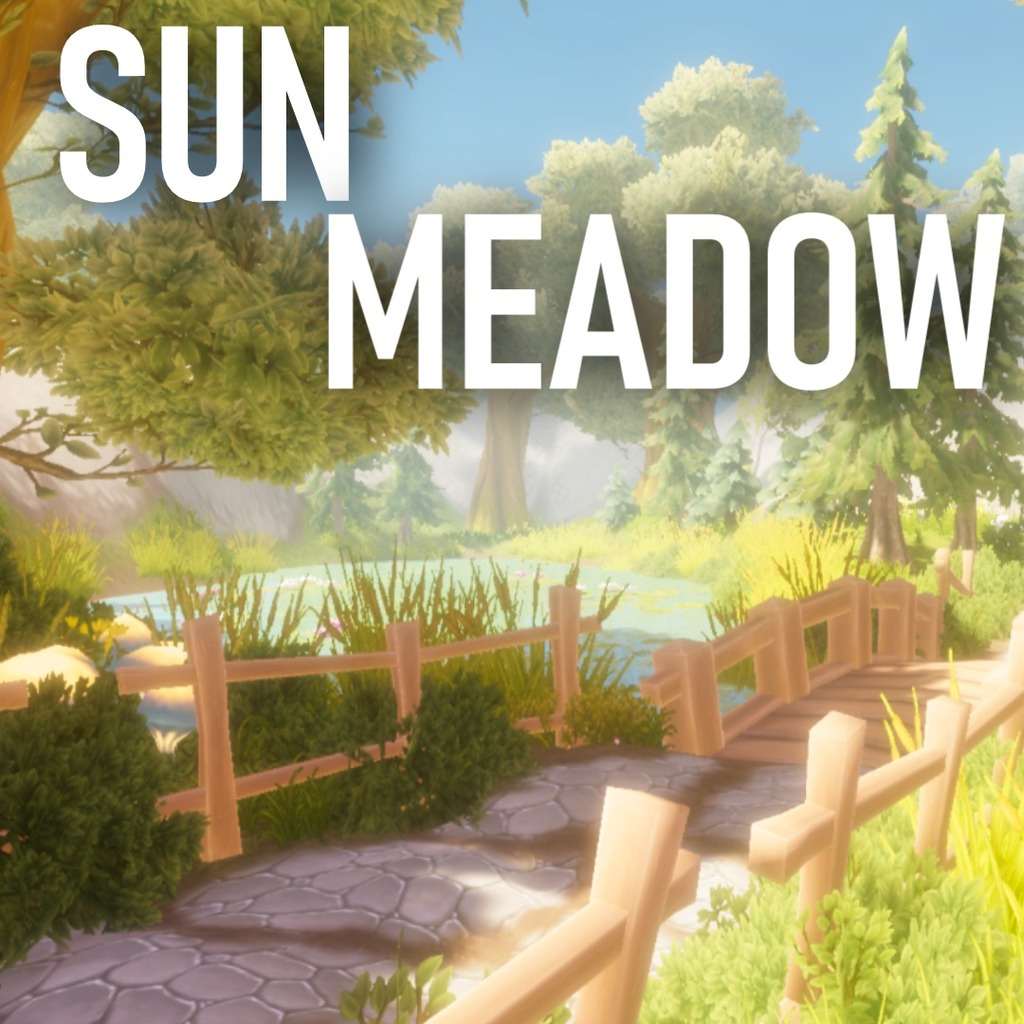
There’s a calming subset of games uniquely suited to quiet evenings and reflective moods — titles that embrace simplicity, slow pacing, and gentle exploration rather than high drama or high scores. Sun Meadow is one such game: an open-ended, narrative-light experience that blends farming, social interactions, and slice-of-life gameplay into what feels like an interactive daydream. It isn’t perfect, and it isn’t particularly deep by modern indie standards, but what it does accomplish is a disarmingly warm and welcoming space where players can unwind at their own pace.
The question that hovers over Sun Meadow from its very first moments is a simple one: can a game about everyday life be genuinely engaging? The answer, broadly speaking, is yes — but only if you’re willing to accept its limitations and embrace its rhythm.
First Impressions: A Relaxed Welcome
Sun Meadow begins with a familiar premise. You arrive in a sleepy village with plans — vague, hopeful plans — to rebuild an old homestead and make a life out of farming, crafting, and building relationships with locals. It’s fertile narrative ground (no pun intended), and the game wastes little time putting you to work in the sunlit fields, tending crops, and exploring a world that feels immediately at ease with itself.
Visually, the game leans into a soft, pastel-laden style that evokes a sense of nostalgia and ease. Character designs are charmingly stylised without ever veering into caricature, and environments — from fields and forests to village squares — are rich with light, colour, and just the right amount of detail. The overall aesthetic is one of gentle whimsy rather than realistic simulation, and that choice informs the emotional tone of the whole experience.
The soundtrack complements this perfectly: mellow, unobtrusive melodies that make even routine activities feel like part of a meditative rhythm. Sun Meadow wants to be soothing, and in its presentation it succeeds immediately.
Gameplay Loop: Slow, Satisfying, Sometimes Repetitive
At its core, Sun Meadow combines farming simulation, crafting, and social exploration into a single, seamless loop. Days pass in a cosy sunrise-to-sunset cycle. You plant seeds, water crops, harvest produce, interact with villagers, cook meals, make deliveries, and gradually restore your homestead. There’s no battle system, no looming threat, no timed challenge that punishes slower progression — the pace is determined wholly by you.
This freedom is both Sun Meadow’s greatest asset and its most significant flaw. On the one hand, the game’s lack of pressure is refreshing. There’s something deeply satisfying about watching crops grow at their own pace, deciding today’s tasks based on instinct, not urgency. For players exhausted by constant goals, timers, and checkpoints, this can feel like a sanctuary.
However, the absence of structured challenge also means the gameplay loop can become repetitive. Planting, watering, and harvesting — while comforting — eventually loop back on themselves with little variation. Side activities like crafting and deliveries add texture, but they rarely introduce mechanical depth or dramatic stakes to keep longer play sessions consistently interesting.
Sun Meadow seems content to be pleasant rather than compelling, and whether that’s a strength or limitation depends entirely on what you’re seeking from a game.
Farming and Crafting: Accessible, but Not Deep
The farming mechanics in Sun Meadow are uncomplicated and easy to grasp, which fits the game’s relaxed ethos. Seeds go in the ground, crops sprout, and bountiful harvests follow with regular care. As you progress, more plant varieties become available, along with a handful of farming upgrades that reduce manual tasks or improve yields.
Crafting follows a similar design philosophy. You gather resources from the land — wood, fibres, wild fruits — and use those materials to create tools, upgrades, and items for villagers. Recipes and upgrades unlock as you advance, and the satisfaction of building something with your own resources is a reliable emotional payoff.
The problem comes when this satisfaction stops expanding. After the first dozen hours or so, many players will notice that the core interactions remain largely the same. The systems don’t evolve beyond incremental productivity gains or aesthetic upgrades. For some, this will be fine — repetition is part of the game’s charm. For others, it may feel like a missed opportunity for deeper engagement.
Villagers and World Interaction: Warm, if Underused
A significant part of Sun Meadow’s appeal lies in its light social simulation, where villagers have distinct personalities, preferences, and small story beats that unfold as you build relationships with them. Compliments, gifts, and conversations unlock new dialogue and occasionally trigger small events that make each character feel like a living part of the world.
Yet even here the game plays its cards close to the chest. While villagers are pleasant and interact meaningfully with the player, their stories rarely dig into emotional depth or narrative subtext. There’s warmth in their exchanges, to be sure, but little in the way of real dramatic payoff or surprise. The villagers exist to add flavour rather than to dramatically transform the player’s journey.
For players looking for heartfelt story arcs or character progression on the level of deeper social simulations, Sun Meadow’s interpersonal dynamics may feel like a side dish rather than a main course.
Accessibility and Approachability
One of Sun Meadow’s undoubted strengths is how accessible it is. Controls are intuitive, objectives are clear without being intrusive, and there’s no punishment for exploring the world at your own pace. The game’s learning curve is gentle, welcoming players of all experience levels.
This accessibility makes it easy to pick up and play in short bursts or long sessions alike. However, the downside is that the game never really demands much from the player. There’s no real mastery curve, no complex systems to learn or master. What you see in your first hour is emblematic of what you’ll see five or ten hours in — which, again, will feel charming to some and shallow to others.
Final Verdict
Sun Meadow is a warm, relaxing slice-of-life experience that thrives on calm pacing, gentle visuals, and a soothing gameplay loop. It’s a game designed for slow Sundays and quiet evenings, not intense challenge or dramatic tension. Its farming, crafting, and social systems are accessible and enjoyable, and its art and sound design reinforce a sense of comfort and ease.
Yet its lack of mechanical depth and narrative escalation means it won’t satisfy players seeking constant engagement or structured goals. If you’re looking for a cozy escape — a game that lets you build, wander, and unwind without pressure — Sun Meadow delivers exactly that. But if your ideal play session includes progression arcs, evolving systems, or meaningful challenges, it may feel too tranquil for too long.