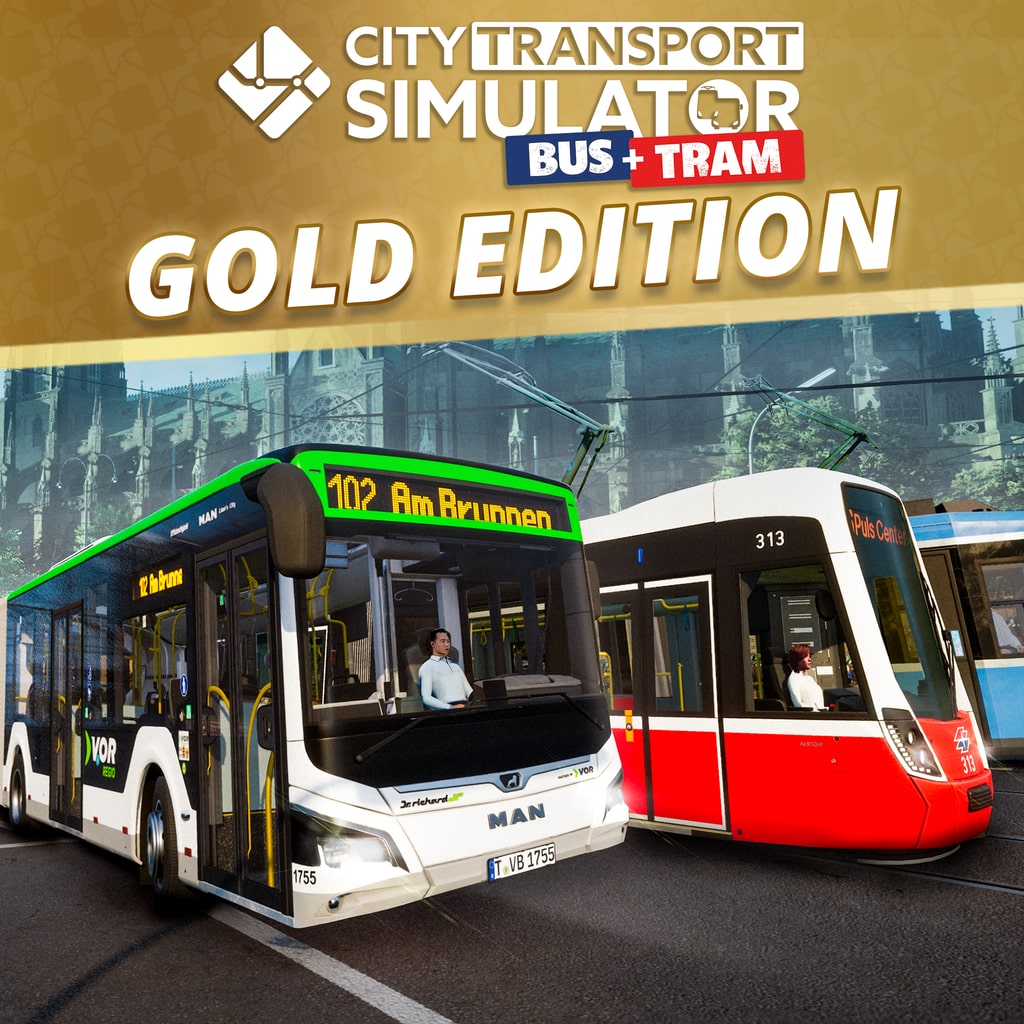
City Transport Simulator: Bus + Tram offers a detailed and immersive public transportation experience, placing players at the helm of managing and driving an extensive modern city transit network. Combining the challenges of realistic bus and tram operation with route management and vehicle customisation, this simulator caters to fans of slow-paced, precision-focused driving games and urban transport enthusiasts alike.
Gameplay and Driving Mechanics
The core gameplay revolves around carefully driving buses and trams along established routes in the fictional European city of Tramau. Both vehicle types offer distinct handling and operational nuances; trams are electric, highly responsive to acceleration and braking commands, while buses demand greater attention to road conditions and traffic signals. Players must adhere to speed limits, timetable schedules, and traffic laws, including stopping accurately at designated stations to pick up and drop off passengers.
Driving involves managing multiple systems such as door operation, turn signals, and careful stopping—features that enhance immersion without overwhelming complexity. Route management is facilitated via an intuitive city map, where players can select or create routes, adding strategic depth alongside the driving.
Career and Sandbox Modes
The Career mode engages players through a progression system where experience points unlock new vehicles and expand routes across the city. Carefully managing driving quality—minimizing passenger discomfort, obeying traffic rules, and avoiding collisions—earns XP and access to additional challenges. While this unlock system can feel somewhat thin compared to broader economic simulators, it establishes clear goals and incentives to improve driving skills and network coverage.
Sandbox mode offers a relaxed environment for players to freely explore the city without schedules or performance pressure. This mode is ideal for players seeking a leisurely, scenic driving experience without the demands of Career mode’s operational goals.
Visuals and City Design
Tramau’s design is a standout element. The city is richly detailed with European architectural flair, varied districts, and vibrant street life. Ambient sounds and weather effects deepen immersion, while the attention to detail in vehicle models and interiors enhances realism. Despite some technical hiccups, the combined aesthetic and audio design successfully evoke the atmosphere of a bustling urban transit system.
Technical and Gameplay Challenges
While City Transport Simulator: Bus + Tram delivers enjoyable driving mechanics, it is not without flaws. Multiple reviewers have noted occasional bugs such as traffic jams, AI glitches wherein pedestrians inexplicably appear in collision zones, and occasional crashes. These issues can disrupt immersion and progression, though patches from developers are expected to improve stability.
Some players feel the game lacks depth in business or economic simulation elements. Unlike some transport sims that allow fare setting, staffing, and detailed financial management, this title focuses mainly on driving and route expansion. As a result, players seeking a full city-building or economic challenge may find this aspect wanting.
Overall Experience and Audience
City Transport Simulator: Bus + Tram stands out by combining accessible but engaging vehicle operation with a charmingly detailed setting. The tiered difficulty and wide vehicle range offer replayability for those who enjoy mastering each transport mode’s quirks. While the simulation doesn’t push into hardcore territory, it balances approachability with rewarding discovery of each tram and bus system’s features.
This simulator is a solid choice for players who prefer immersive driving and route management over complex economic systems. The relaxing sandbox mode and captivating city design invite long sessions of scenic exploration and route optimisation, while career progression offers satisfying goals without overwhelming micromanagement.