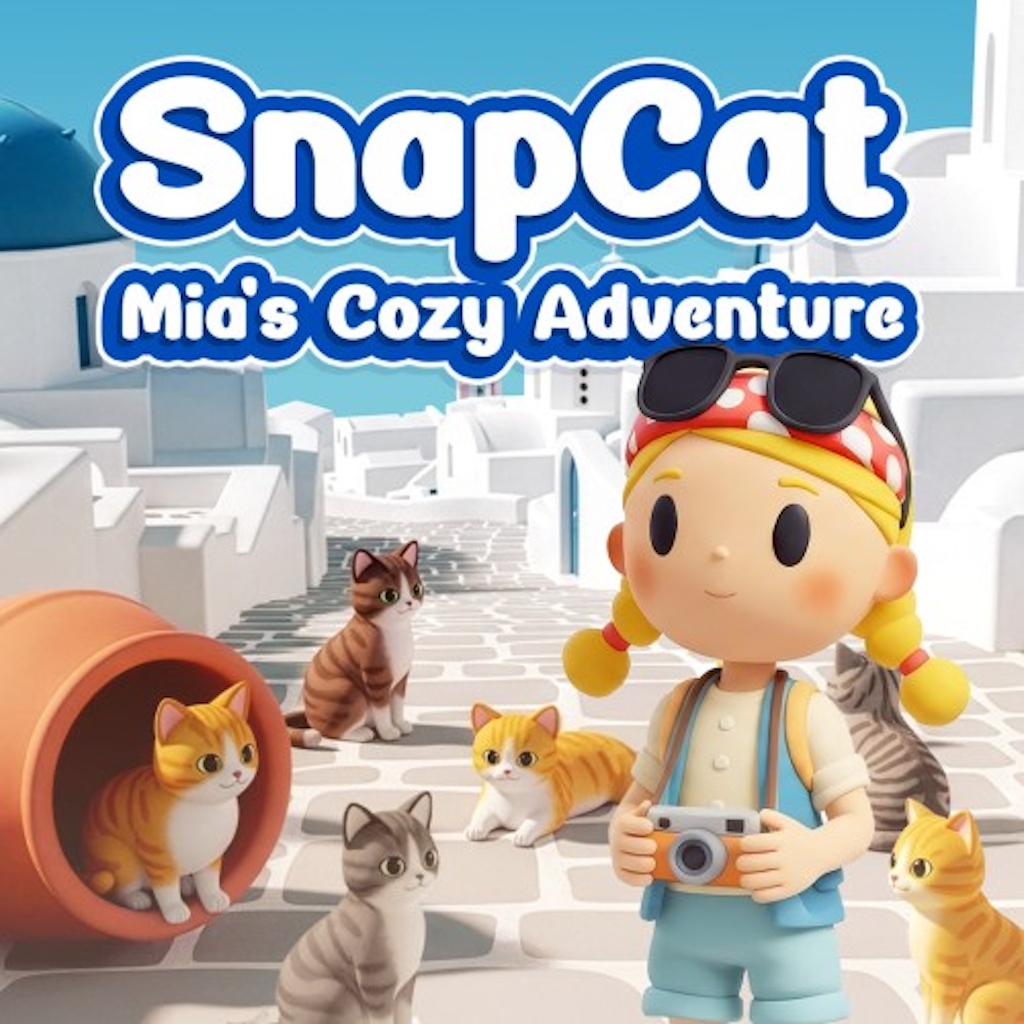
SnapCat: Mia’s Cozy Adventure arrives as a gentle, warm-hearted title perfectly positioned for players seeking comfort, creativity, and quiet pacing. It’s the sort of game that doesn’t demand relentless perfection or grindy progression; instead, it invites players into a safe, expressive space where curiosity and exploration are rewards in themselves. If you’re someone who enjoys games that slow life down and place emphasis on personality, interaction, and creative expression, SnapCat may well become a frequent companion.
At its core, SnapCat: Mia’s Cozy Adventure combines elements of light social simulation, exploration, and photography with a thematic focus on companionship and personal storytelling. The result is a title that prioritises feel over dramatic tension, presence over urgency, and charm over complexity. It’s exactly the kind of antidote to high-impact action titles that players have been craving in recent years.
World and Premise — Cozy Vibes, Solid Foundation
Set in a tranquil seaside town filled with quirky characters, colourful locales, and a comforting dose of feline energy, SnapCat: Mia’s Cozy Adventure frames its narrative around Mia, a young protagonist who returns home for the summer to reconnect with her roots—and her curious cat, SnapCat.
Rather than an epic quest or world-saving narrative, the game operates on a series of interwoven stories: helping neighbours with odd jobs, uncovering local secrets, and capturing memories—both literally and figuratively—with your camera. There is a gentle throughline that drives your objectives, but the emphasis is on exploration and community rather than dramatic escalation.
This is not idle fluff. Well-crafted dialogue and relatable character beats give the adventure a grounded sincerity. Townsfolk feel like real people with distinct personalities and motivations, and the sense of place is more than just a series of backdrops. It’s the sort of setting that feels inviting and lived-in, whether you’re meandering by the pier at sunset or stopping by the local café to chat.
Gameplay Loop — Exploration, Creativity, and Discovery
At its heart, SnapCat is less a game about high scores or mastery, and more about curiosity and expression. The core loop revolves around three primary activities:
- Exploration: Wander the town and its surroundings. Quaint parks, bustling markets, mysterious coves, and quiet gardens all invite deeper inspection. There’s no looming countdown or punishing timer; instead, spaces reward lateral thinking and attention to detail.
- Photography: Mia’s camera isn’t just a cosmetic tool. Photographing SnapCat, townsfolk, scenic moments, and hidden surprises is both delightful and meaningful. Some shots tie into in-game objectives; others unlock creative albums that become keepsakes of your journey.
- Social Interactions: Conversations with NPCs are bite-sized and impactful. Rather than sprawling dialogue trees, interactions are succinct but thoughtful, pushing story seeds forward without piling on complexity.
These systems intertwine elegantly. Photograph a stranger’s favourite spot and you may unlock a richer conversation later. Complete a simple errand for a local shopkeeper, and their trust opens up new story hooks. There are no punitive failure states; the only “loss” is time, and by design, time in SnapCat feels richly spendable.
Movement and Control — Comfort Over Precision
Movement and controls lean into comfort and ease. There’s no need for lightning-fast reflexes or pixel-perfect precision. Camera panning, walking, and basic interactions are intuitive and friendly. This accessibility is a conscious design choice, creating a space that welcomes players regardless of skill level.
That said, the relaxed control philosophy does occasionally work against the player in tighter spaces or when precise framing is required for certain photo quests. These moments are few, and never game-breaking, but they do illustrate that SnapCat isn’t designed for twitch reflexes—it’s designed for mindful engagement.
Narrative and Characters — Heartfelt Without Being Heavy
Storytelling in SnapCat strikes a careful balance between emotional resonance and light-hearted enjoyment. There is no dark twist waiting in the wings, no world in peril, no ticking clock. Instead, the game excels at small stories: reconnecting with an old friend over coffee, helping a shy artist find confidence, or even uncovering what makes SnapCat such a peculiar and charming companion.
Characters are as varied as they are likable. The local baker with too many kittens, the fisherman who prefers card games to nets, the librarian who secretly writes poetry—these personalities populate the town with depth and warmth. Conversations are crafted with genuine voice, often veering into quiet moments of humour or reflection rather than exposition dumps.
While some players might wish for larger narrative arcs or dramatic conflict, SnapCat’s storytelling strength is precisely its refusal to fabricate urgency. It demonstrates that character and place can be compelling without contrivance.
Visual Style and Audio — Aesthetic That Soothes
Visually, SnapCat is charming without veering into kitsch. Its art style embraces soft colours, rounded shapes, and gentle animation. Environments feel bright and inviting, with a painterly quality that enhances the sense of peace and discovery.
SnapCat himself is an absolute highlight: expressive, mischievous, and wonderfully animated. Whether lounging in a sunbeam, darting into a crowded square, or photobombing your carefully framed shots, the feline leads the game’s emotional texture in a way few characters in bigger titles manage.
Audio design reinforces the ease of pace. The soundtrack features mellow tunes perfect for strolling through town, with subtle melodies that ebb and flow rather than demanding attention. Ambient sounds—seagulls by the docks, distant café chatter, bells from the marketplace—layer without ever overwhelming the senses.
The result is an environment that encourages lingering rather than racing through objectives. This is a game you can pause mid-frame to enjoy simply being inside.
Pacing and Replayability — Comfort Can Be Finite
Part of SnapCat’s charm is also its most subjective element. The game’s unhurried pacing is immersive, but it can feel slow to players accustomed to action or story momentum. Objectives often require travel and repeated exploration, which some may find meditative and others repetitive.
Replayability is mostly tied to creative pursuits: capturing unique photo collections, discovering hidden locales, or simply revisiting moments with SnapCat in tow. There are no branching endings, dramatic divergences, or mechanically complex layers that reshape subsequent playthroughs. If your primary motivation is narrative twist or strategic challenge, SnapCat may feel finite before its credits roll.
That said, for players attuned to ambience, personal expression, and unstructured play, the freedom to wander and document makes return trips worthwhile.
Verdict
SnapCat: Mia’s Cozy Adventure is a delightful and soothing game that confidently embraces gentle pacing, creative exploration, and character-driven vignettes. It is less about victory conditions and more about the joy of discovery, connection, and quiet moments with an absurdly charismatic cat.
The game is not without limitations—its lack of narrative urgency and mechanical complexity may temper broader appeal—but for players seeking warmth, aesthetic comfort, and open-ended exploration, it stands as a strong contender in the “cozy game” genre.