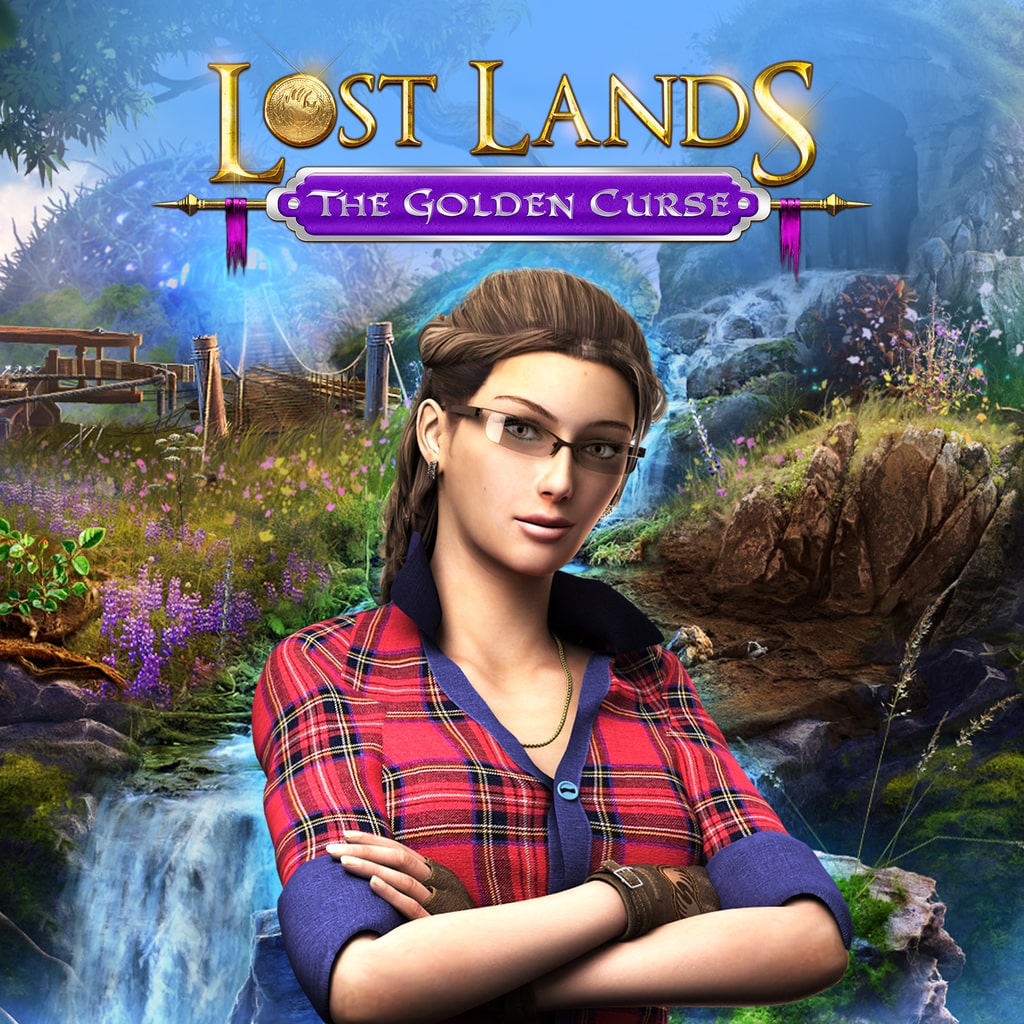
Lost Lands 3: The Golden Curse continues the long-running fantasy adventure series with a darker, more ambitious chapter that leans heavily into mythology, environmental storytelling, and classic hidden-object puzzle design. Building on the foundations laid by its predecessors, this third entry expands the scope of the Lost Lands universe, introducing a central curse-driven narrative that raises the stakes and gives the world a stronger sense of urgency and consequence.
At its core, The Golden Curse remains a traditional hidden-object adventure, but it layers that familiar framework with richer world-building, more varied puzzles, and a narrative that feels more cohesive and purposeful than earlier outings. This is a game designed for fans of story-led puzzle adventures—players who enjoy methodical exploration, item-based problem solving, and slowly unraveling a fantasy mystery rather than fast-paced action.
Story and Setting
The narrative of Lost Lands 3 revolves around a mysterious golden curse that has begun to corrupt the world itself. Statues come to life, living creatures are transformed into gold, and entire regions are frozen in a state between existence and annihilation. You once again step into the role of Susan, a familiar protagonist tasked with uncovering the origins of the curse and stopping its spread before the Lost Lands are consumed entirely.
Storytelling is delivered through a combination of dialogue, cutscenes, environmental clues, and collectible lore fragments. Compared to earlier entries, The Golden Curse places greater emphasis on narrative momentum. Objectives feel more connected, and the central threat looms consistently in the background, giving context to even smaller tasks.
The world itself is a highlight. Locations range from crumbling ruins and enchanted forests to cursed settlements and ancient sanctuaries. Each area feels distinct, both visually and thematically, reinforcing the idea that the curse manifests differently depending on where it takes hold. This sense of place helps the game feel like a journey rather than a collection of disconnected puzzles.
Gameplay and Core Mechanics
Gameplay follows the established hidden-object adventure formula. Players explore static scenes, interact with characters, collect items, and solve puzzles to progress. Hidden-object scenes are frequent and serve as the primary method of item acquisition, while standalone puzzles and environmental challenges break up the flow.
The hidden-object segments are well constructed. Object placement is logical, thematically consistent, and rarely feels unfair. Items blend naturally into the environment, requiring observation rather than random clicking. Optional hint systems are available for players who prefer a smoother experience, but the game is generous enough that hints rarely feel necessary.
Beyond hidden-object scenes, The Golden Curse features a wide variety of puzzles. These include logic challenges, mechanical contraptions, pattern matching, and inventory-based problem solving. The puzzle variety is one of the game’s strengths, ensuring that progression rarely feels repetitive.
Difficulty is moderate and well balanced. Puzzles are challenging enough to feel satisfying without becoming obscure, and solutions usually rely on clear visual or narrative cues. The game respects the player’s intelligence, trusting them to connect ideas rather than spelling everything out.
World Design and Exploration
Exploration in Lost Lands 3 is more layered than in previous entries. Areas interconnect logically, and backtracking is used purposefully rather than as padding. New items or abilities often unlock previously inaccessible paths, encouraging players to revisit earlier locations with fresh perspective.
The map design supports this structure well. Fast travel options reduce unnecessary repetition, while clear markers help players track objectives without removing the sense of discovery. This balance between guidance and freedom keeps the pacing steady and avoids frustration.
Environmental storytelling is also more prominent here. Visual details—golden corruption creeping across stonework, abandoned tools frozen mid-use, partially transformed characters—convey narrative information without relying solely on dialogue. This strengthens immersion and reinforces the stakes of the central curse.
Visual Presentation
Visually, Lost Lands 3: The Golden Curse is detailed and atmospheric. Environments are richly illustrated, with strong use of colour and lighting to differentiate cursed and untainted areas. The golden motif is used effectively, serving both as a visual signature and a storytelling device.
Character models are stylised but expressive, and creature designs lean into fantasy archetypes without feeling generic. While animations are limited, they are functional and rarely detract from the experience.
The interface is clean and intuitive. Inventory management is straightforward, puzzle interactions are clearly indicated, and menus are easy to navigate. The game prioritises usability, which is essential in a title with this many interactive elements.
Audio and Atmosphere
Audio design complements the game’s fantasy tone. The soundtrack is moody and orchestral, shifting subtly depending on location and story context. Music underscores tension during key moments and recedes during exploration, allowing players to focus on problem solving.
Sound effects are understated but effective. Environmental audio—wind through ruins, magical hums, distant echoes—adds texture to locations without becoming distracting. Voice acting is present in key scenes and generally competent, helping bring characters to life without overacting.
Pacing and Length
Lost Lands 3 offers a substantial amount of content. The main story is lengthy, and optional bonus chapters and side puzzles extend playtime further. Despite this, pacing remains largely consistent thanks to the variety of tasks and locations.
The game avoids the trap of overwhelming the player with too many objectives at once. Instead, it introduces new mechanics and story elements gradually, maintaining engagement over long sessions.
That said, players unfamiliar with the genre may find the overall length daunting. This is a game designed to be played over multiple sittings rather than rushed through in one go.
Replayability and Longevity
Replay value is moderate. While the main appeal lies in the first playthrough and narrative discovery, completionists may revisit the game to find missed collectibles or solve puzzles more efficiently. However, once the story is complete, there are limited incentives for full replays beyond personal enjoyment.
The inclusion of bonus content helps extend longevity, offering additional story context and challenges that feel meaningful rather than tacked on.
Strengths and Weaknesses
Strengths
- Strong narrative cohesion and world-building
- Varied and well-designed puzzles
- Atmospheric environments and effective visual storytelling
- Balanced difficulty suitable for a wide audience
- Substantial content with meaningful progression
Weaknesses
- Limited innovation beyond genre conventions
- Minimal animation and static presentation in places
- Replay value depends largely on player preference
Final Verdict
Lost Lands 3: The Golden Curse is a confident and polished entry in the hidden-object adventure genre. It doesn’t attempt to radically reinvent its formula, but it refines it with stronger storytelling, improved pacing, and a richer sense of place. For fans of fantasy-driven puzzle adventures, it delivers a rewarding and immersive experience that justifies its length and complexity.
While newcomers may find the scale intimidating, those willing to invest the time will uncover a thoughtfully constructed world filled with engaging challenges and a compelling central mystery.