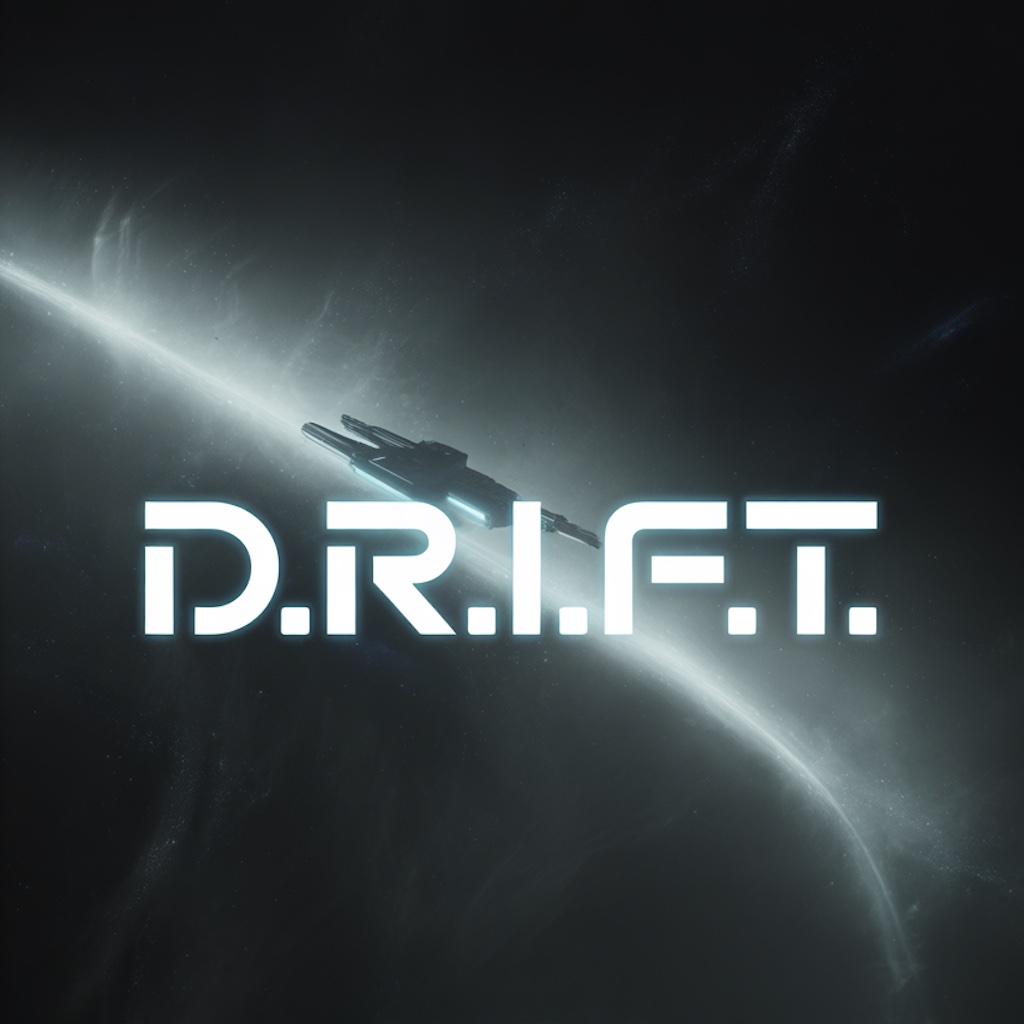
There’s no shortage of racing games vying for attention, yet very few manage to carve out a distinct identity. D.R.I.F.T., an indie-developed precision racer built entirely around momentum, angle control, and high-speed finesse, is one of the rare exceptions. It doesn’t rely on spectacle, licensed cars, or open-world sprawl. Instead, it focuses on that intoxicating moment every drift-fanatic knows: the edge of traction, the razor-thin line between perfect control and total disaster.
D.R.I.F.T. is unapologetically specialised. It isn’t a traditional racer—you won’t find rubber-banding AI, scripted races, or cinematic events. What you will find is a deep, technical, stylish drifting simulator that rewards mastery, creativity, and nerves of steel. It’s the kind of game that initially frustrates, then slowly clicks, and eventually becomes an obsession.
Style First, Always
From its first moments, D.R.I.F.T. makes its intentions clear. Every element—UI, car silhouettes, lighting, track design—leans into a minimalist, cyber-noir aesthetic. Neon reflections flare across the pavement, smoke curls colourfully behind tyres, and every track pulses with ambient electronic beats. It’s sleek without being sterile, stylish without hiding the road, and atmospheric in a way that grounds every drift in a sense of flow and rhythm.
The cars themselves strike a balance between realism and abstraction. They look like exaggerated interpretations of iconic drift machines, avoiding licensing while retaining personality. Each vehicle’s body lines respond dynamically to lighting, and even subtle changes in angle produce beautiful arcs of tyre smoke.
D.R.I.F.T. is built on vibes as much as mechanics, and its visual identity sets it apart from more simulation-heavy titles.
Drifting That Demands Precision
What truly separates D.R.I.F.T. from the pack is its driving model. This isn’t a game about drifting as a stylistic flourish—this is drifting as the fundamental language of movement. Every track, every corner, every challenge is designed around chaining drifts, maintaining angle, and carrying as much speed as possible while balancing throttle, counter-steer, and weight transfer.
At first, the physics feel almost harsh. Cars feel slippery, twitchy, eager to spin out. But the game isn’t broken—it’s honest. It wants players to unlearn conventional racing habits and embrace drift-specific control.
Once it clicks, the game becomes transformed. You begin reading corners differently, predicting weight transfer, flicking into drifts with confidence, and linking sections in long, flowing chains that feel impossibly smooth.
Mastering D.R.I.F.T. is like learning an instrument: frustrating early on, satisfying as techniques develop, and euphoric when everything comes together.
Tracks Built for Flow
A good drift racer lives or dies by track design, and D.R.I.F.T.’s courses are exceptional. They are handcrafted, not procedurally assembled, and designed with intentional rhythm:
- Long, sweeping S-curves ideal for high-angle drifts
- Tight hairpins requiring delicate brake feathering
- Wide highway descents perfect for long, continuous slides
- Industrial zones with complex zones for line experimentation
- Neon-lit urban circuits with concrete walls that punish mistakes
Each track feels like a puzzle built for drifting. You aren’t just navigating a course—you’re learning its tempo.
Replayability is high, because even if you master a track, your run can always be cleaner, faster, more controlled. Leaderboards amplify this, and competing against ghosts (either your own or global players) becomes dangerously addictive.
Progression and Customisation
D.R.I.F.T. doesn’t overwhelm players with dozens of cars or tuning trees. Instead, progression is focused:
- Unlock new cars gradually
- Earn style points to upgrade handling, weight distribution, and torque curves
- Unlock cosmetic customisation, liveries, and effects
- Progress through increasingly challenging drift zones and knockout events
Upgrades remain meaningful without letting players overpower cars. Everything remains grounded, forcing players to rely on skill rather than stats.
Cosmetic options—especially tyre smoke colours, neon underglows, and trail effects—fit the game’s stylish aesthetic and add flair to every drift.
Modes for Every Drift Mindset
D.R.I.F.T. offers several core modes, each designed around a different aspect of the discipline:
Career Mode – A structured climb through drifting challenges, teaching mechanics gradually before throwing brutal tests your way.
Drift Zones – Score-based arenas focusing on high-angle drifts, combos, and sustained control.
Time Attack Drift – Finish courses quickly while maintaining drift bonuses. Ideal for flow chasers.
Freestyle Mode – No rules, no time limits—just you, a track, and the pursuit of perfect style.
Online Leaderboards – No direct PvP, but fierce asynchronous competition keeps top players improving far beyond what the campaign requires.
While some players may wish for traditional races or more content variety, the tightly curated mode selection reflects the game’s identity: pure drifting, refined to an art form.
Sound and Atmosphere
D.R.I.F.T.’s soundtrack steals the show. Electronic, synth-wave, and lo-fi beats merge seamlessly with engine roars and tyre screeches. Tracks swell as combos build, then soften during resets, creating a sense of pacing that mirrors the gameplay.
Sound effects are crisp and weighty. Engines growl, tyres complain, and bumpers scrape just enough to remind you that danger always lurks just outside your drift line.
Where D.R.I.F.T. Stumbles
Even great drift games hit some potholes, and D.R.I.F.T. has a few:
- Steep learning curve will frustrate newcomers expecting arcade-style drifting.
- Limited content variety—it’s a drifting game, not a racing game, and it never pretends otherwise.
- No true multiplayer battles, only leaderboard competition.
- Physics can feel unforgiving, especially with heavier cars.
- Occasional camera issues on extremely tight hairpins.
Still, none of these flaws derail the experience, particularly for players who value depth over accessibility.
Pros & Cons
Pros
- Exceptionally satisfying drifting model, built entirely around precision, momentum, and player mastery.
- Stylish neon–cyber aesthetic with gorgeous lighting, vivid smoke effects, and a cohesive visual identity.
- Beautifully crafted tracks designed specifically for flow, angle control, and chaining long drifts.
- Deep sense of progression as players improve skill, unlock new cars, and refine tuning options.
- Leaderboards and ghost races provide long-term replayability and intense asynchronous competition.
- Strong sound design and electronic soundtrack that perfectly syncs with the game’s rhythm and pacing.
- Focused design philosophy, delivering a pure drifting experience without unnecessary distractions.
- Freestyle and time-attack modes offer creative freedom and skill-testing challenges.
Cons
- Steep learning curve may frustrate players expecting arcade-style drifting.
- Limited content variety, as the game focuses solely on drifting rather than full racing experiences.
- No direct multiplayer battles, meaning competitive players rely on time trials and leaderboards.
- Tight camera angles can occasionally make hairpins difficult to read.
- Some heavier cars feel overly punishing, especially for beginners.
Final Verdict
D.R.I.F.T. is one of the most focused, stylish, and satisfying drift titles in years. It’s a game built for mastery, not casual play; for flow-chasers, not shortcut seekers. What it lacks in breadth, it makes up for in precision and personality.
If you love drifting, style-driven gameplay, neon aesthetics, and skill-based progression, this is one of the best modern interpretations of the sport.
If you don’t? D.R.I.F.T. probably won’t convert you—but it was never trying to.