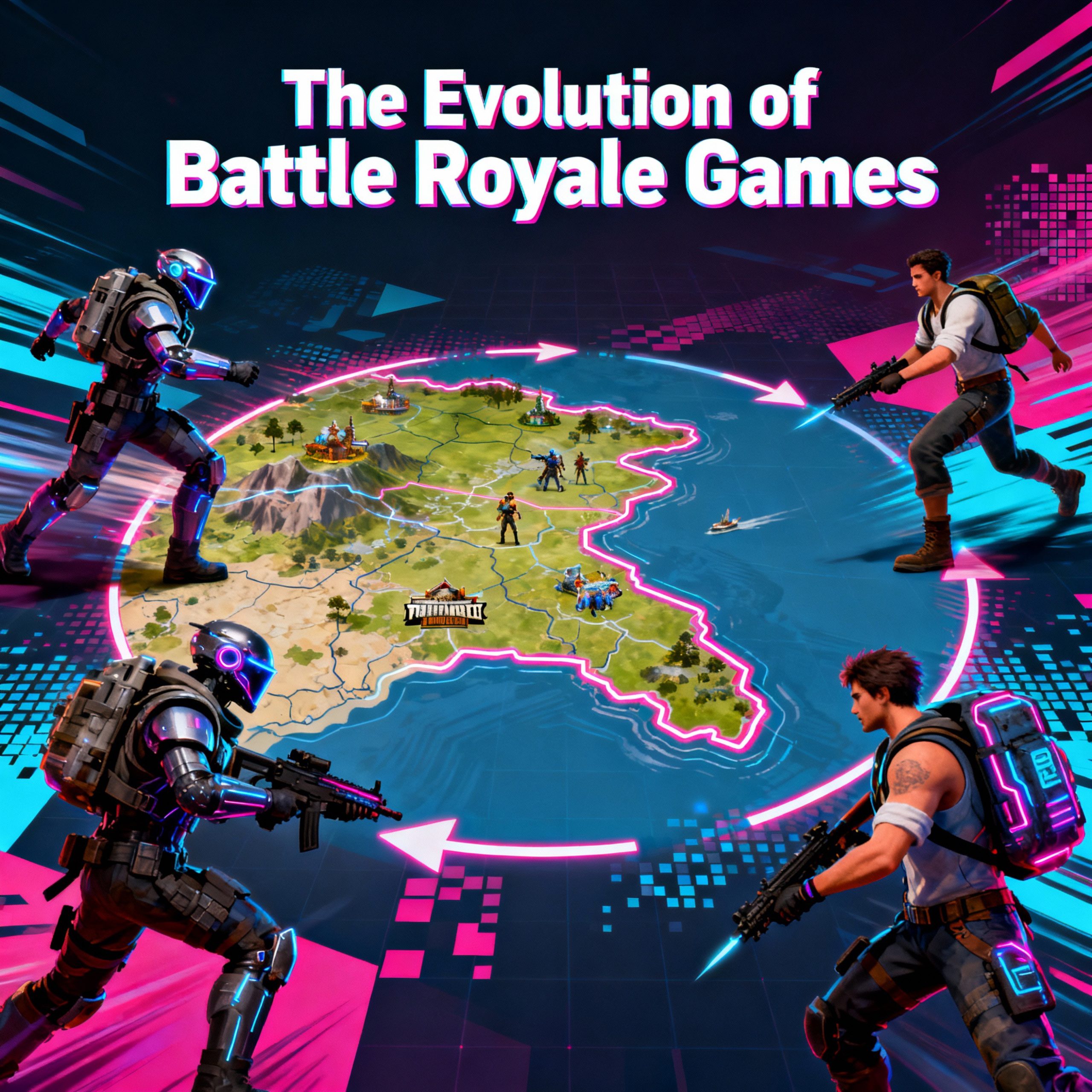
From a niche mod to a global phenomenon, the battle royale genre has reshaped the gaming landscape dramatically since its breakout moment less than a decade ago. Its evolution traces back to humble beginnings in modded multiplayer games and has surged into a mainstream staple boasting millions of players worldwide. Here’s the story behind the rise and transformation of battle royale games.
Origins in Mods and Early Influences
The battle royale concept originated from mods for games like Minecraft and Arma 2 in the early 2010s, inspired heavily by the 2000 Japanese cult film Battle Royale and the Hunger Games novels. These mods pitted dozens of players against one another on a shrinking map, survival being the ultimate goal. Brendan Greene, better known as PlayerUnknown, was instrumental in popularizing the format through his mods for DayZ and Arma III.
PUBG: Defining the Modern Genre
The release of PlayerUnknown’s Battlegrounds (PUBG) in early 2017 was a turning point. Featuring 100-player matches with randomized loot drops on shrinking maps, PUBG introduced polished, accessible mechanics that drew in over 50 million sales within its first year. Its success on PC and console launched battle royale onto the global stage and cemented many of the genre’s core elements—last player standing, time-limited play areas, and scavenging gameplay.
Fortnite and the Rise of Innovation
Epic Games responded with Fortnite: Battle Royale later in 2017, introducing unique mechanics like building structures during combat (inspired by Minecraft). Its colorful art style, frequent live events, and pop-culture crossovers propelled it to unprecedented popularity, with over 125 million players by 2019. Fortnite transformed battle royale from a gritty survival game to a cultural phenomenon and esports powerhouse.
Hero-Based and Teamplay Variants
The next evolution introduced hero-based battle royales, most notably Apex Legends in 2019, which brought distinct characters with unique abilities, emphasizing team tactics alongside traditional survival mechanics. This shift layered strategy on top of classic shooting gameplay and broadened appeal by promoting communication and cooperative play.
Battle Royale Integration in AAA Franchises
Battle royale modes became a default in many major AAA shooters: Call of Duty: Warzone and Battlefield 2042 integrated large-scale multiplayer with battle royale’s tension and pacing, blending traditional shooter mechanics with the shrinking zones and survival pressure. These games maintained their franchise identity while capitalizing on battle royale’s popularity.
Mobile and Cross-Platform Expansion
Mobile adaptations like PUBG Mobile and Free Fire expanded the genre’s reach to billions worldwide, especially in emerging markets. Cross-platform play now lets mobile, PC, and console players compete seamlessly, making battle royale a truly universal multiplayer experience. Accessories like cloud gaming services further remove hardware barriers, democratising access.
What’s Next?
Future trends suggest increased integration of AI for smarter matchmaking and dynamic events, expanded player customization, and hybrid game modes blending battle royale with RPG, survival, and story-driven elements. Expect continued innovation from indie developers and AAA studios alike, keeping the genre dynamic and evolving well into the next decade.
Conclusion
From mod community experiment to global cultural fixture in less than ten years, battle royale games have revolutionized multiplayer gaming. The genre’s blend of competitive survival, social engagement, and continuous evolution guarantees it will dominate the multiplayer space for years to come.