
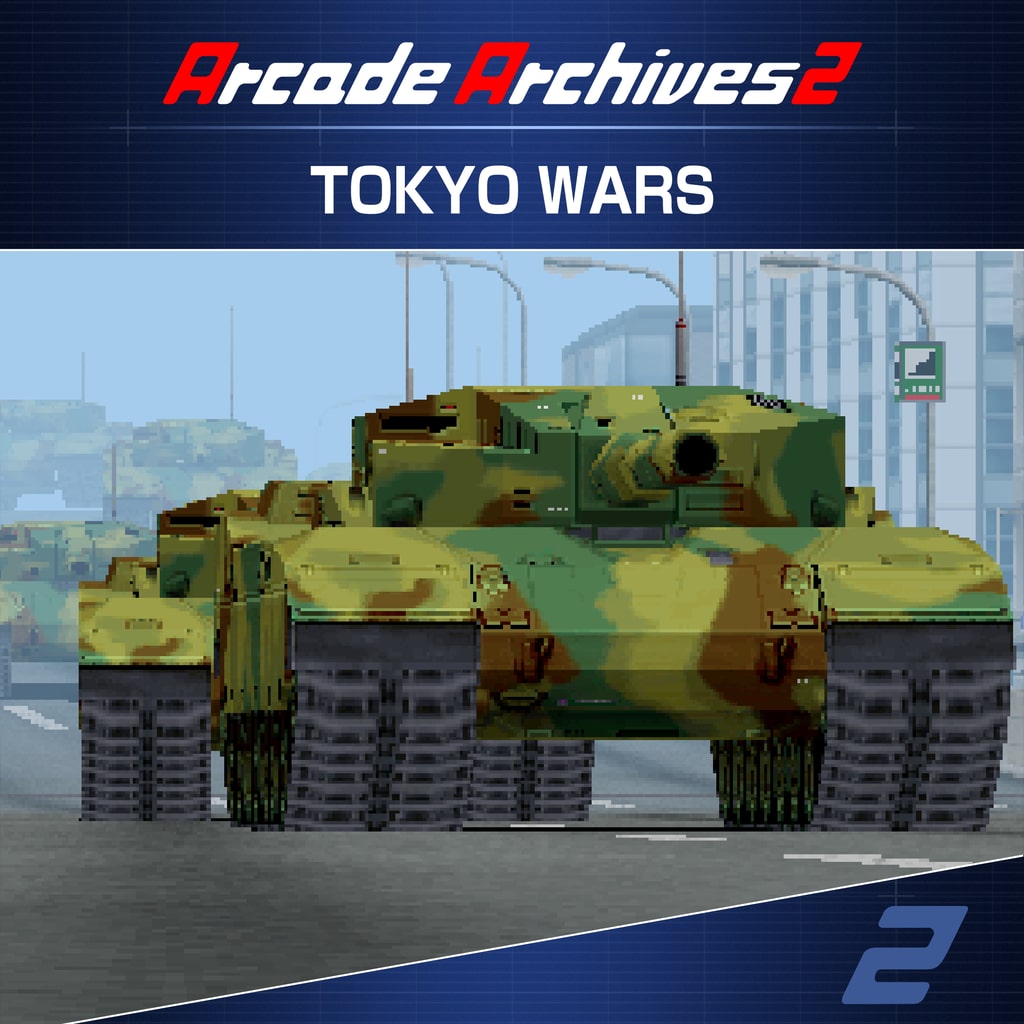
When Namco’s TOKYO WARS first stormed arcades in 1996, it stood out as a bold, 3D tank-shooter ahead of its time: high-speed vehicular combat across city streets, team-based battles, and large arcade cabinets built for spectacle. Now, decades later, Hamster Corporation brings it back to life in Arcade Archives 2 TOKYO WARS — and the experience proves that even a simple, old-school concept can feel fresh again when handled with care.
Back to the Streets of Tokyo
At its core, TOKYO WARS is beautifully straightforward: choose your side (Green Force or White Force), pick a tank, and drive through semi-open city maps, destroying enemy vehicles until your team’s reserves are depleted. It’s a concept as pure as arcade action can get — no power-ups, no complex RPG systems, just raw tank combat and relentless momentum.
On modern consoles, this simplicity translates into accessibility. The game supports up to four-player split-screen, injecting a cooperative chaos that’s rare in vintage action titles. That means blade-thin corridors, wide boulevards, and frenzied deathmatches as you and friends navigate Tokyo’s fractured streets.
New Modes, Old-School Feel
This re-release doesn’t just replicate the arcade original — it enhances it. The classic Original Mode is here, alongside Hi-Score and Caravan Mode, which longtime retro fans will recognize from other ACA titles. Arcade Archives 2 also adds Time Attack Mode, a new twist where you attempt to finish the game as fast as possible, testing not just your shooting skill, but your route-finding and survival instincts.
At the same time, Split-Screen Mode makes local multiplayer more engaging than ever. Whether you’re working as a team or duking it out, racing across overlapping fields of battle, there’s a purity to the experience that modern games often overcomplicate.
Even better: support for variable refresh rates helps replicate the hit-and-miss feel of the original arcade hardware, making the gameplay smoother and more faithful to its roots.
Tank Combat That Hits With Weight
Playing TOKYO WARS isn’t just about where you aim — it’s about situational awareness, strategy, and pacing. Tanks move quickly, but you don’t simply barrel into conflict mindlessly. Skilled players will use the on-screen radar and map layout to set up flanking maneuvers, avoid clustered enemy groups, and pull back to let your shield recharge.
Each tank can survive several hits, giving the combat a tactical ebb and flow. You’re not just spamming shots; you need to pick your engagements, time your attacks, and protect yourself when the odds are stacked. The original system was delightfully simple — one button to shoot, steering to maneuver — and the re-release preserves that elegance.
Atmosphere & Presentation
Graphically, TOKYO WARS is a product of its time, but that doesn’t mean it’s dated in a bad way. The polygonal tanks and blocky cityscapes evoke mid-’90s arcade charm, and the re-release keeps that aesthetic intact while smoothing some rough edges.
Sound design plays its part too: tank engines rumble, shots echo, and explosions pop. There’s no sweeping orchestral score, but that’s part of the appeal. The sparse soundtrack and effect-heavy audio bring you closer to what the original arcade cabinet must’ve felt and sounded like.
Adding to the authenticity, the re-release includes arcade-style display filters and screen settings, building the bridge between that retro hardware feel and modern TV screens.
Replay Value & Community
Replayability is TOKYO WARS’ strongest suit. The blend of modes encourages different playstyles. Want to climb the online leaderboards? Hi-Score Mode is your playground. Prefer a tight, adrenaline-fuelled sprint? Go for Time Attack. Love chaotic team battles? Split-Screen is where it’s at.
The game’s limited map count (just a couple of battlegrounds) might sound restrictive, but the way players adapt tactics to those spaces keeps things feeling fresh. Plus, having local multiplayer supports the communal energy that made arcade games great — this port gives that spirit a second life.
Limitations & Nostalgic Frustrations
Of course, not everything lands perfectly. With only two battlefield maps to choose from, variety is limited. For modern players used to sprawling open-world or highly varied multiplayer arenas, it may feel repetitive after extended sessions.
Additionally, the AI in single-player or lower-player games lacks strategic depth — TOKYO WARS was built for human rivalry and cooperation, and it shows when you go solo.
Another potential sticking point is the simplicity of the control scheme. One button to fire, steering to drive — it’s intuitive, yes, but it may feel shallow compared to more complex contemporary tank combat games.
Verdict
Arcade Archives 2 TOKYO WARS is a nostalgic throwback, but it’s more than just a relic — it’s a revived slice of ’90s arcade intensity with enough modern polish to feel relevant today. Whether you’re diving into Split-Screen chaos, chasing your fastest completion in Time Attack, or just rolling through Tokyo’s streets with friends, the timeless appeal of tank-based destruction remains potent.
For retro fans, tank combat lovers, or anyone who craves the raw, unfiltered energy of old arcade games, this is a must-play. It’s not massive in scope, but it doesn’t need to be. Sometimes, blowing stuff up in a polygonal city is enough.
A compact but explosive arcade re-release — it’s not the deepest game, but when the battle begins, it’s gratifying in all the ways that matter.






[…] 2 SPACE INVADERS remains foundational, but its design echoes across countless modern shooters. Arcade Archives 2 TOKYO WARS foreshadows large-scale vehicular combat concepts. Arcade Archives 2 STEEL WORKER and Arcade […]